

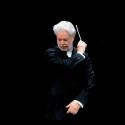
It was a hefty evening, as it needn't necessarily have been throughout, since Shostakovich’s Ninth Symphony can conceal more darkness between the lines in a lighter take. In his second full concert of his second season as the wildly successful and popular Chief Conductor of the London Symphony Orchestra, Antonio Pappano spared us none of the hard-hitting.
Nor did the phenomenal pianist Seong-Jin Cho in Prokofiev’s colossal Second Piano Concerto, drawing as usual crowds of his fellow South Koreans. It was neither Pappano's nor Cho's fault if I’d recently heard interpretations of that and Beethoven’s Fifth more to my own taste.
Playing-wise, the articulation of Shostakovich’s shorter symphony between two more monuments, the Eighth and the Tenth, was supreme: enough to have put it at the top of the list as a recording when I compared all versions of the Ninth for BBC Radio 3’s Building a Library. What I observed there, though, was that Shostakovich didn't like his second movement, marked Moderato, taken too slowly – he told Koussevitzky so – and treating it as a slow movement, like Pappano, risks losing its essential character as a limping waltz. Still, the evening's first tranch of woodwind soloists – it's a splendid kind of showing-off that Pappano can field a second, equally good team, whom we heard in the Beethoven – was hauntingly led by clarinettist Sérgio Pires.  Before that, the neoclassical opening of the Allegro con brio quickly turned beefy, and while the conductor is a master of continuity, there was spacious panache around the insistent trombone (Simon Johnson) pompously announcing the second theme (on piccolo, as it turns out).
Bassoonist Rachel Gough announced her tragic solos in the Largo following a biting, scary Scherzo as a human cry of pain, a risk worth taking. The finale gathered steam, but the madcap dash at the end wasn't quite as hair-raising as it can be (in another connection, deliberate or not, we got the same in genuinely triumphant mode, at the end of the Beethoven – a real clincher to conclude the concert).
I first heard Seong-Jin Cho in the 2023 Proms playing Chopin's First Piano Concerto, a work which can seem palely pretty, but which here was a miracle of pearly gorgeousness, profound in itself. Prokofiev's Second is at the other end of the scale, a monster in every way, not least notewise (the cadenza which takes up the development of the first movement spreads on to three staves in the score). 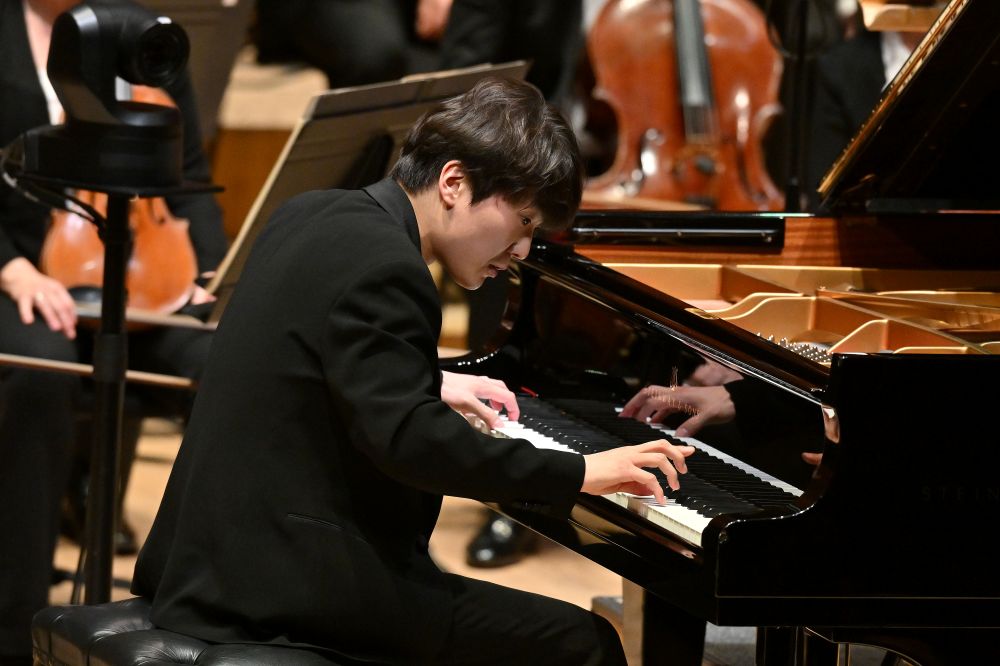 After the melancholy melody of the start, Cho was determined to show us he can do the weight with fullest clarity, but I was still hooked on Igor Levit's interpretation six months ago, flying through the darkness. Where Cho truly stuns is in the quirkily-accented dances over the abyss, which made the third-movement variations on a dinosaur's back the individual highlight of a never less than impressive performance. He also moved from expressive physicality to absolute poise in the calm theme which unexpectedly emerges in the finale. Around him the orchestra sent out more clearly-defined shards of glass than I've ever heard in this work. The encore, Ravel's À La Manière De Borodine (yes, its identity stumped me), returned us to the humane stillness of Prokofiev's last theme in the concerto.
Pappano's Beethoven Fifth was high, lucid and bright. Terrific rhythmic definition, outstanding work from the first two of the four horns and a thunderous kickoff /underpinning of the fugato passage in the Scherzo from the double basses (now reduced, but not substantially, from eight to six) gilded the excitement. 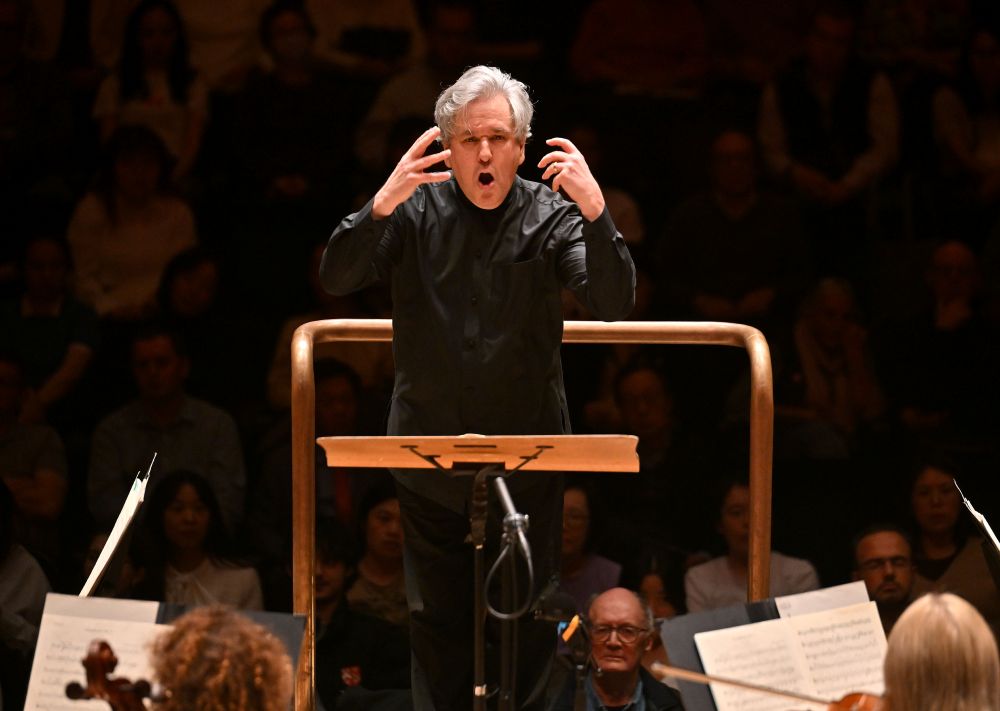 There was also ravishing soft playing in the transitions of the Andante con moto and from the beautifully-dimmed recap of the scherzo to the start of the build to the finale. For me, though, the excellent bowed to the memory of the electrifying, when the Luigi Cherubini Youth Orchestra got to play its first Beethoven Five under the baton of a galvanised Riccardo Muti. It may well be my personal problem that I ask myself "why" in the second and last movements, and my delight that Muti's swift tempi temporarily solved that problem. Pappano's take was a remarkable one, all the same, with first-rate playing throughout.




Add comment