Bach: The Complete Keyboard Concertos Mahan Esfahani (harpsichord/director), Britten Sinfonia, leader Jacqueline Shave (Hyperion)
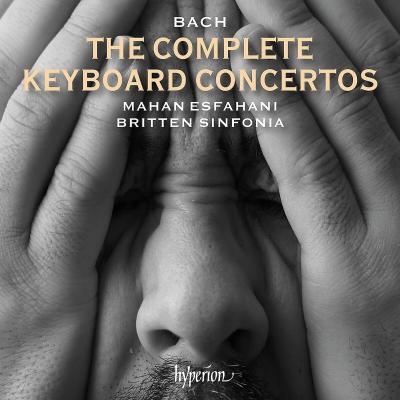
I prefer the sound of Bach’s keyboard music to be played on a modern piano, my go-to recordings of the concertos being those by Angela Hewitt and András Schiff. I’ll make an exception for this new Hyperion set, Mahan Esfahani using a gorgeous-sounding modern copy of a German baroque harpsichord. He’s accompanied by a slimmed-down Britten Sinfonia, Esfahani believing that these works “make their maximum impact on record with an ensemble of one player to each part”, those ensemble players using modern instruments. There’s an interesting quote near the end of Esfahani’s booklet essay, arguing that this approach “fundamentally liberates the harpsichord from antiquity and thus propels the instrument and its sound into the realm of the immediate and living”. Plus, his harpsichord is a modern one.
Enough waffle: these are hugely enjoyable performances, superbly balanced, one big gain being that the strings never feel subservient, the keyboard always in a dialogue with equals. Take the bright opening movement of Concerto No. 3, violinist Jacqueline Shave and colleagues singing like birds while Esfahani purrs away underneath. The major-key concertos have rarely sounded so upbeat, No. 4’s elegant finale one of the highlights of the set. No. 6, a joyous recasting of Bach’s 4th Brandenburg Concerto, features Michala Petri alongside Ian Wilson on recorders.
Especially intriguing is Esfahani’s reconstruction of an unfinished 8th Concerto in D minor, based on material from the cantata Geist und Seele wird verwirret, two sinfonia movements linked by a harpsichord cadenza. The A minor Triple Concerto is included, despite Esfahani’s doubts about its authenticity, Shave and flautist Thomas Hancox on terrific form in the central “Adagio”. This is a wonderful, set, stylishly played and directed, beautifully recorded and very well annotated.
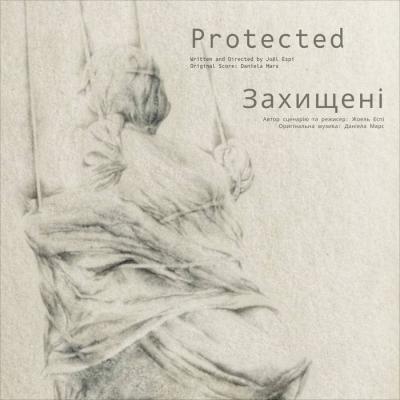
Daniela Mars: Protected Daniela Mars (flutes) (Records from Mars)
Last year I reviewed Brazilian flautist Daniela Mars’s debut album, in which she explored the resonances of the low flutes that are her speciality, above all the extraordinary contrabass flute – tall as a person and whose sound emerges from subterranean depths. Mars has now branched out into film scoring, writing the soundtrack for the documentary film Protected, by Swiss film-maker Joël Espi, about Ukrainian artist Halnya Andrusenko. Andrusenko’s signature works involve wrapping family members – and even herself – in paper, these works called “Protected Parents” and similar. I was at the London premiere of the film and the soundtrack offers a sombre underpinning to a story of war and loss – but also of hope and the triumph of creativity.
Heard on its own as an album the music has a different effect. Mainly slow moving, multi-layered strata of flutes and atmospheric sound conjure an alluring web of sound that foregrounds Mars’s low-lying melodies. It is on the cusp of sound-art and music, the textures wonderfully captured (Mars is herself responsible for the mixing as well as playing everything) and feels more universal, away from the specifics of the lives of the people in the film. The low tessitura grounds everything, with higher sounds only coming in “Halyna’s Theme” – which follows the solo bass flute version a couple of tracks later, the lower version winning out for me. Mars also supplies vocals on a couple of tracks, with the connection between her pure tone and the timbre of the flute clear. The final track is the longest, a six-minute meditation called “The Wind Breathes”, which combines flute drones with metallic vibrations and sounds of breathing: it’s unnerving but haunting and memorable. Bernard Hughes
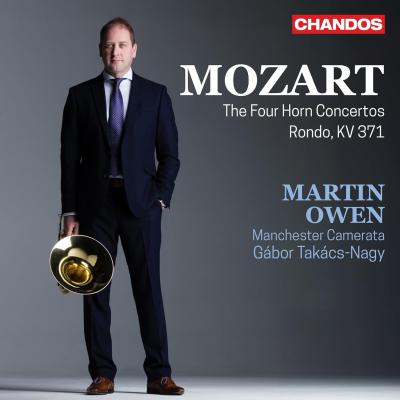
Mozart: The Four Horn Concertos, Concert Rondo Martin Owen (horn), Manchester Camerata/Gábor Takács-Nagy (Chandos)
Senza Parole: Italian arias for horn by Puccini, Verdi, Rossini and others Felix Klieser (horn and director), I Solisti di Pavia (Berlin Classics)
I like it when musicians’ publicity photographs give us a sense of how they play. As with this new disc of Mozart’s four horn concertos, soloist Martin Owen looking relaxed and very tidy in an immaculate blue suit. He's clearly a man to trust. Playing the horn is a treacherous business and you’d prefer to give the job to someone whose appearance suggests calm confidence and impeccable technique. Which isn’t to criticise Owen’s playing at all; listen to his phenomenal album of concertos by Strauss and Weber and you’ll hear what a bold, flamboyant player he can be, but he recognises that Mozart needs a different approach.
I’m a horn player: naturally I love these concertos but concede that they’re not this composer’s most profound outpourings. You could exchange the very similar rondos of the three E flat major works and not notice that much difference; it’s the slow movements that count, and what Mozart expresses through a solo instrument with such a limited range is remarkable, the “Andante” of Concerto No. 2 and No. 4’s “Romanza” both exquisite. Listen to Owen’s subtle gear change in the latter as it veers into G minor – unmarked, but it feels so right. No. 2’s opening “Allegro maestoso” always feels richer and deeper than the other opening movements, Owen marvellous when veering into darker pastures at 3’36”. The 6/8 finales all romp along, Gábor Takács-Nagy drawing witty and incisive playing from the Manchester Camerata strings. It would have been good to have included the sublime K.494a fragment, but we do get the K371 Concert Rondo as a bonus. Excellent notes and very good sound make this a desirable disc.
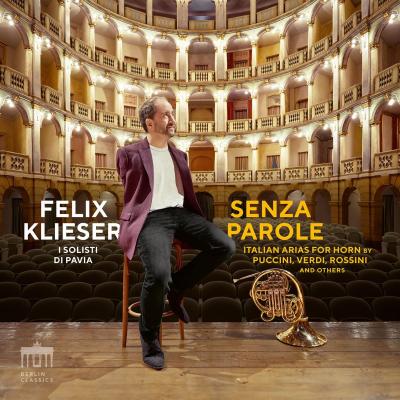
Felix Klieser’s Senza Parole is a collection of Italian operatic arias, skilfully arranged by Wolfgang Renz for horn and orchestra. Though some transpositions have been made to better fit the modern horn’s range, the results are always idiomatic. Good tunes are good tunes, and there’s more than enough tonal variety and expression in Klieser’s playing to compensate for the missing texts. Faster numbers, like Rossini’s “Largo al factotum” or Verdi’s "Di quella pira" are nicely done, and there’s a witty transcription of “La Danza” from Rossini’s Les soirées musicales, a fiendish tarantella nailed by Klieser. Other highlights include a melting take on “Just Ciel” from Rossini’s seldom-played late opera Le siège de Corinthe, and crowd-pleasing versions of Puccini’s “O mio babbino” and “Nessum dorma”. There’s stylish backing from I Solisti di Pavia, the album recorded in the town’s historic Teatro Fraschini.
Wishing Tree Gesualdo Six/Owain Park (Hyperion)
Songs of Angels ORA Singers/Suzie Digby (Orchid Classics)
Mentor: Britten and Oldham London Choral Sinfonia/Michael Waldron (Orchid Classics)
With Eys Lift Up Choir of Magdalen College, Oxford/Mark Williams (Coro)
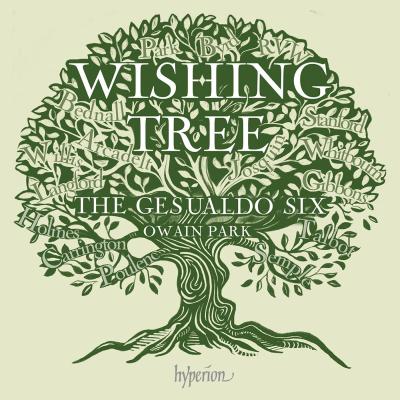
There’s suddenly a burst of releases from top choral outfits, so I will take them as a group. The Gesualdo Six’s Wishing Tree contains rather more secular repertoire than they usually offer, here combining Renaissance pieces in celebration of nature with contemporary pieces, and a thread of folksong, such as Vaughan Williams’s delectable Bushes and Briars. Alongside older pieces from Josquin, Arcadelt and Gibbons (a gorgeous The silver swan) there are excellent contributions from Alison Willis (the susurrating The wind’s warning), Joby Talbot (the striking, antiphonal The wishing tree) and the ensemble’s director Owain Park (his dreamy Fantasia on English children’s songs). But, the secular character notwithstanding, perhaps my favourite track was David Bednall’s beautiful Put out into the deep, five-part harmonies with a crunchy edge, and the singers’ projection of the biblical text impeccable, even when the texture fragments. The singing is of the standard we have come to expect from the Gesualdo Six, as is Adrian Peacock’s production.
Pairing contemporary pieces with their Renaissance inspiration has also been a stock-in-trade for the ORA Singers since 2016, over now four albums. But the choir doesn’t just record such pieces, it commissions them, enriching the contemporary repertoire in its dialogue with music of the past. Previous albums have had responses to Byrd, Tallis and Victoria: now it is the turn of Orlando Gibbons. New works by Marco Galvani (the thrilling Hosanna to the Son of David), Cecilia McDowall (a dancing O Clap your hands together), Nicola LeFanu (Be still, my soul really gripping) and Will Todd, whose rich Veni Creator finishes the album, are juxtaposed with their partner-pieces. The final piece of the jigsaw is a strand of Gibbons arrangements by Harry Baker with piano (he himself plays), but the inclusion of the piano is slightly jarring in the context of the album. Rather more to my taste are a pair of nicely astringent settings by James Weeks. The ORA Singers, featuring some of the best choral singers around, sound excellent and credit must go to Artistic Director Suzie Digby, not just for another fine contribution to choir’s growing discography, but for her commitment to commissioning.
I didn’t know any music by the British composer Arthur Oldham (1926-2003) prior to this new album by the London Choral Sinfonia. Oldham was Benjamin Britten’s only student (from 1944 to 1952) and led a fascinating – if not always happy – life, including a major breakdown in his 20s, before later establishing himself as a leading choirmaster and rediscovering his composing mojo in his 40s. He is represented on this album by two slight pieces and one more significant: Laudes Creaturarum – the “Canticle of All Creatures”. Scored for soprano solo, choir and organ, it’s a substantial 10 movements, with nods to early music, and to Britten himself (such as in the very opening). I’m very glad to have heard it – although for animal-based 20th century British choral music I prefer Kenneth Leighton’s punchier Laudes Animantium, recorded by Londinium in 2023. The Oldham is paired with Britten’s much recorded Serenade for Tenor, Horn and Strings, featuring the excellent Annemarie Federle and tenor Nick Pritchard. As conductor Michael Waldron notes, there are plenty of good recordings of the Serenade around, so his angle is to return to Britten’s tempo markings, which makes for a fresh perspective, with a slower “Dirge” and faster (but not as fast as originally marked) “Hymn”. It’s terrific.
Last in this round-up is a disc by the choir of Magdalen College, Oxford of sacred music by the American Nico Muhly, 13 of the 18 tracks composed for the choir. Muhly is steeped in church music in the English tradition, and these pieces are a perfect fit for the choir, both in liturgical and technical terms. They make demands of the young singers (boy trebles alongside mixed-voice students), but not too many, and stylistically there is nothing to upset the Magdalen worshippers. All that said, I find the music much of a muchness, a bit lacking in character and interest: it’s never less than good, but not often inspired. “On All Things” has a refreshing energy and the “Agnus Dei” of the Missa Brevis a touching humility – and soaring treble solos from Matthew Liu and Raphael Onobhayedo, but on the whole I found the album a bit underwhelming. Bernard Hughes
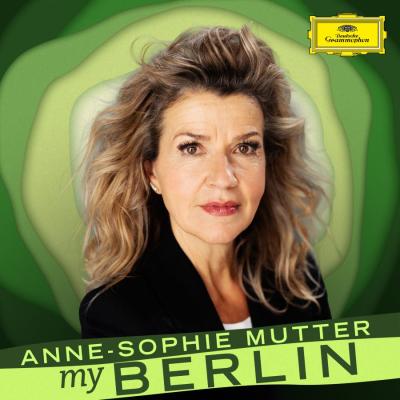
Anne-Sophie Mutter: My Berlin - works by Gounod, Debussy, Mendelssohn, Vivaldi, Bruch, Brahms, Beethoven, Dvořák, Fauré Anne-Sophie Mutter (violin) with Lambert Orkis (piano), Mahan Esfahani (harpsichord), Yo-Yo Ma (cello) and various orchestras (Deutsche Grammophon)
First, we need to adjust expectations. The recordings are not new, and it isn’t really an album. Anne-Sophie Mutter (or ASM as she refers to herself in a spoken afterword), describes this digital-only release as a ‘playlist’. It is the second of a seven-part series of ‘personally curated’ excerpts from her Deutsche Grammophon albums, in this case mostly from the period 1995-2015, the first, My London having been released in February.
The pieces here all have some connection, she says, with Berlin (or BER-lin, as she insists on calling it). Apart from one track, curiously, they were all recorded in BER-lin, the exception being a performance of the opening movement of the Fauré First Sonata from the Herkulessaal in Munich from 2002. It is long-phrased sostenuto heaven; I found it the most appealing track in the collection. There is also a track to serve as a reminder of the time when Mutter was Karajan’s teenage ‘discovery’, with the slow movement of the Bruch concerto with the Berlin Phil from 1980.
The part of the album I got on with the least well was her Vivaldi, recorded at the Neue Heimat club in Friedrichshain as part of Deutsche Grammophon’s ‘Yellow Lounge’ brand rejuvenation exercise. Footage of a regally coutured Mutter in the club is all over ASM’s Instagram; these things are sent to try us.
The focus of My BER-lin on ASM’s story leaves one figure in the shadows. I absolutely enjoyed the range and versatility of pianist Lambert Orkis’s playing, and note that his 80th birthday has happened between the arrival of My London in February and this new setlist. His sensitivity in Debussy’s “Beau Soir” from the Grammy-nominated “Berlin Recital” from 1995 is remarkable, and his work dealing with Mutter's mightily capricious tempo variation (the Germans might call her 'eigenwillig') in Brahms's Hungarian Dance No. 5 from the same album is the accompanist as stuntman and escapologist. Belated happy big birthday to unsung hero Lambert Orkis! Sebastian Scotney