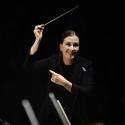
Chopin’s piano concertos and Strauss “symphonic fantasia” Aus Italien are young men’s music, bursting with inspired ideas, but baggy at times, hard to steer. Elgar’s In the South is up there with the mature Strauss tone poems – even if it couldn’t have taken the shape it did without them – but here the steering itself was the problem: missing the exuberance, the Philharmonia’s Principal Conductor Santtu-Matias Rouvali stretched it on the rack.
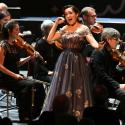
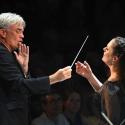
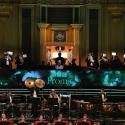
It was an odd Prom to win a packed house. Many audience members were Korean, come to see and hear Seong-Jin Cho, winner of the 2015 International Chopin Competition at the age of 21 and possessed of an exquisite sensibility; my neighbour told us that tickets to see him in Seoul were almost impossible to come by. She and others wouldn’t have been disappointed. Pearly-pretty in roulades and transcendental flourishes, never as vulgar as the brothel pink lighting in which the hall was bathed for the duration,Cho still projected every note clearly into the vasts.. Cho says Santtu is his “musical soulmate”, and you could see as well as hear the close, lovingly-phrased partnership. 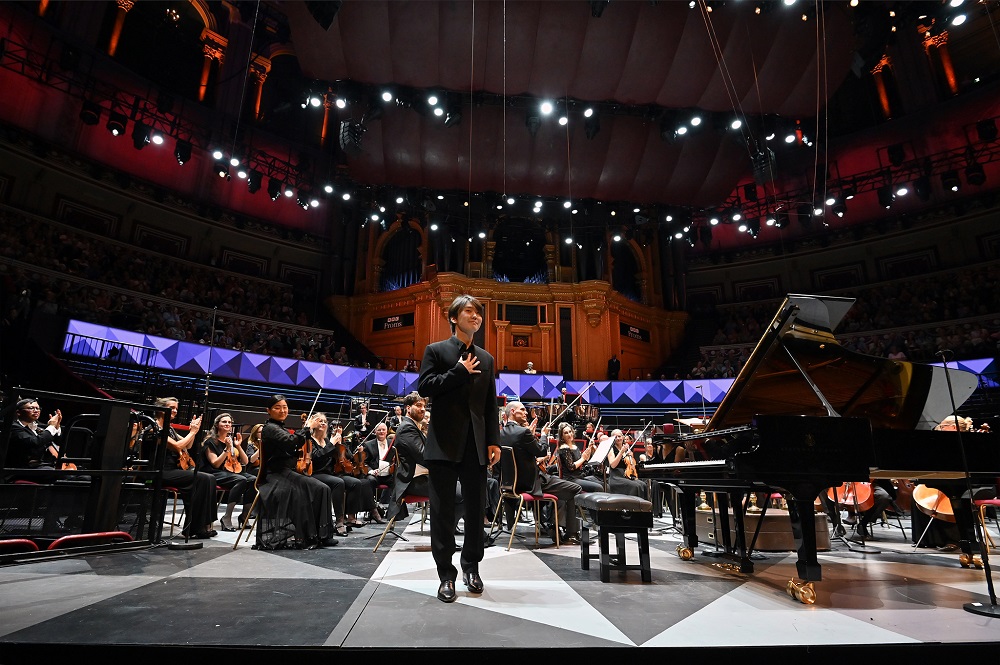 Yet what a vexation to the spirit is so much of the first movement: the endless orchestral introduction, the contrived development, the all-too long recap. In the Romance, all you have to do is succumb to the pianist’s poetry, which couldn’t have been more ethereal, and Cho pointed the dance rhythms of the Polish Krakowiak with sprightly charisma in the Rondo (again, just a little too spun-out for comfort). The rather predictable encore, the E flat Nocturne, Op 9 No 2, was full of nuance; I’d have preferred a more straightforward delivery focusing on the music rather than the soloist’s artistry, but it depends what you want.
Palpable affectation marred Rouvali’s opening gambit. Elgar’s Italian chronicle begins with a swaggering gambit starts with a gesture indebted to Strauss’s Don Juan – it was actually sketched as a theme depicting Hereford organist Sinclair’s bulldog Dan, immortalized in the "Enigma" Variations. So where was the bravado; why the portentousness? Timing isn’t everything, but note that Elgar’s first, 1923 recording as conductor runs to 16 minutes, while this took 23. Once past the brass-heavy opening – it may be the acoustics from where I was sitting, but splendid as the Philharmonia players, horns especially, undoubtedly were, the blend was poor – subtleties were beautifully etched. The Roman cohorts' brutal march worked well, but the “popular song” on viola, coming as much-needed simplicity, needs to be gently moved along, or else it sounds maudlin, as it did here. 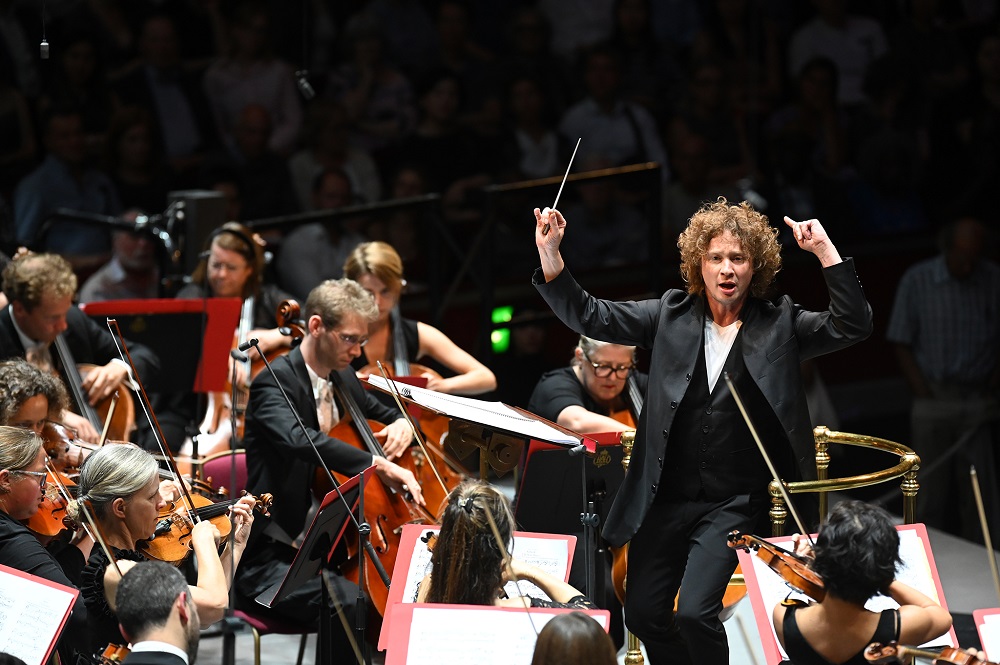 Redemption beckoned in the best of Aus Italien, namely the first movement’s misty morning on the Campagna – the shifting harmonies are already pure Strauss – and the third’s magical breezes on the beach at Sorrento (woodwind flurries pointing the way to the silvery chords of Der Rosenkavalier). Rouvali’s over-grand way only pointed out the “where are we going” deficiencies of the “Ruins of Rome” Scherzo and the way in which Strauss got himself saddled with what he thought was a genuine Neapolitan folk-song in the finale but turned out to be Denza’s “Funiculì, Funiculà'” (royalties beckoned). But the long-limbed melodies of the slower movements were as beautifully phrased and pointed as Rouvali’s collaboration with Cho, and for me that Sorrentine nature picture was a very good reason for sitting through a very mixed bag of works and performances.