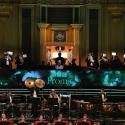
Last night’s Prom saw two beloved favourites – Mendelssohn’s Violin Concerto and Dvořák’s Seventh Symphony – prefaced by a fairly unknown quantity. This was Bernd Alois Zimmerman’s rediscovered Fairy-Tale Suite, written for radio by the German composer in 1950 but never performed until 2001. Unmistakably haunted by war-time nightmares, it takes us spine-tinglingly deep into some truly menacing woods.
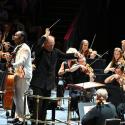
Sadly, the magically gifted Alina Ibragimova – soloist in the Mendelssohn – had to fight her way through thickets of her own as Elena Schwarz allowed a robust and well-muscled BBC National Orchestra of Wales to subdue her exquisite gossamer-light playing at a few decisive moments. Subtle and refined, Ibragimova aimed for intimacy, and often delivered a filigree tenderness – but sometimes found loud orchestral tangles in her way.
Zimmerman’s unquiet hike through forests of peril begins with the Bartok-like nocturnal spookiness of his prologue. It continues in richly atmospheric music that (despite the composer’s connection with the Darmstadt avant-garde) channels picturesque orchestral scene-painters of other sorts, from Ravel to (so I heard) Zemlinsky.
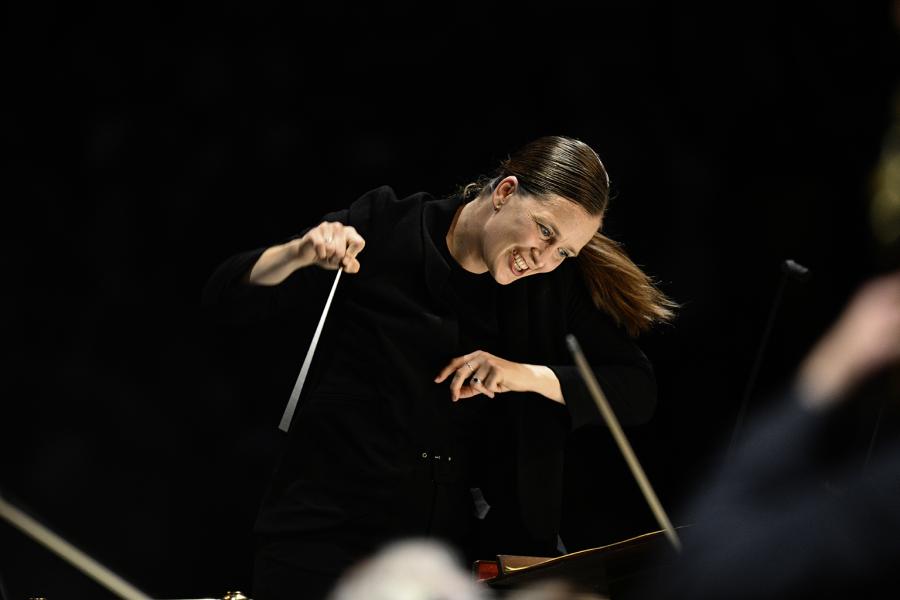
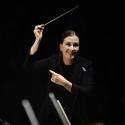
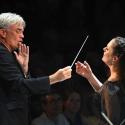
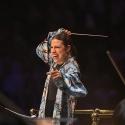
Here, Schwarz (pictured above) proved an effective and sure-footed guide as she led her large troupe (four percussionists and timpani, plus a brace of saxophones) through piquantly contrasting textures. They ranged from the raucous trumpets and bagpipe-esque drone of the Musette (now almost in Mahler-land) to the infernal gallop of “The Ride through the Wood” and the militaristic terrors of “The Apparition”. Brass and percussion in particular captured all the acid irony of these far-from-naive fables. The dread-packed closing “Festive March” sounded as if a squad of ogres was just about to crash the kiddies’ party.
In contrast to the extraversion of her brilliant fuchsia frock, Alina Ibragimova seemed to want to invite us to a warm, small gathering of trusted friends. Her playing asked us to attend to every fine detail of tone and tempo, pressure and line, she brought to Mendelssohn’s evergreen marvel. Schwarz and the orchestra, however, sounded on occasions as if they had other ideas, and were aiming for a bolder, fuller “Albert Hall” impact. Balance issues aside, that mismatch sometimes left the violinist stranded in a pure-toned, sweet-voiced world of her own, more air than fire, with the band in another dimension.
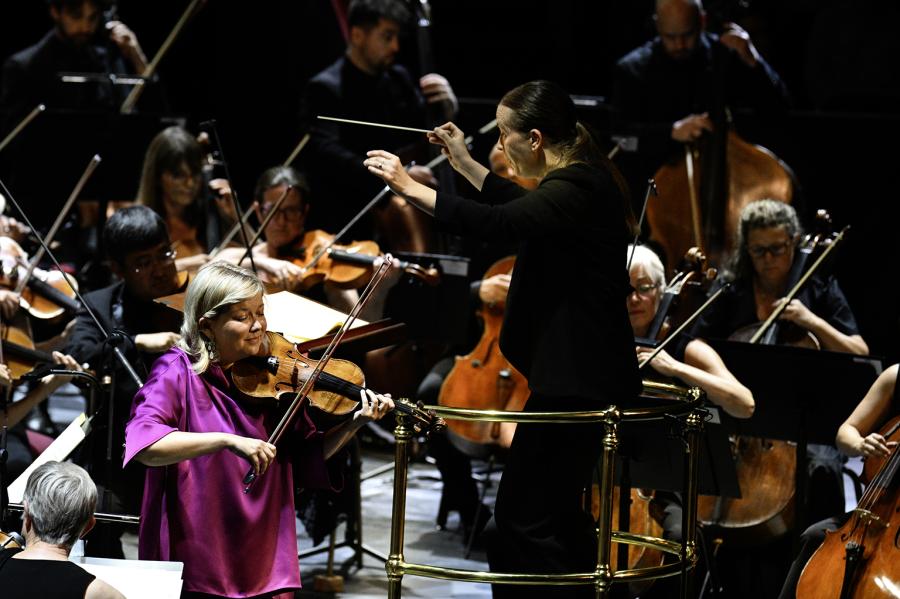
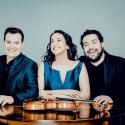
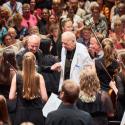
Ibragimova’s inner-directed sensitivity let the revolutionary cadenza glow, and lent a lissom, long-breathed delicacy to the great Andante song. But the pause-less transitions from movement to movement sounded less perfectly smooth than they should be, although the meaty, even gruff orchestral sound did attractively offset the violin’s speed-of-light, fairy-like skittering in the finale. With her exemplary qualities of freshness and finesse Ibragimova (pictured above) managed, in spite of everything, managed to shrink the huge hall from cavern to salon size.
In Dvorak’s Seventh, Schwarz – in her debut Prom – had the chance to display her command of an architecturally ambitious score in which the Bohemian matches, and maybe surpasses, the authoritative large-scale shapes he had found in Brahms. She was measured, judicious, even-handed and even-tempo-ed, forming and linking long paragraphs with cool authority. If the performance sometimes lacked thrills (though not in the swirling cross-rhythms of the dancing furiant scherzo), then Dvorak himself is taking pains to prove his serious credentials as heavyweight sculptor, not folksy charmer.
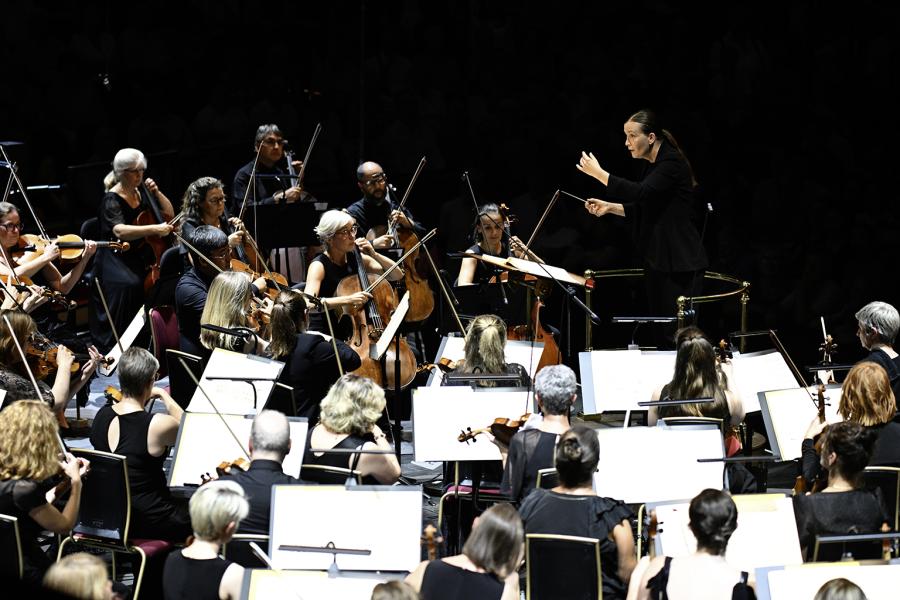
Especially in the final Allegro, the BBCNOW brass, far at the back, truly found their stride, while flutes and clarinets punctuated the deep swell of strings with their deft melodic forays. Spacious, but cautious, in her reading, Schwarz in the beginning could feel becalmed – although the “poco adagio” slow movement built up to a splendid tutti sign-off. The furiant seemed to loosen limbs and quicken pulses, as if the orchestra had mastered an accent and an idiom. Her finale combined pulse and momentum with passages of brooding solemnity, strong-voiced cellos to the fore, until the last-gasp minor-to-major twist was zestfully unleashed.