

Although this streamed concert from the Scottish Chamber Orchestra featured the music of Schubert and Tchaikovsky, the ghost at the feast was Mozart, the acknowledged inspiration behind the two main pieces. In particular these works sought to capture the charm and ease of Mozart but cast in the later composers’ idioms.
As with the SCO concert I reviewed a fortnight ago this was broadcast on YouTube, the presentation simple and unobtrusive – no son et lumiere to get in the way of the music. And the repertoire was chosen to show the advantages of a small orchestra: lithe textures, fast tempos and a wonderful transparency to the playing. I had not previously come across the orchestra’s principal conductor Maxim Emelyanychev but was delighted by his loose-limbed, ambidextrous style.
My zeal for Schubert’s Fifth Symphony is that of a convert. I was (I am ashamed to say) past 40 before I ever heard the piece, but I loved it immodestly from the very first and on some days would describe it as my favourite symphony. This is a potential double-edged situation, as I don’t want to hear it played anything other than very well. I wasn’t disappointed. 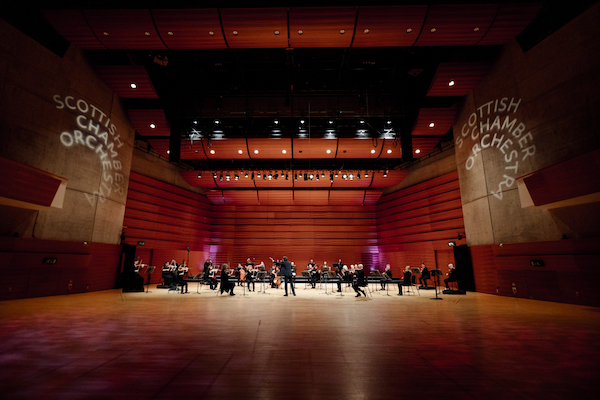 Emelyanychev took every movement it at a real lick, but without losing detail in the playing. The violins were sparkling throughout, the basses pert and the flutes lively (guest principal Brontë Hudnott really caught the ear). It’s extraordinary that Schubert wrote this music at the age of 19, such is its assurance. It is replete with all the Schubert trademarks including melodic fluency and harmonic sidesteps into unexpected, far-flung key areas, from which he always finds his way back. It is also concise, which Schubert isn’t always.
It is the third movement that is most clearly a homage to Mozart, in the shape of its main tune, the cheeky chromaticisms and the contrapuntal interplay between melody and bass. Emelyanychev and the orchestra revelled in the moments of mock-pathos, a smile never far from the surface.
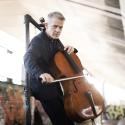
Tchaikovsky’s Rococo Variations are similarly joyous in outlook, sometimes with exhilarating virtuosity, sometimes with inward tenderness. The soloist was the SCO’s principal cello Philip Higham (pictured below by Ryan Buchanan), who had the advantage of knowing the ensemble from the inside, although making the move to being out in front must have had a nerve-wracking side to it. 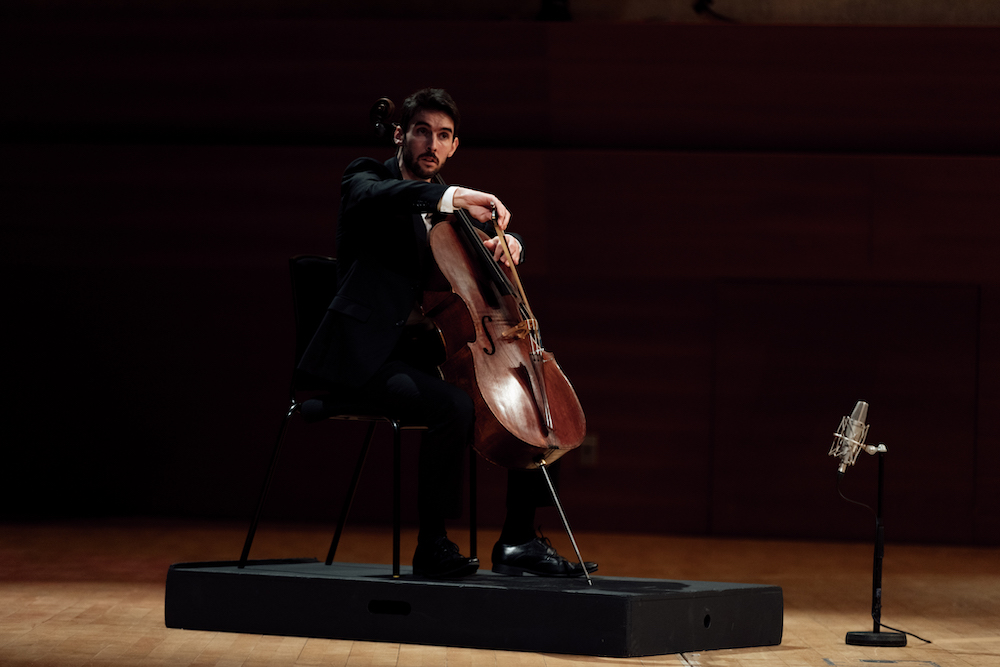 There was charm in abundance in his reading of the opening two movements but for an evening mainly about good humour the introvert moments of variation 3 and 5 were striking. The orchestra were excellent accompanists in this delicately scored music and Emelyanychev showed both wit and subtlety.
The only complaint (and it’s a minor one) is that the orchestra hasn’t resolved what to do about applause. After the Schubert symphony they applauded themselves slightly self-consciously, after the Tchaikovsky they applauded Philip Higham somewhat more enthusiastically and after the final item (Schubert’s Rosamunde entr’acte) they stood in silence and the lights faded out. All three of these have their drawbacks, and there is perhaps no perfect answer, but the failure to settle on any one solution was awkward.
But this gripe aside I was gripped and thoroughly recommend seeking out this performance on YouTube.


Add comment