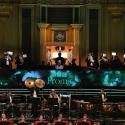
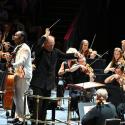
My last St John Passion arrived during the Proms in the vast hanger of the Royal Albert Hall, where the impeccable, discreet musicianship of Masaaki Suzuki and the Bach Collegium Japan sometimes struggled with the chilly open spaces all around. At St Martin-in-the-Fields yesterday evening, no such problems: the Monteverdi Choir and English Baroque Soloists, with Peter Whelan directing, balanced intimacy and grandeur in a reading whose visceral impact and involving immediacy wholly filled the church, while never overwhelming it.
Vocally and instrumentally, the Monteverdi singers and EBS players played at the top of their game. Yet the evening’s most charismatic performance proved proved to be Nick Pritchard’s Evangelist: not merely a solid story-telling sheet-anchor, but the emotional heart of the Gospel narrative from first to last.
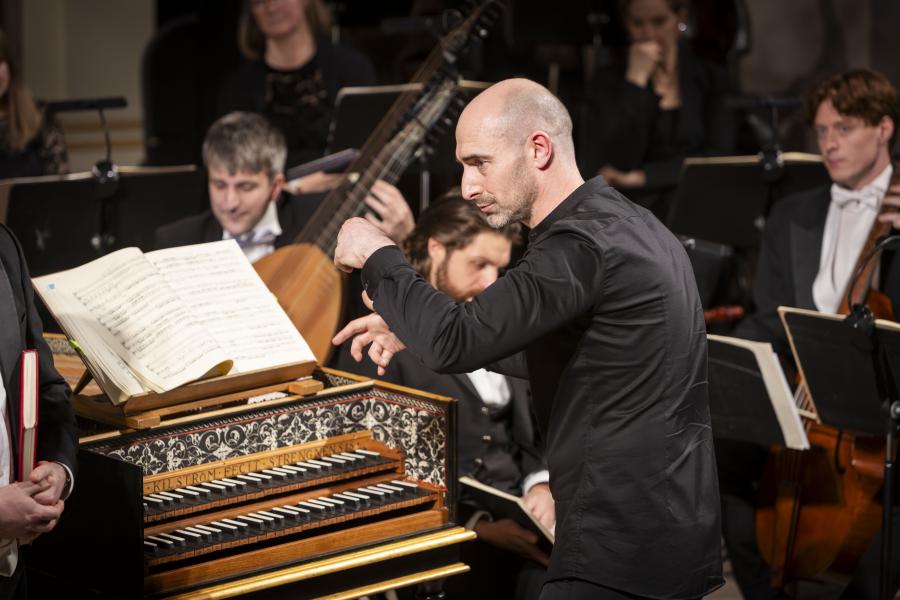
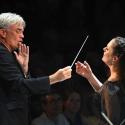
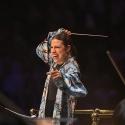
So swift and forceful is Bach’s telling of the betrayal, trail and crucifixion of Jesus – first staged in Leipzig at Easter 1724, but regularly revised until the composer’s death – that it becomes hard to imagine the effect of the long Good Friday sermon that would originally have split the first and second parts. As conductor and continuo, Whelan (pictured above) was a mobile, mercurial presence whose quick changes of scene, urgent tempi, and relish for dynamic contrast, accentuated the fast-flowing drama of the piece. From the menacing chug and unsettling oboes of the opening bars, we grasped that this road to the peace beyond grief would be bracingly dramatic. At times Whelan became an almost balletic interpreter of the music – quivering and juddering, for example, as the soldiers divided Jesus’s garments in the chorus “Lasset uns den nicht zerteilen”. Here, and throughout, the Monteverdis responded with a rhythmic agility and clarity of expression that carried them thrillingly across the work’s drastic shifts of mood and tone.
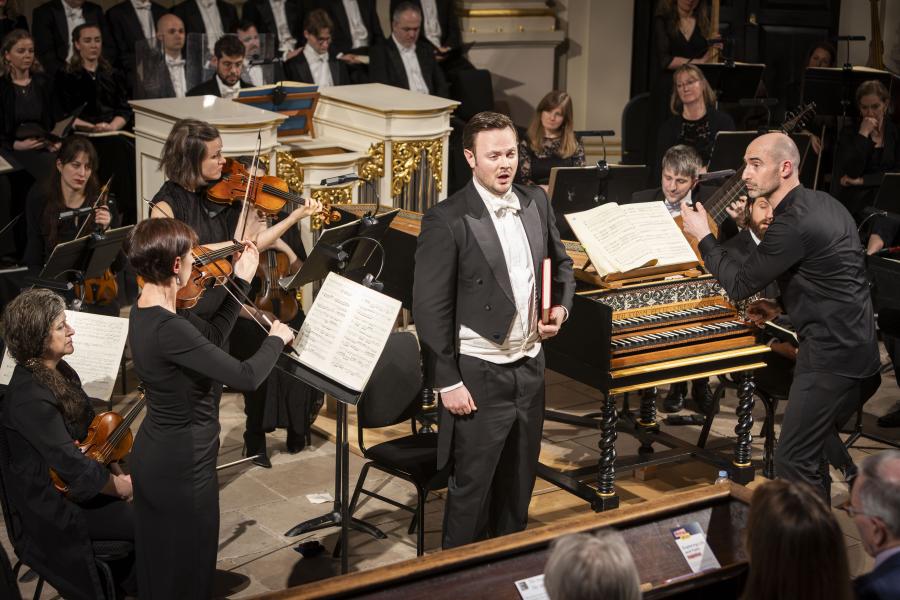
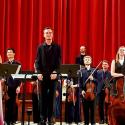
Pritchard (pictured above) brought nuance, colour and variety to every line of the Evangelist’s recitative. He never seemed to hurry, or to flatten, a phrase that some well-placed accent or emphasis could bring to life. Even his longest stretches of narration never felt becalmed. His word-painting as, for instance, he summoned the cold of the night of Peter’s betrayal or voices the self-reproach of the backsliding disciple who “weinete bitterlich”, was deeply expressive but never cornily overdone.
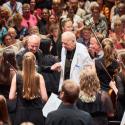
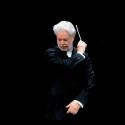
He was joined by star baritone Konstantin Krimmel as Jesus, with Julia Doyle and Rebecca Leggett as the soprano and mezzo soloists, and Malachy Frame as a dithering Pontius Pilate whose bass poignantly united imposing vocal presence with moral debility. Pritchard and Krimmel also took on the separate tenor and bass arias that punctuate and reflect on the story. As Jesus, Krimmel (pictured below) commanded a serene inscrutability that matched polished assurance of tone with the terse, not-quite-there detachment of the lines he sings.
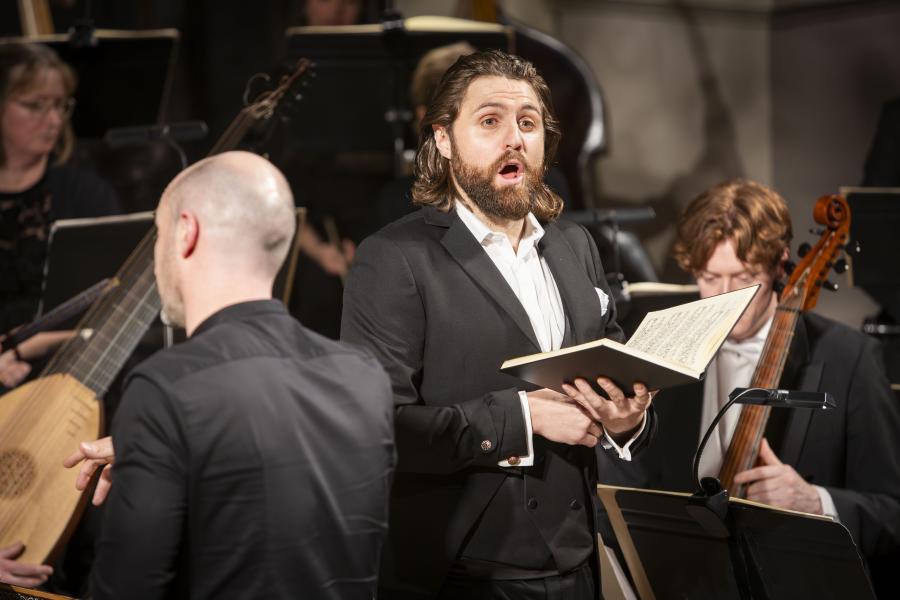
So it was satisfying to have much more of this hugely promising singer’s range revealed in the arias, above all a gently joyous “Mein teurer Heiland”. Meanwhile, Pritchard brought fluency, colour and sensitivity in phrasing to “Erwäge, wie sein blutgefärbter Rücken”, the voice climbing up to Paradise, “dem Himmel”, as EBS leader Madeleine Easton’s violin rose to heaven’s gate.
Leggett sometimes seemed to be competing with the orchestra in her opening aria, “Von der Stricken meine Sünden”, although the anguished yearning of the sinner’s plea for liberation cut through strikingly. When it came to “Es is vollbracht”, however, she was irresistibly moving: not the heaviest of voices for the aria, but full of well-judged touches in phrasing and feeling, commandingly bleak against the achingly lovely viola da gamba part, but imperious in her sudden leap into the glory of “Der Held aus Juda”.
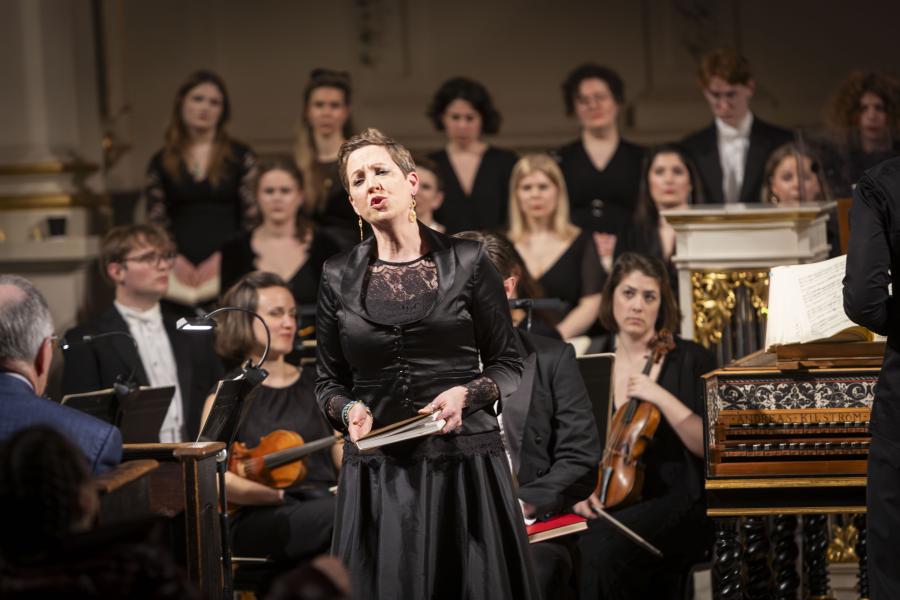
Julia Doyle (pictured above) achieved a skipping candour and purity of tone in her opening piece, “Ich folge dir”, beautifully enhanced by the festive Baroque flutes of Elizabeth Walker and Annabel Knight. And when she returned with the impassioned elegy of “Zerfliesse, mein Herze”, she sculpted the lamenting syllables of “Dein Jesus ist tot” with heart-tugging artistry, her voice a gleam of tragic silver against the woody earthy, shades of oboes and flute behind.
As for the choir, their diction exact and entries ferociously clean, they sang with absolute authority from the initial ominous outburst of “Herr, unser Herrscher” through to the muscular tenderness of their hard-won consolation in “Ruht wohl”. Even the gentlest, most introspective moments here had heft, solidity and pulse. Acting both as bloodthirsty mob and pained observers, they aced the tricky transitions of the trial scene, as the spitting hate of “Kreuzige, kreuzige!” and the persecutory delight of “Wir haben ein Gesetz” gives way to the heaven-seeking radiance and warmth of “Durch dein Gefängis”. The great choir founded by Sir John Eliot Gardiner has had to endure its own trials of late, but this Passion revealed an undimmed quality in close-focus detail and overall vision alike.