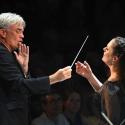
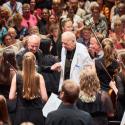
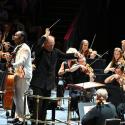
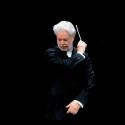
Pretty much any performance of Mahler’s “Resurrection” Symphony is a special occasion, but this one perhaps more so than most. For one thing, it was a landmark event in the BBC Scottish Symphony Orchestra’s 90th anniversary year - the only concert this season that saw the return of Sir Donald Runnicles, their Conductor Emeritus.
Runnicles’ Mahler performances were always highlights during his time in charge of the orchestra, and this is a special work for him, not only one of the pieces that persuaded him to become a conductor, but also one in which he sang as a young member of the Edinburgh Festival Chorus back in 1965. With those ingredients then all was set fair for a barnstormer of a performance, and it seemed that most members of the audience knew that. Sunday afternoon concerts in the Usher Hall can be quiet affairs, but this one was full to the gunwales.
True to form, much of that success was down to the man on the podium, who understood how to get the best out of musicians who knew him well. However, that would have counted for little had he not been able to count on such wonderful playing. The orchestral sound was underpinned by terrific ballast from the cellos and basses, and topped by brass sound so gleaming and focused that it could pin you to the back of your seat. In the middle of that was a string section that could sound savage, sweet, or anything in between, gorgeously soft in the “Urlicht” song, and summoning up the most remarkably sweet swoop on the violins after the entry of the chorus in the finale.
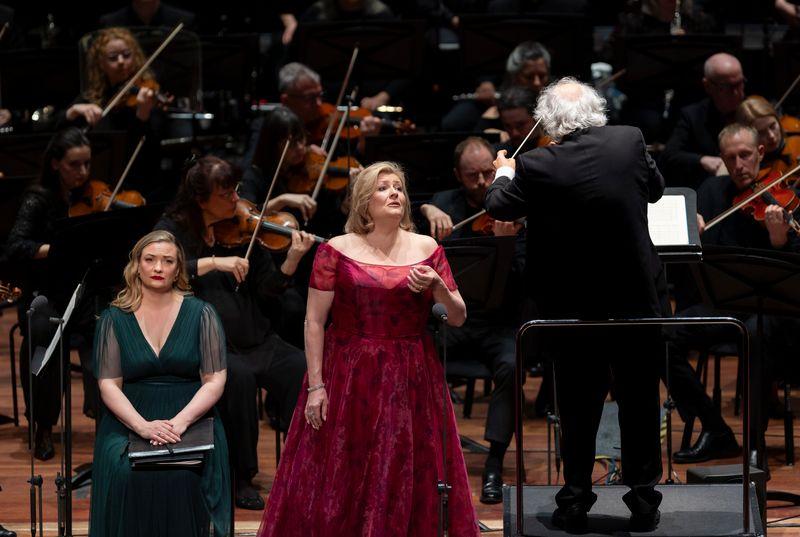
Top marks to the singers, too. The Edinburgh Festival Chorus were on their finest form, with all the words glowingly clear, and it probably wasn’t their fault that their first entry was a bit too loud to qualify as pianissimo. Jennifer Davis sang the soprano line with bright, spiritual intensity, and Karen Cargill was a radiant, focused, mezzo, sounding plausibly childlike in “Urlicht”.
It, therefore, seems a bit churlish to quibble at some details. The opening Walküre-ish outburst from the cellos and basses was grumbly rather than tightly together, and Runnicles’ way with the first movement was rather too pacy to be a convincingly deep meditation on death. And did Cargill really have to start singing before the gong stroke at the end of the Scherzo had fully faded away?
That said, Runnicles turned that speedy approach to his advantage in a second movement Ländler that was even more dance-like than normal, and he had an enormously persuasive way with the big paragraphs, summoning up a pile-driving climax to the anguished first movement, and understanding perfectly all the ebb-and-flow, control-and-release technique needed for the finale’s massive Day of Judgement panorama. Queries about details fall away when presented with someone who understands the overarching argument as well as him. This is a symphony on the largest scale that needs the grandest gestures and a conductor who knows the end from the beginning. In Runnicles we certainly had one of those.
- To be broadcast at a future date on BBC Radio 3
- More classical reviews on theartsdesk