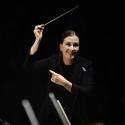
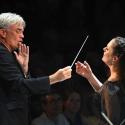
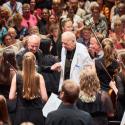
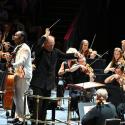
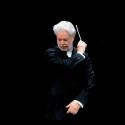
Being a great Mahler conductor is all about going the extra distance: the near-inaudible pianissimo, the seismic crescendo, the rhetorical ritardando; the accelerando that borders on reckless, the tempo change that crashes the gear-shift, the general pause that becomes a gaping chasm. Mahler took all the trappings of Austro-German music to the edge and back. His most successful interpreters do likewise. So, on the evidence of this Prom performance of the pantheistic Third Symphony, is Donald Runnicles a great Mahler conductor? Maybe not quite, not yet. But getting there.
The first movement of the Third Symphony remains one of Mahler’s most flabbergasting creations – and in the moments following the great opening summons from eight horns in unison where lowering trombones find a weary consonance and those same horns oscillate between two notes as if feeling for the beginnings of a chorale, Runnicles and the BBC Scottish Symphony Orchestra found the space and implanted the beginnings of something hugely atmospheric. Okay, so there weren’t the reserves of power in those string bass upheavals and he could have asked his trumpets to make something a little wilder of their unruly fanfares; likewise the yawning trombone glissandi. As I say, going the extra distance.
The best thing about Runnicles’s first movement was the wonder and delicacy with which he chronicled spring’s awakening – the little march which tip-toes before rip-roaring its way in. The “rabble” section was effective, too, with hooligan clarinets and rowdy uncoordinated drumming. But still those mighty cinemascopic releases didn’t ever quite muster the power to overwhelm and in the rampant presto to the finishing line the trumpets again needed to but didn’t give us all the brassiness they could muster.
The flora and fauna of the middle movements fared better, though the third movement’s woodland frolics weren’t exactly red in tooth and claw (a little Disneyfied) and the distant posthorn solos (beautiful) were simply not distant enough. Great efforts were made to open and shut the doors to the auditorium in order to effect the changes in perspective but in this of all halls somewhere more remote from the platform would have made for a more magical effect.
In the fourth movement Nietzsche setting I applaud Runnicles for resisting the received wisdom from some quarters that the rising semitones in cor anglais and oboe should be played as slides. There are those who believe that the marking “drawn upwards” was Mahler’s preferred expression for portamento. I don’t trust the evidence (hearsay) and frankly when Mahler asked for slides he marked them as such. The bird-like cries here imply such an effect – the literal alternative is the wrong kind of ugly and distracting.
So what of the great closing adagio, arguably Mahler’s finest? Well, Runnicles had it steal in with a palpable sense of wonder and its rarefied atmosphere was beautifully drawn and maintained throughout. Better yet, he conveyed the movement’s gradual transition from deep inwardness to a more public expression of the love that passeth all understanding. The private caress that becomes the cosmic embrace. And the final sunset really was a glowing forte (as written) as opposed to a vulgar fortissimo (as so often interpreted).
The best thing about Runnicles’s first movement was the wonder and delicacy with which he chronicled spring’s awakening – the little march which tip-toes before rip-roaring its way in. The “rabble” section was effective, too, with hooligan clarinets and rowdy uncoordinated drumming. But still those mighty cinemascopic releases didn’t ever quite muster the power to overwhelm and in the rampant presto to the finishing line the trumpets again needed to but didn’t give us all the brassiness they could muster.
The flora and fauna of the middle movements fared better, though the third movement’s woodland frolics weren’t exactly red in tooth and claw (a little Disneyfied) and the distant posthorn solos (beautiful) were simply not distant enough. Great efforts were made to open and shut the doors to the auditorium in order to effect the changes in perspective but in this of all halls somewhere more remote from the platform would have made for a more magical effect.
In the fourth movement Nietzsche setting I applaud Runnicles for resisting the received wisdom from some quarters that the rising semitones in cor anglais and oboe should be played as slides. There are those who believe that the marking “drawn upwards” was Mahler’s preferred expression for portamento. I don’t trust the evidence (hearsay) and frankly when Mahler asked for slides he marked them as such. The bird-like cries here imply such an effect – the literal alternative is the wrong kind of ugly and distracting.
So what of the great closing adagio, arguably Mahler’s finest? Well, Runnicles had it steal in with a palpable sense of wonder and its rarefied atmosphere was beautifully drawn and maintained throughout. Better yet, he conveyed the movement’s gradual transition from deep inwardness to a more public expression of the love that passeth all understanding. The private caress that becomes the cosmic embrace. And the final sunset really was a glowing forte (as written) as opposed to a vulgar fortissimo (as so often interpreted).
- Listen to this concert on the BBC iPlayer for the next six days
- See theartsdesk's pick of the BBC Proms
- Read Igor Toronyi-Lalic's Q&A with Donald Runnicles