If there was love in the Royal Scottish National Orchestra’s Valentine’s concert, then it was very much of the doomed variety. There was Romeo and Juliet, of course, as imagined in Tchaikovsky’s Fantasy Overture, and Zemlinsky’s marvellously strange take on The Little Mermaid.
Zemlinsky’s Mermaid disappeared for decades until it was reconstructed in the 1980s, and that long absence might go some way towards explaining why it’s such a rarity in concert halls today. We audiences are the losers in that, though, because this 45-minute orchestral fantasy is a cascade of colours in which the listener can feel as weightless and fluid as the mermaid in her watery realm. Sure, it’s flawed - Zemlinsky can’t make up his mind whether he’s telling the story or evoking a mood, and there are plenty of wandering longueurs - but it’s a musical universe all of its own, and when the music is as thickly textured and lavishly upholstered as this then you can forgive any compositorial self-indulgence.
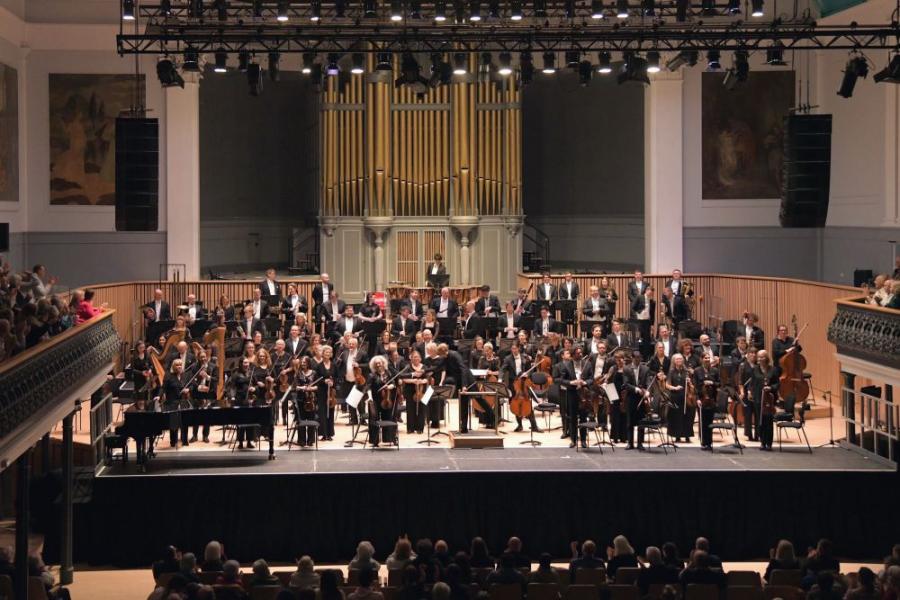
Conductor Kevin John Edusei’s painterly approach drew each episode with admirable clarity, which let the piece unfold with helpful directness, even if that inadvertently drew attention to the piece’s patchy coherence. The RSNO seemed to love getting the chance to play it, though, with every texture brought to kaleidoscopic life from the bottom of the brass and basses to the twinkling harps and piccolo that glittered at the top of the ball scenes. They also played up a storm in Romeo and Juliet, with plenty of breadth and sweep, and Edusei shaped it with an extra bass inflection here or a cheekily emphasized pause there so as to point up the drama.
There was also plenty of drama in Rachmaninov's Rhapsody on a Theme of Paganini, perhaps a little bit too much so when it came to pianist Makoto Ozone, who interpolated his own jazzy improvisations to spice up some of the piano’s solo passages. There can’t be many who would agree that Rachmaninov’s score is in need of much livening up, however, and Ozone got a bit carried away in some of his interpolations where less would definitely have been more. It was always fun to listen to, however, and the orchestra gamely went along with it, with playing of filigree delicacy in the outer movements and a lovely sense of mystery in the slower middle variations.