

Bach: Goldberg Variations BWV 988 Asya Fateyeva (soprano/alto saxophones), Eckart Runge (cello) Andreas Borregaard (accordion) (Berlin Classics)
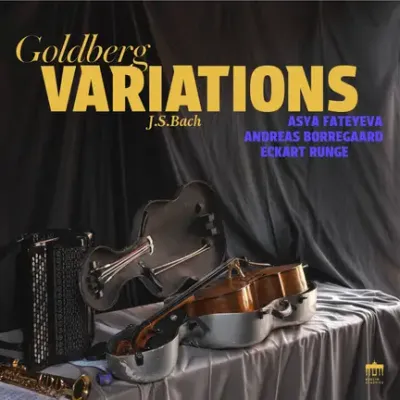
Bach’s “Keyboard exercise consisting of an aria with several variations for a two-manual harpsichord” from 1741 maintains its fascination, keeps on filling gaps and finding welcoming new places. Dmitry Sitkovetsky's string trio version (‘in memoriam Glenn Gould’) has become a staple of the repertoire. Wendy Carlos was the first of many musicians who might have been tempted to confess: “Forgive me father, for I have synthed.” And Jeremy Denk’s 2012 NPR essay ‘Why I Hate The Goldberg Variations (because they are “preternaturally happy, cheerful, perfect, organized, clean, boring, popular”) is essential reading.
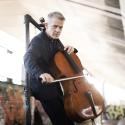
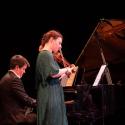
The group assembled here (release date is 29 May) describe in their liner note how they have been exploring together the ways to adapt the work for their combination of saxophone, cello and accordion since 2017, and to make it a part of their musical lives. Cellist Eckart Runge was the lynchpin of the prestigious Artemis Quartet from its foundation in 1989 until 2018. Danish accordionist Andreas Borregaard is the dedicatee of the multimedia work “My favourite piece is the Goldberg Variations” (2021) by Philip Venables. For me, the main interest in this recording is to hear Crimean-born, Hamburg-resident saxophonist Asya Fateyeva take us (happily) a world away from the nasal and sour saxophone sound which has become rooted in the UK, and treat the listener to a much warmer timbre, with utterly secure tuning, and a leader-ish quality. It’s indefinable but it’s definitely there. For a taster of how that totally assured, stellar solistic voice stands out in this chamber context, try the wonderfully life-affirming Alla Breve variation 22 (Track 23). Yes, Asya Fateyeva is a star. Sebastian Scotney
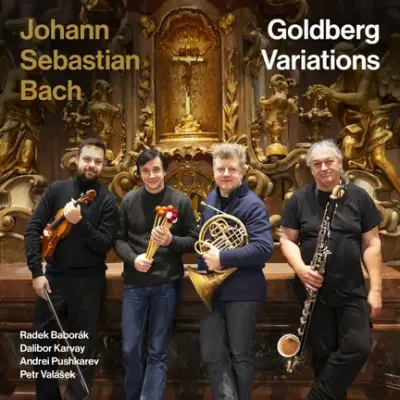
Bach, arr. Tomáš Ille: Goldberg Variations Radek Baborák (horn), Dalibor Karvay (violin), Andrei Pushkarev (marimba), Petr Valášek (bass clarinet) (Animal Music)
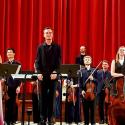
Czech composer Tomáš Ille’s reimagining of Bach’s Goldberg Variations was premiered in 2017, its first incarnation scored for violin, horn, bassoon and guitar. While I’d love to hear what that version sounds like, I’m more than happy with the revision used for this 2025 recording, the bassoon and guitar replaced by bass clarinet and marimba, the latter presumably for balance reasons. What’s alluring about this particular combination is the instrumental blend, or, more specifically, the lack of it. Each voice has such a distinct identity, and the unpredictability with which Illes assigns different lines leads to plenty of ear-tickling moments, and many passages where it’s impossible not to giggle.
Illes confounds our expectations, with Andrei Pushkarev’s marimba far more than a keyboard substitute and Petr Valášek on bass clarinet playing unfeasibly high at various points. Radek Baborák’s agility is a given (listen to his effortless lip trills in Variation 14), and violinist Dalibor Karvay slips in out of focus to magical effect depending on which line he’s playing. Sample Ille’s exquisite Variation 16, recast as a lonely violin and marimba duet. That number segues into a virtuosic take on the little “Ouverture” which pops up halfway through the sequence, with outlandish horn and bass clarinet solos competing for attention. Variation 25 is another gravely beautiful violin and marimba duet, and the “Quodlibet” is a rousing four-part romp. Big-hearted fun, and very nicely recorded to boot.
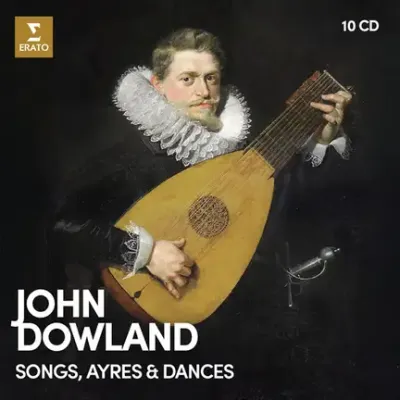
John Dowland: Songs, Ayres and Dances Various artists (Erato)
This year is the 400th anniversary of the death of song-writer and lutenist John Dowland (c.1563-1626) and, among many new recordings of his music, comes this 10-disc box set from Erato of releases from between the late 1960s and the early 2020s, although mostly bunched around the 1980s and 1990s. Considered one of the great musicians in the whole of Europe (although never truly appreciated in his homeland), Dowland’s music is predominantly bleak in tone and these discs are perhaps best sampled in small doses to avoid being sucked down into an Elizabethan melancholy. Indeed, discs 9 and 10, which feature more non-Dowland than Dowland offer welcome variety, putting Dowland’s gloom alongside perkier contemporaries like Thomas Campion and Anthony Holborne.
The music on these discs is mainly solo songs accompanied by lute, with some solo lute music and occasional viols. The voices range from the pioneering countertenor Alfred Deller (recorded in 1949) to his modern successor Phillipe Jaroussky (2021), via Emma Kirkby and specialist early music groups like the Boston Camerata. There is something here for all tastes. The Deller tracks on disc 4 are an interesting historical artefact on a disc that is mainly Emma Kirkby, a rare female voice among the countertenors. Her diction and clarity are heard well in “Can she excuse my wrongs?”, which she takes at quite a lick. James Bowman’s “In darkness let me dwell” on disc 9, by contrast is lingering and wistful (although the recording is quite distant) and I enjoyed the tenor Nigel Rogers (disc 6) from 1988 in “Flow my tears”, probably Dowland’s greatest song, which he treats with simplicity and sincerity.
Of the non-solo song inclusions, there is an interesting foray into Dowland’s sacred music for vocal ensemble by Pro Cantione Antiqua (still in Dowland’s familiar lamenting mode), and into the instrumental music by Virelai on disc 2 – “Mr Bucton’s Galliard” a rare and welcome moment of levity. This is also heard on the Fretwork album with countertenor Michael Chance with viols in place of lutes. Perhaps my favourite of the discs, it goes on a journey from the pained instrumental “Lachrimae Antiquae”, on which “Flow my tears” was based, through a rare song not in English (“Lasso vita mia, mi fa morire”) to lighter dances at the end. It also includes the piece whose punning title encapsulates the composer’s work, “Semper Dowland, semper dolens” (“ever Dowland, ever doleful”) – and suggests that we should perhaps actually be pronouncing his name to rhyme with “lowland”. Bernard Hughes
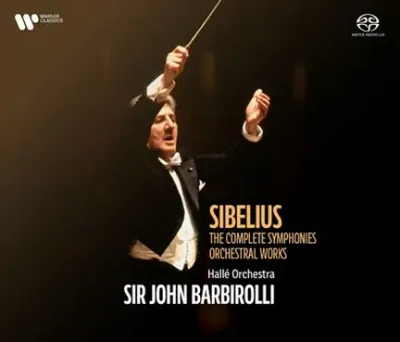
Sibelius: The Complete Symphonies, Orchestral Works Hallé Orchestra/Sir John Barbirolli (Warner Classics)
Sir John Barbirolli started conducting Sibelius’s symphonies in the 1930s, first recording No. 2 during his tempestuous spell leading the New York Philharmonic. The composer was sent a copy on 78s and was duly impressed, writing to thank the conductor as a “devoted admirer”. Back in the UK, Barbirolli recorded symphonies 1, 2, 5 and 7 in the 1950s with his Hallé Orchestra, lively performances which reappeared in Warners’ big Barbirolli box set. Better still was a 1962 remake of No. 2 with the Royal Philharmonic, superbly played and wonderfully recorded, and currently available on the Testament label. And, between 1966 and 1970, Barbirolli finally set down a complete symphony cycle for EMI with the Hallé. I like these late performances, despite their quirks. Tidiest is a disc of orchestral works, with snarling, raw brass in Finlandia and a jaunty Karelia Suite. Pohjola’s Daughter, still a relative rarity in concert programmes, is also marvellous, a work as impressive as any tone poem by Strauss.
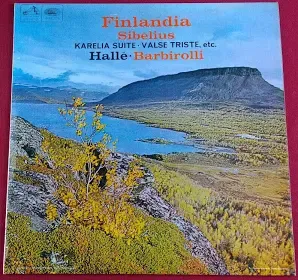
Other short works are dotted among the six discs. Four movements from Sibelius’s Pelléas and Mélisande incidental music are impressive; Barbirolli’s “At the Castle Gate” is incredibly imposing, as are two movements from the first set of Scénes Historiques, the huge brass eruption in the “Scena” sounding here like Janacek. Rarer still is the three-movement Rakastava suite from 1912, Barbirolli drawing tender playing from the Hallé strings.
Warners have ordered the symphonies in order of recording dates, a factor which becomes more pertinent as you work through the box. Barbirolli’s remakes of Symphonies 1, 2, 5 and 7 were taped in 1966 along with the orchestral works. They’re all very enjoyable: 1 and 2 intensely romantic but fiery, the expansive tempi invariably feeling right. No. 5 is one of my go-to performances, despite a scrambled first movement coda; the closing minutes of the finale are alarmingly intense, the hammer blows a magnificent release of tension. The end of No. 7 is similarly hair-raising, though I’m not convinced by Barbirolli’s abrupt handling of the final C major chord.
Symphony No. 4 followed in 1967, Barbirolli finding abundant warmth and humanity in a score which can feel oppressively dark, the slow movement’s big tune glorious when it eventually appears. Two years passed before Symphony No. 3 was taped, Barbirolli’s reading heavy-footed and occasionally imprecise (there’s a spectacular horn fluff near the start of the symphony). The first movement is far too slow, sounding alarmingly like a rehearsal take, but, to me, it sort of works, and the end of the finale is weighty but exhilarating. Symphony No. 6 appeared in the last concert which Barbirolli conducted in May 1970 and the recording was made shortly afterwards, just two months before his death. Expansive speeds are less of a problem in this work, and this distinctly autumnal performance hangs together very well.
So, an idiosyncratic but very loveable cycle, very well recorded in Abbey Road and Kingsway Hall. To quote an iconic cinematic lawyer, “it’s the vibe of the thing”, and Barbirolli consistently nails the Sibelian vibe, even in his final months. This set has been reissued at budget price before and now appears in remastered SACD form at a significantly higher price. The sound is impressive: clear, with excellent stereo separation. Great, then, but possibly one for connoisseurs only. Warners have a stupendous 1970s Sibelius cycle with Paavo Berglund conducting the Bournemouth Symphony Orchestra, noticeably better played than Barbirolli’s and in stunning analogue sound – maybe those recordings (including a spectacular Kullervo) should have been given the SACD treatment instead?
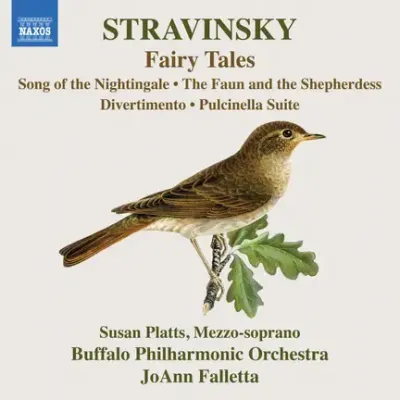
Stravinsky: Fairy Tales Buffalo Philharmonic Orchestra/JoAnn Falletta, with Susan Platts (mezzo) (Naxos)
For all that Stravinsky is one of the most widely-recorded of composers, there are always neglected corners to find, and this album does that under the guise of grouping together “fairy tales”. Certainly stories of the supernatural interested Stravinsky in his early years (less so as he got older) but it’s a bit of a stretch to include Pulcinella, but not, say, Petrushka, which is definitely supernatural – but also one of his most recorded pieces.
Pulcinella is also well-represented in the catalogue, and this recording of the suite by JoAnn Falletta and her longstanding partner orchestra, the Buffalo Philharmonic, is fine, but not going to supplant my favourites, which include Christopher Hogwood with the St Paul Chamber Orchestra and Pierre Boulez with the Orchestre National de France. In both these cases the recording is of the complete ballet, with all movements and singing included, rather than the watered-down suite, which I can see is easier to programme in concert – but when you’re listening at home, why not treat yourself to the real deal?
The Boulez recording is also paired with The Song of the Nightingale, which is likewise an orchestral suite in which Stravinsky eliminates the singing of the original opera. It’s a piece with an interesting history – Stravinsky wrote the three acts either side of the seismic shift in his style of Petrushka and The Rite of Spring. The suite comes only from the later acts, but has little trace of the pounding dissonance of The Rite. It is nonetheless beautifully orchestrated and Falletta connects with the drama – the opening in particular is full of fire – and the wistful ending also well-captured.
If Pulcinella is – despite Stravinsky’s protestations – in reality no more than a fancy arranging job, his use of Tchaikovsky in The Fairy’s Kiss is rather more complicated and interesting. The end result sounds like neither Tchaikovsky or Stravinsky, and it’s always been a bit of a black sheep in his output. Once again here we get the suite rather than the full ballet (I like Neeme Järvi’s 1980s recording of the whole thing with the Royal Scottish National Orchestra) and there is nice playing, particularly in the final pas de deux.
But the big win on this album is the earliest piece represented, the three-movement song cycle Faun and Shepherdess, which Stravinsky wrote as a wedding present for his first wife – and first cousin – in 1906. Later in life the composer described it as “Wagner in places… but never like Rimsky-Korsakov… and like Stravinsky not at all.” It’s certainly not the Stravinsky who emerged only a couple of years later, but taken on its own terms it’s a little gem of Russian orchestral song-writing. Stravinsky had only been studying with Rimsky-Korsakov a short time, but the older composer already recognised his promise – and the Buffalo players are alive to every twist and turn of the music, and mezzo Susan Platts is terrific. This piece, at least, is a keeper. Bernard Hughes



Add comment