

Aside from the happy accident of longevity, something that set Bach and Handel and Telemann apart from their contemporaries was fluency. I’m speaking here of musical rather than verbal tongues: the least polyglot of them was Bach, with his command of four languages, German, Latin, French and Italian, in decreasing degrees of facility. While Handel criss-crossed Europe, Bach and Telemann anchored themselves in small areas of central and northern Germany respectively.
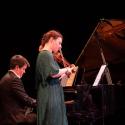
Yet the world came to them. Bach especially composed in French and Italian with mother-tongue fluency, albeit a strong German accent. From the playful ornamentation of the Aria onwards, acute one moment, grave the next, Pavel Kolesnikov’s account of the Goldberg Variations at the Wigmore Hall spoke musical French like a native. It seems unfair to credit composer or artist more than each other: for a brief hour and a half, they met and made us at home, in a piece whose essence is the paradoxical art of showing off in private.
On a technical level, Kolesnikov employed the same personal kind of harpsichord-oriented technique that distinguished his 2018 album of Louis Couperin. Predating the Goldbergs by two decades, Couperin’s nephew François composed a variation cycle, Les folies françaises of 1722, and its portraits of human frailty, appraised keenly but without stern judgment, came to mind more than once. In common with a few other young pianists unafraid to reclaim baroque music for their modern-Romantic instrument, Kolesnikov respects the quicker decay, the falling cadences and bell-like clarity of music essentially conceived with harpsichord in mind, translating it into the idiom of the piano rather than making any vain and literal attempt to render the tone of one instrument on another. A couple of right-hand notes picked out towards the end of the Aria rang like faraway bells, establishing a tonal theme which receded and then advanced through the course of the 32 variations.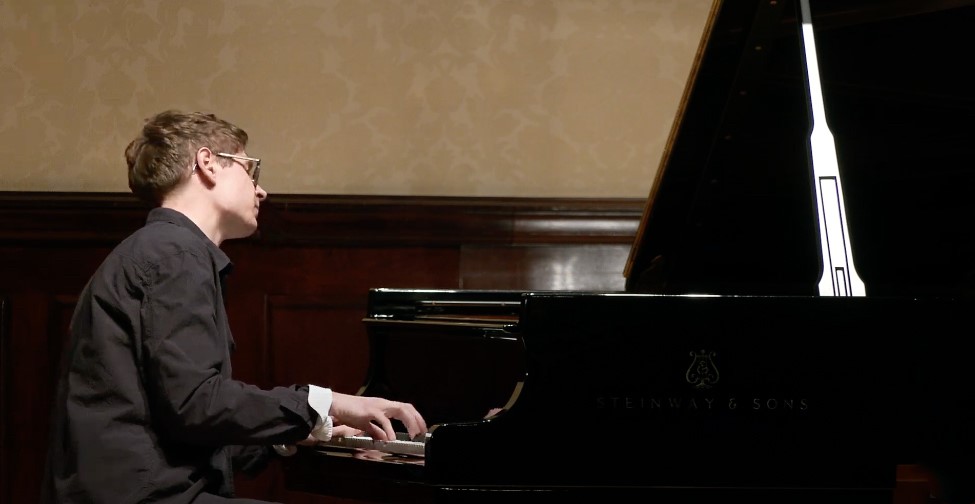 Les Goldbergs en français, harpsichord on piano: the art of translation in Kolesnikov’s hands is very much in the style of Chapman’s Homer, or Dryden’s: confident of treating the text as a springboard and not a trawling net. The Canon at the fifth which brings the Variations to its still halfway point began in imposing fashion, articulated as if to awe a congregation into submission like an organ fugue or a Lutheran sermon. Even before its much quieter reprise, however – and while taking all the repeats Kolesnikov never quite said the same thing twice – the rhetoric began to wind down and turn inwards, until the music’s inner contrapuntal mechanism simply stopped.
From this and other, personal touches of rubato in the left hand you might not guess that the pianist’s approach to the Goldbergs arose from an encounter with the choreographer Anna Teresa De Keersmaeker. Perhaps he played more strictly when they toured the piece together last summer, or on his recent Hyperion recording which the concert served to promote: I couldn’t say. What last night’s performance communicated was a one-off engagement in the spirit of “joyful wisdom” which Nietzsche identified as the “unity of singer, knight, and free spirit which distinguishes the wonderful early culture of the Provençals”. Such an engagement is necessarily provisional, and if Kolesnikov plays the Goldbergs again tomorrow or in 10 years’ time they will surely sound quite different, and all the better for it.



Add comment