There is genius not only in the rainbow hues of Pavel Kolesnikov’s playing but also in the way his chosen programmes resonate. He’s given us interconnected wonders from across the centuries, but chose to focus on the greatest of composers for the piano in only his third such recital. His first all-Chopin concert was given in sentimental homage to his birthplace, Novosibirsk; the second was a BBC Lunchtime Prom of Mazurkas; and this third, under circumstances even more exceptional than the Prom, brought light to his first UK audience after lockdown – a privileged 25 of us each evening.
In impeccable English – London has long been his home – Kolesnikov celebrated his return to public performance by underlining how Chopin disliked recitals before large audiences and discovered more about what he'd composed when he played in the salon. But Chopin's is never “salon music” in the disparaging sense; given the right sequence, it creates a universe which resounds from the depths of despair to the music of the spheres.
W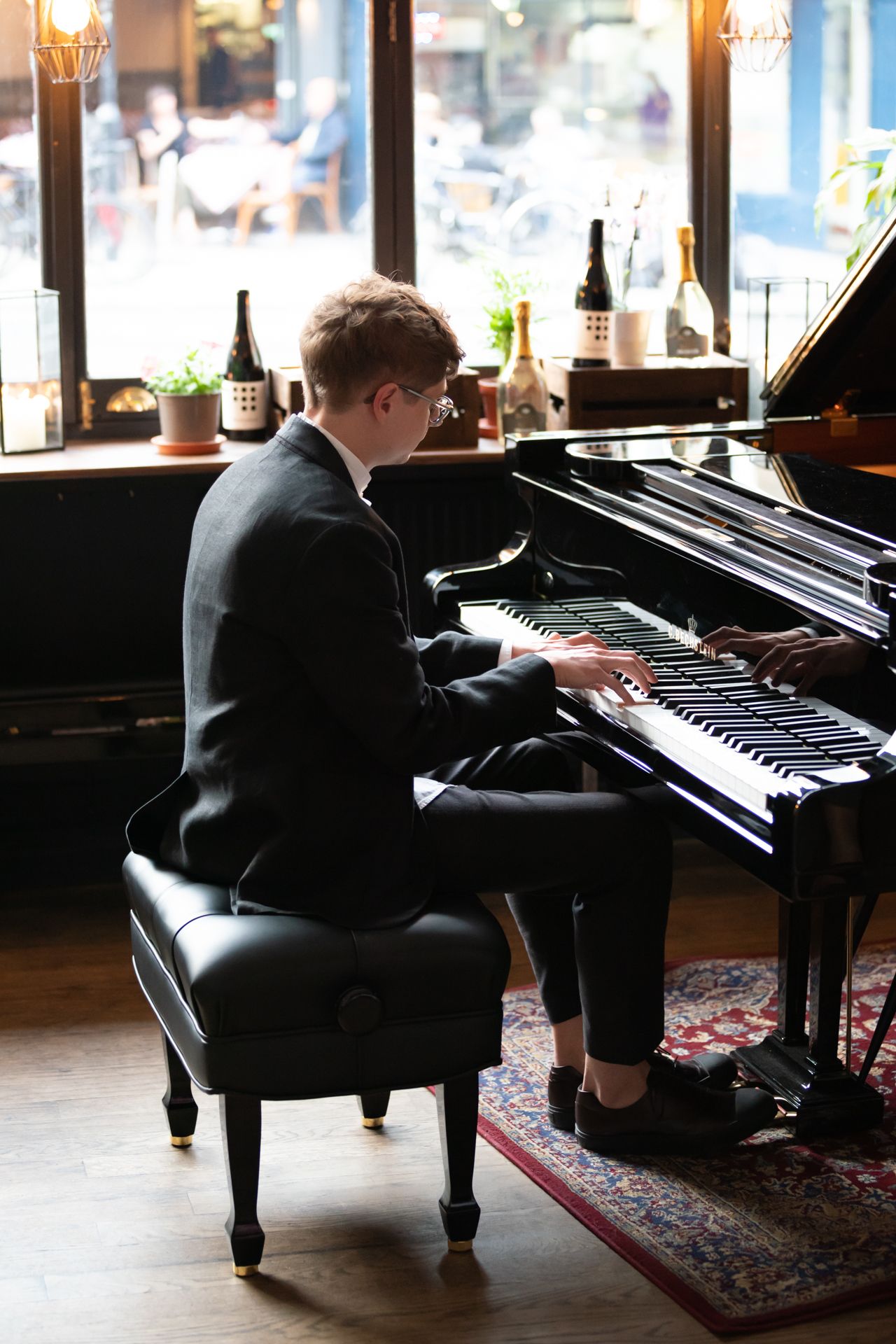 e’ve had recitals of huge scope in the Fidelio Orchestra Café already: Steven Isserlis’s Bach, searing sonatas by Beethoven and Janáček from Alina Ibragimova and Samson Tsoy. The statement of intent was clear here in the launch of a C sharp minor trilogy – Polonaise Op. 26 No. 1, Nocturne Op. posth., Fantaisie-Impromptu. Kolesnikov told us he’d agonized over where to put the exquisite E flat major Valse, another “Op. posth.”, discovered only in 1955, until on the way to the venue he realized he should place it as a preface. An immediate encore would not have been appropriate after the clear thunder of the C minor Etude, Op. 25 No. 12, shaking the venue's foundations.
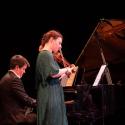
With Kolesnikov, no repeated phrase ever sounds like its first appearance; what happens in the middle of a piece changes any return of the main subject-matter. Profoundly, for the first time, in the A flat major Impromptu, and even more so – albeit as a given – when the repeated A flats form a bridge to the tragic juggernaut which sweeps over the fragile consolation of the D flat major Prelude, but doesn’t destroy it. This was the core for a pianist who understands Chopin’s interweaving of heaven and hell. The demonic leapt out unexpectedly sometimes, in the giddy revolutions of the C sharp minor Valse; nothing merely pretty or ethereal here, more a Mephisto Waltz. Fantasy and wit came later, in several Mazurkas, while restlessness coming to a poetic halt struck with exceptional vividness in the A flat Impromptu and G sharp minor Etude, Op. 10 No. 5, with its sudden ray of light at the end. 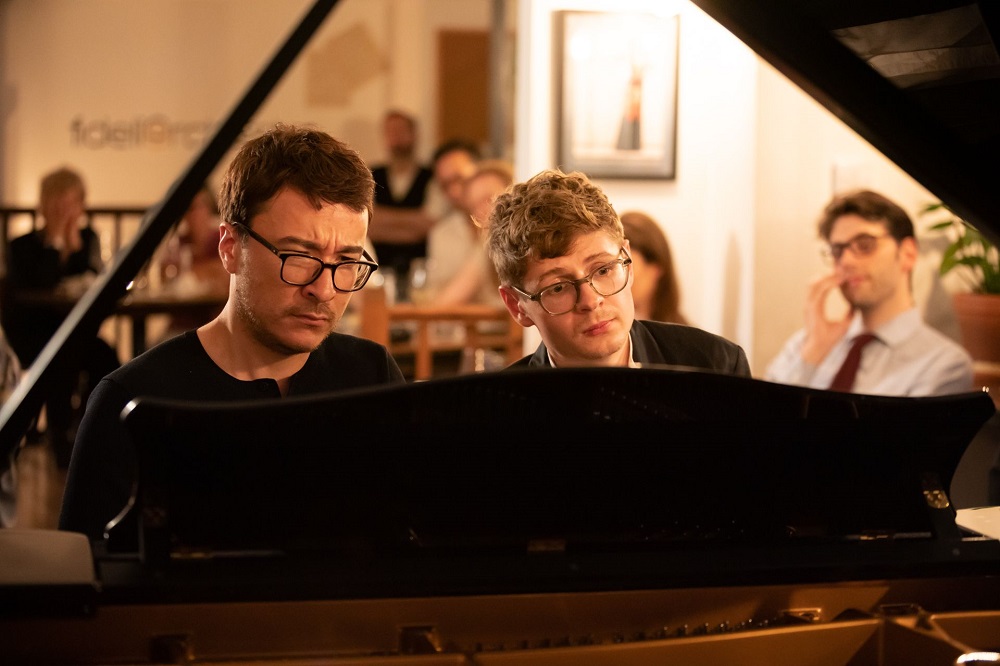 Encores, when they came much later, before and after dessert (citrus olive oil cake with saffron mascarpone cream, as original a mix of flavours as anything in Alan Rosenthal’s consistently fine menus), turned out to be unusually rich. The second movement of a G minor Sonata by C P E Bach provided another meditative turn inwards; it always amazes me how the great artists in this series pull focus from the variable traffic and human life humming outside the cafe windows on the Farringdon Road. And there was a return to the Wigmore Hall programme Kolesnikov shared with partner Tsoy back in June (the two pictured above at the Fidelio Orchestra Cafe), in the poignant depths of the Schubert F minor Fantasie, but this time with an audience. So colossal is Schubert’s contrapuntal expansion of horizons towards the end that you wonder if another fragile melody is ever to return. It did, and how poignantly, another impression to fortify us through the difficult months.
- This week's performer at the Fidelio Orchestra Cafe from tomorrow is the pianist Louis Schwizgebel. Further details on the website
- More classical music reviews on theartsdesk