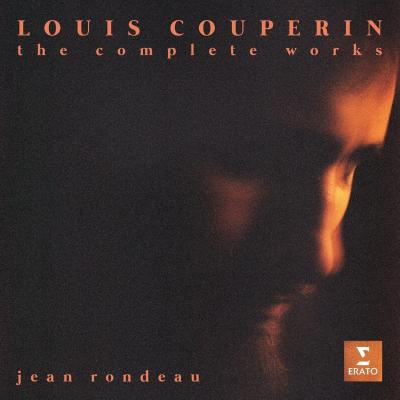
Louis Couperin: The Complete Works Jean Rondeau (harpsichord, organ and artistic direction) (Erato)
Louis Couperin (1626-1661) was the first musically and historically significant member of the Couperin family, long overshadowed by his nephew François. Harpsichordist Jean Rondeau, this handsome box set’s driving force, contributes a useful pocket biography in which he compares Louis to Mozart. Aside from the fact that both composers died aged 35, Rondeau considers Louis to have been “a genius who brought a new style to light”. Born in the Brie region of the Île-de-France to a musically active family, a chance encounter with Louis XIV’s splendidly-named court keyboard player Jacques Champion de Chambonnières led to him moving to Paris in 1651 and becoming a full-time musician, his roles including an important position as organist at the church of Saint-Gervais and as a viol player in the royal court. Though a prolific composer, none of Louis Couperin’s music was published in his lifetime, most of it rediscovered in the 20th century and none of it in the composer’s hand. Rondeau even suggests that some of the pieces in this collection are the work of Louis’s talented younger brother Charles, the father of François.
Harpsichord and organ music dominate these ten discs, with additional works from a swathe of other composers active in 17th century Paris. I’d not come across Ennemond Gaultier before hearing his imposing, melancholy “Tombeau de Mésangeau” on the first of the ten discs. Then listen to a magical viol transcription of the same work on the fourth disc, after encountering the tiny “Pange Lingus Gloriosi by one Guillaume-Gabriel Nivers, an austere delight. As an entry point, try the four harpsichord suites on the ninth CD, three of them beginning with a rhapsodic unmeasured prelude. Rondeau relishes the metrical freedom though acknowledging that “the absence of a rhythmic framework must be counterbalanced by a clear narrative”. They sound marvellous here, and I love the grace which Rondeau finds in the dance movements; the Suite in Fa’s “Allemande” and “Gigue” sound resplendent here. I’ve rarely heard a harpsichord sound so warm and rich, and it’s significant that the recordings, made using a variety of instruments in four different church settings, were mostly made using just a pair of well-placed microphones with no knob-twiddling.
The second disc is my favourite, Rondeau joined by the Ricercar Consort. Violist Pierre Pierlot’s transcription of another F major suite is a treat, and even the briefest pieces ooze personality. A tiny Simphonie par Mr. Couperin lasts little more than a minute, a work so enchanting that you’ll find yourself listening to it on repeat. Discs 4 and 10 include imposing organ pieces alongside sacred music and intriguing instrumental numbers. Sackbuts and cornetts feature, as does a bass dulzian, the predecessor of the modern bassoon.
Erato’s thick booklet is a joy to peruse, containing scores of session photos and detailed descriptions of the various harpsichords and organs which Rondeau uses. Place the individual CD sleeves on the floor in order and they form a portrait of Rondeau’s face – a daft but endearing design quirk. Do watch the bonus DVD and read his epilogue, Louis Couperin and Peace, an unashamedly personal and moving account of his discovery of Louis Couperin’s music and an explanation of how listening to and enjoying the music of the past can enhance our lives. If you’re reading this review, you presumably understand that already, so snap up this life-enhancing release while you can. In Rondeau’s words, “may these dances lead our souls away from impending decline.”
Britten: Young Person’s Guide, Les Illuminations, Courtly Dances from Gloriana, Sinfonia da Requiem Orchestre Philharmonique de Monte-Carlo/Lawrence Foster, Julie Roset (soprano) (Alpha Classics)
Here’s an album of three of my favourite Britten pieces – plus a welcome fourth – by an orchestra and conductor I was previously unaware of: the Orchestre Philharmonique de Monte-Carlo and Lawrence Foster. Marking the 50th anniversary of the composer’s death, there are three pieces written between 1939 and 1945, the time of the real blossoming of Britten’s career, plus the dances extracted from the opera Gloriana, commissioned for the Coronation in 1953. Lawrence Foster (b.1941) is an American conductor of Romanian heritage who has forged much of his career in Europe, especially in France. The orchestra was formed in 1856, even if it’s new to me, and this album features decent performances both instrumentally and, in Les Illuminations, vocally, in the form of soprano Julie Roset.
Britten’s Young Person’s Guide is a favourite orchestral showpiece and is played here neatly and convincingly, if not with the swagger that the very best recordings have. It is, for me, an irresistible piece, not least in “that moment”: the brilliant return of the Purcell theme as the crowning climax of the final fugue. It’s one of the great coups de theâtre in the orchestral repertoire and I can only imagine Britten’s glee when he came up with the idea. Here the fugue is appropriately fleet and frisky, if not as fast as it’s sometimes heard, and although I enjoyed the present tam-tam as the brass enter, the moment doesn’t quite hit like it can, the trombones don’t quite sing through. For an idea of how fast it can go, and how the ending can fly, check out Simon Rattle and the Berlin Philharmonic on YouTube.
The song cycle Les Illuminations, setting Rimbaud, is most commonly heard with a tenor (and string orchestra), although its premiere in 1940 was actually by soprano Sophie Wyss. There was an excellent recording by Mary Bevan and 12 Ensemble on Signum in 2024, and this is another very good upper-voice performance, by Julie Roset. The strings are greater in number than on Bevan’s recording, and the sound a bit more present. Roset is terrific, whether in strident or confiding mode, although I probably slightly prefer Bevan’s darker colours. It’s a fabulous cycle though – Britten wrote so well for strings – and this performance is well-shaped in both voice and ensemble.
The “Courtly Dances” from Gloriana are an off-cut from one of Britten’s few flops, but work well as a “third movement” on this album, a lighter interlude before the seriousness of the Sinfonia da Requiem. The dances, with their cod-Elizabethan harmony spiced with dissonances, are quite dark in tone, and by no means easy listening. But the highlight of the whole album is the last piece, the Sinfonia da Requiem of 1939. Right from the off there is a real determination, a sombreness in the percussion and low strings, a captivating intensity and singlemindedness in the playing. The timpani is excellent, the low brass ground the whole sound, and the strings are sonorous and relentless – and the last movement finds a wonderfully fragile resolution. This is a really good performance. Bernard Hughes
Holst: The Planets, Bax: Tintagel London Symphony Orchestra/Sir Antonio Pappano (LSO Live)
Arnold Bax enjoyed a shoutout in the Guardian a few weeks ago, and here’s a lustrous new recording of his tone poem Tintagel. Getting to know Bax’s seven symphonies is an ongoing project for me, but I’ve loved this depiction of a Cornish seascape for years. That big swooping horn theme at 1’20” is resplendent in this performance, Antonio Pappano’s LSO sonorous trombones ushering the theme in with some style, a moment of such magnificence that you wonder what can follow it. In that sense Tintagel is reminiscent of Strauss’s Also sprach Zarathustra, the conductor having to work hard to sustain listeners’ interest once the heat has died down. Though Bax, unlike Strauss, does bring his big tunes back in the closing minutes. Pappano does a good job in the slippery central section, an abundance of atmosphere making up for a lack of singable tunes, and the brassy coda is rousing. Full marks to LSO Live’s production team for taming the dry Barbican acoustic, but, for a true Baxian sonic spectacular, try Bryden Thomson’s ripe Chandos version with the Ulster Orchestra.
This album places Tintagel after Holst’s “Neptune” when it works rather better as a curtain-raiser for an extrovert performance of The Planets. “Mars” has bite and momentum and “Venus” swoons. Especially impressive is the weary processional in “Saturn”, lower brass dragging their feet before the shattering central climax, and this “Uranus” has black humour in spades. Tenebrae are on hand to provide the distant vocals in “Neptune”, the final fade immaculately handled. This is a really enjoyable disc, beautifully annotated and packaged.
Mahler: Symphonies 1-9 Czech Philharmonic Orchestra/Semyon Bychkov (Pentatone)
Early instalments in Semyon Bychkov’s Mahler Cycle started appearing in 2023 so it’s surprising to see the set boxed up at budget price so soon, especially given that these performances of Symphonies 6-9 haven’t been available before. You’d expect the Czech Philharmonic to sound at home in this repertoire: Mahler was born in Bohemia and spent his formative years in the Czech city of Jihlava, then part of the Austrian Empire. Bychkov’s Symphony No. 1 starts beautifully, the offstage trumpet calls perfectly placed, Mahler’s soft horn chorale the warmest wakeup call imaginable. Pentatone’s spacious engineering is a consistent pleasure across these performances: everything is audible without ever sounding spotlit. The scherzo’s trio is delicious, with idiomatic string portamenti and a delectable contribution from the principal oboe. Bychkov’s third movement isn’t too slow and the crash at the opening of the finale is spectacular.
Symphony No. 4’s clean lines are another highlight, the Czech winds flawless in the first movement’s exposed counterpoint, strings warm and consoling in the long slow movement. The huge explosion near the movement’s close is impressive, and soprano Chen Reiss is winning in the symphony’s finale. No. 2 has an impressive choral contribution from the Prague Philharmonic Choir, and Elizabeth Kulman sings “Urlicht” beautifully, but the performance only catches fire intermittently. The 3rd Symphony fares better, with a magnificent trombone solo in the long first movement and a nicely balanced posthorn in Mahler’s quirky “Comodo”. Plus, a stellar turn from Scottish mezzo Catriona Morison in the fourth movement, though I’m still not convinced by the Bychkov having the principal oboe play their solos with exaggerated glissandi, which always sounds to me as if the player is about to keel over and collapse.
Things get progressively more exciting and distinctive in the later symphonies. Glorious brass playing in Symphony No. 5 won me over (horns and trumpets as good as any you’ll hear on disc), with a radiant chorale at the close of the second movement. Bychkov’s “Adagietto” is ideally paced, and the upbeat finale really dances through never being pushed too hard. No. 6 receives a colourful, less doomy performance than usual, with an exquisite Alpine interlude in the first movement’s development section. Bychkov places the scherzo second, always a plus in my book, and the huge finale is both exciting and coherent. Mahler’s hammer blows have plenty of impact, and listen out for a beautiful, elegiac trombone threnody in the final minutes.
Symphony No. 7 might be the best thing in this set, Bychkov’s reading well-paced and magnificently played. Tempi are shrewdly chosen; the opening never drags and the faster main theme romps along. Bychkov relaxes nicely into Mahler’s gorgeous second subject without ever losing sight of how harmonically bold this work is. The first movement’s last-minute resolution into a bright E major is ear-tickling here, followed by an atmospheric account of the first “Nachtmusik”. The scherzo isn’t as quirky as the best versions on disc, but the “Andante Amoroso” swoons and the finale is affirmative and exciting. I’ve long struggled with Symphony No. 8 but Bychkov’s big-hearted, spectacular performance needs to be heard. You really can hear everything, passages like the first movement coda jaw-dropping in terms of sonic impact. You’ll need a quiet sit down after listening to the closing “Chorus mysticus”.
Bychkov’s expansive Symphony No. 9 unfolds at a lower temperature but it’s wonderfully played. I like a bit more bite in Mahler’s fast inner movements but the daringly slow “Adagio” holds together, recalling Bernstein’s late DG performance with the Concertgebouw Orchestra. A pity that there’s no sign of Symphony No. 10 in fragmentary or completed form; the “Adagio” could easily have been accommodated in this 11-disc package. A very good mainstream Mahler cycle then, very well played and magnificently engineered. But I’d point anyone who wants to hear the Czech Philharmonic in this repertoire in the direction of Vaclav Neumann’s1970s Mahler cycle on Supraphon, his unhomogenised brass and winds more pungent, the analogue recordings full of punch. Or, even better, Karel Ancerl’s swift, raw account of Symphony No. 9, taped in 1966 and still available on a single disc.
Schubert: Symphonies 6 & 5 Deutsche Kammerphilharmonie Bremen/Paavo Järvi (Sony)
I’m always happy to hear a new Schubert Fifth Symphony, and there have been a number of good ones in the last few years, of which perhaps Maxim Emelyanychev’s 2024 release with the Scottish Chamber Orchestra is the pick. This current version by Paavo Järvi and the Deutsche Kammerphilharmonie Bremen is right up there and has much to recommend it – not least its pairing with the Sixth Symphony, which I think sits more comfortably alongside the genial Fifth than its more frequent companion, the “Unfinished” Eighth.
The first movement of Järvi’s Fifth has a good sense of intent, and a real attention to detail in the orchestral articulation, not least in the delightful dialogue between violins and low strings in the opening theme. It is a very concise and modest piece – I much prefer Schubert when he more brief and to the point – and the opening movement whistles by in breezy good humour. So much of the success or otherwise of a performance of Schubert’s Fifth is in the second movement, an Andante rather than a proper slow movement, and for my money, and within reason, the faster the better. The exemplar here is my favourite overall recording of the piece – Roger Norrington and the London Classical Players – who whistle through in 7:48: by comparison Järvi takes 9:17. But there is more to it than sheer speed. Järvi has the necessary forward momentum and lack of self-indulgence. He does more rallentando towards the ends of phrases than Norrington would dream of, but it is never over-egged, and many would prefer Järvi’s more relaxed tempo. The Menuetto – clearly inspired by Mozart’s 40th Symphony – is suitably springy here, if perhaps not quite demonic enough, while the finale is a return to the scampering fun of the opener, with a similar level of moment-to-moment characterisation.
The album is carefully billed as “Symphonies 6 & 5”, as the Sixth comes first – and that is a good decision. It is known as the “Little C Major” – by analogy with the “Great” Ninth Symphony. I much prefer the scale of the Sixth, finding the Ninth a bit indigestible, while enjoying the rhetorical flourishes of the slow introduction that are a foretaste of the later work. This is followed by a balletic, almost Tchaikovskian movement, with flutes to the fore, and the same dynamic variety as in the Fifth. Where the Andante of the Fifth is one of Schubert’s most introspective movements, the equivalent in the Sixth, also an Andante, is Haydnesque in its stately manners, and this is one of the most straightforwardly enjoyable parts of the whole album. Continuing Schubert’s tour of influences, the rapid Scherzo nods to Beethoven, with a muscularity a mile away from the Andante’s delicacy. After which the finale is more in the relaxed vein of the Fifth, the playing conversational and fluid. Järvi has contributed here an excellent addition to the discography of both symphonies, and the pairing is notably successful. Recommended – even if it doesn’t quite displace Norrington at the top of my list. Bernard Hughes
In Parallel: Works by Rachmaninov, Amy Beach and Alma Mahler Ariana Kashefi (cello), Petr Limonov (piano) (Champs Hill)
This a carefully and thoughtfully planned programme of works written around 1900 “in parallel” in different locations, which plays to the strengths of both Kashefi, a fine British-Persian cellist with a “beautiful tone” (Jessica Duchen, writing on this site) and Limonov, a Moscow-born pianist with a palpable empathy for Rachmaninov’s music – the main work being his Cello Sonata in a fine performance, especially of the gloriously romantic third movement, ‘Andante’, building towards and then retreating from a superb climax.
The album also deals highly imaginatively with the “conundrum” of the isolatedness of the Rachmaninov Cello Sonata (Op. 19), the last chamber work he completed. The solution proposed is a neat one, and it works well. Kashefi and Limonov go forward two opus numbers to Op. 21 for the album opener, a cello-and-piano arrangement of the song “Zdes’ khorosho”, which, unlike Yo Yo Ma, Kashefi wisely takes down the octave from the violin arrangement. Then forward a couple more opus numbers to Op. 23 for a piano piece arranged by the dedicatee of the cello sonata, Anatoliy Brandukov. The Rachmaninov “Prelude Op.23 No.10” is an absolute highlight of the programme, with a wonderful sostenuto, a climax about halfway which sounds like a perfect take, wonderful cantabile playing high up on the A-string, and a beautifully controlled decrescendo to the end.
‘Morendo’ endings do risk becoming a habit on this disc, with all three of the 1898 Amy Beach pieces either stating the term or implying it, and Kashefi and Limonov planning and executing each of these graceful retreats with due care, politeness and control. Alma Mahler’s song “Die stille Stadt” from 1901 is played here with real poise and elegance. It is also wonderful to hear a programme of chamber music played and recorded in the intimacy of the concert room at Champs Hill. The surroundings give real immediacy and authenticity to all of the emotion and expressiveness in Kashefi’s playing and allow her fine sound to be heard to great advantage. Recommended. Sebastian Scotney
Live at the Queen Elisabeth Competition: works by Mendelssohn, Liszt, Sokolović and Mozart Nikola Meeuwsen (piano), Orchestre Royal de Chambre de Wallonie/Vahan Mardirossian (Fuga Libera)
Having just turned 24, Dutch pianist Nikola Meeuwsen is well on his way. Born in the Hague in 2002, he won a Steinway Competition in 2012, a Royal Concertgebouw Competition in 2014, and the Concertgebouw Young Talent Award at sixteen in 2019. A major London agent has just snapped him up, and rather fittingly announced the signing on Mozart’s birthday earlier this year. Meeuwsen has also been appointed Artist-in-Residence for Janine Jansen’s International Chamber Music Festival in Utrecht. This new disc documents a major event in his journey: he won first prize at the Reine Elisabeth Competition in Brussels last summer, and this live recording is of his semi-final programme, complete.
There is a wonderful cleanness and seriousness about the opening work, Mendelssohn’s Variations Sérieuses, which have made me excited to hear his Bach and/or his Haydn. Liszt’s Dante Sonata has not just a superb sense of the pacing, shape and scale, but also a clarity in the voicing which recalls Jorge Bolet. Meeuwsen also brings the right stuff to each of the two studies which the competition organisers commissioned from the Serbian-born Montreal-based composer Ana Sokolović: he neatly solves the puzzles of the first, and digs into the rhythms of the second.
In the Mozart “Jeunehomme” concerto, the depth and concentration and also the natural elegance he achieves, especially in the central C minor ‘Andantino’ movement are memorable. In particular, Meeuwsen makes something utterly glorious out of the longer of the two cadenzas (the “B” cadenza) that Mozart wrote for this movement… but then, I suppose… it’s a live recording, and one just has to make allowances for the fact that when he emerges gently from this intensely private world, the orchestra’s big ‘land’ marked ‘forte’ is, well, a bit agricultural. Above all, what this disc has captured is a key moment in the early career of a very fine musician indeed. His liner note essay is well worth reading too. He admits in it that in the last movement of the Mozart he was on such an “eiland van gelukzaligheid” (island of bliss) he came in an octave too high. Just like the way he plays, the way he writes is a model of friendliness, generosity, gratitude – and clarity. He’s going far. Sebastian Scotney