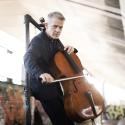
Yesterday I travelled through a sweltering London in shorts and sandals to go and hear Schubert’s Winterreise, about a bleak journey through a frozen landscape. It was quite the disjuncture, and a strange piece of seasonal programming. But I was glad to hear veteran baritone Thomas Hampson in fine voice in the Schubert, accompanied by Latvian accordionist Ksenija Sidorova, even if the second half of Kurt Weill and Astor Piazzolla was less fulfilling.
Singers eschewing the traditional pianist for the more unusual (in the classical concert hall) sounds of the accordion is all the rage at the moment. Only last year I heard a brilliant Benjamin Appl at the Wigmore Hall, accompanied by the Lithuanian virtuoso Martynas Levickis. Clearly part of it is a glut of excellent Baltic accordionists. Sidorova was brilliant as an accompanist, and in her two solo items in the second half, and her and Hampson together are perhaps the most handsome duo I have ever seen, if it isn’t too shallow to say so.
Winterreise, at whatever time of year, is well suited to the accordion, even if I suspect the sound might have palled if we had the full 85 minutes. Which is why I was happy with a selection of 14 numbers, even if that would have displeased the purists – in fact, I found the 45-minute first half a couple of songs too many. But on the whole I really enjoyed it, and Hampson remains in great form (I recently heard Willard White and was similarly relieved to hear a legendary singer who still has it). Hampson’s German was darkly coloured, with crisp final consonants and he has the ability to switch from stern gravity to a melting lightness, owning the stage with practised authority.
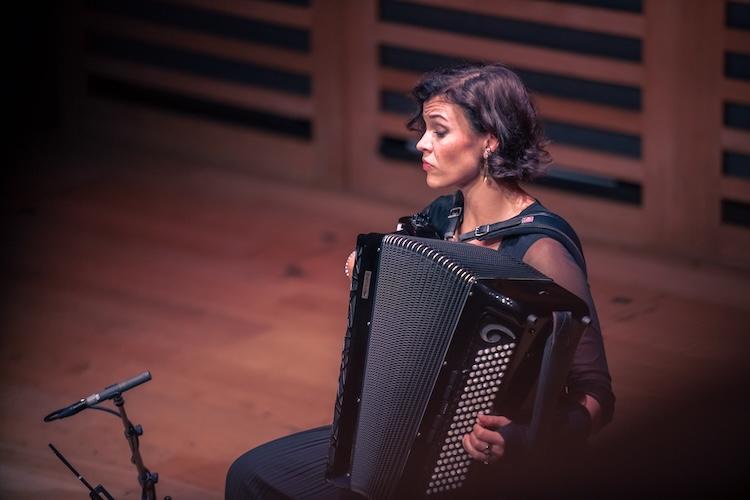
The accordion arrangement (which was uncredited in the programme – is it Sidorova’s own?) accommodated most of Schubert’s textures: the fleet figuration of “Erstarrung”, the trudging tread of “Gute Nacht” and the utterly bleak blankness of “Der Leiermann”. Only in “Die Post” was it unequal to the challenge, although Hampson was at his best in this song, the pain in his “Mein Herz! Mein Herz!’ was piercing.
The performance was slightly hampered by an impromptu lighting fail during “Der Lindenbaum” which drew a wry smile from Hampson as he sang, but for the most part it was all about the Romantic-era angst of Schubert’s interior journey, even if metres away Kings Cross was full of after-work drinkers having a good time in the sunshine.
After that, the second half was a bit thin. Two items from Sidorova alone – the inevitable Piazzolla and a new piece by Sergey Voitenko. You know what you will get with Piazzolla and we got it. It’s impassioned tango all the way down, Sidorova almost performing it as a dance, pouting and snapping her head to the side. The Voitenko was less characterful and not particularly memorable, nostalgic, full of longing. Fine, but no more than that.
Then we had four songs from Kurt Weill, of which “Mack the Knife” was the pick, half in German, half in English, and almost Schubertian in its directness. Hampson’s sense of menace under the apparent good humour and his elaborately rolled r’s where delicious. “Westwind” had an operatic ending in a night of chamber-scale singing, and “Speak Low” worked perfectly with accordion. But the second half, even with two encores (which should really have been part of the programme) was a bit thin and lacking in cohesion, after the intensity and clarity of the Schubertian first.