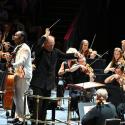
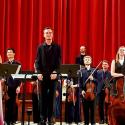
Saul has lately been occupied by opera. Lauded versions, above all Barrie Kosky’s recently-revived smash for Glyndebourne, have claimed Handel’s mighty oratorio from 1739 as a virtual theatre piece with the stage directions mislaid. Yet its incandescent drama of rage, envy, betrayal, love and derangement lives in the blazing, epic music – trombones, carillion, harp and all – that partners every step of the Israelite king’s descent into destruction. For the opening event of this year’s London Handel Festival, Jonathan Cohen’s period ensemble Arcangelo deployed a 30-strong chorus, a full-spectrum Baroque orchestra of similar numbers and a clutch of fine soloists. All proved that Saul can move, stir, thrill and terrify without the complete theatrical works.
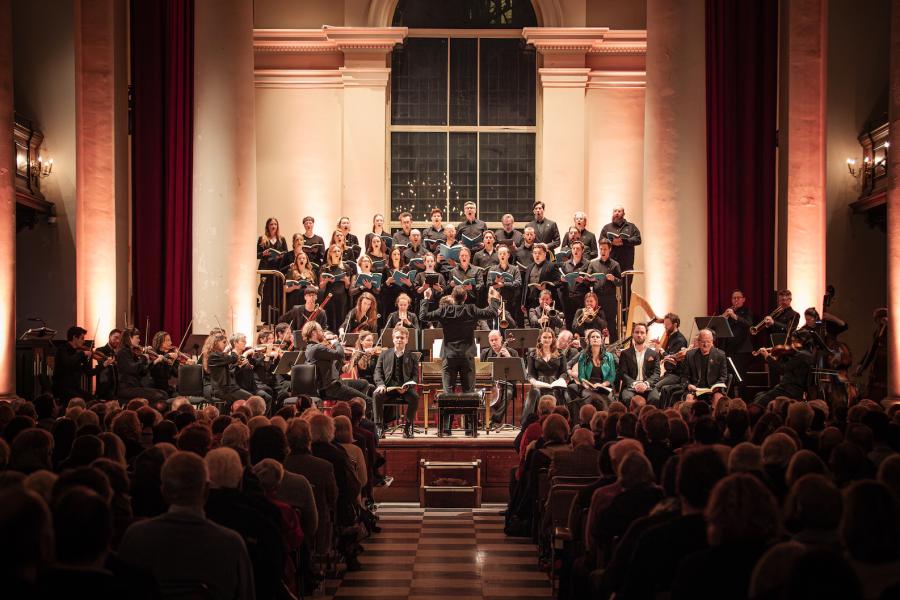
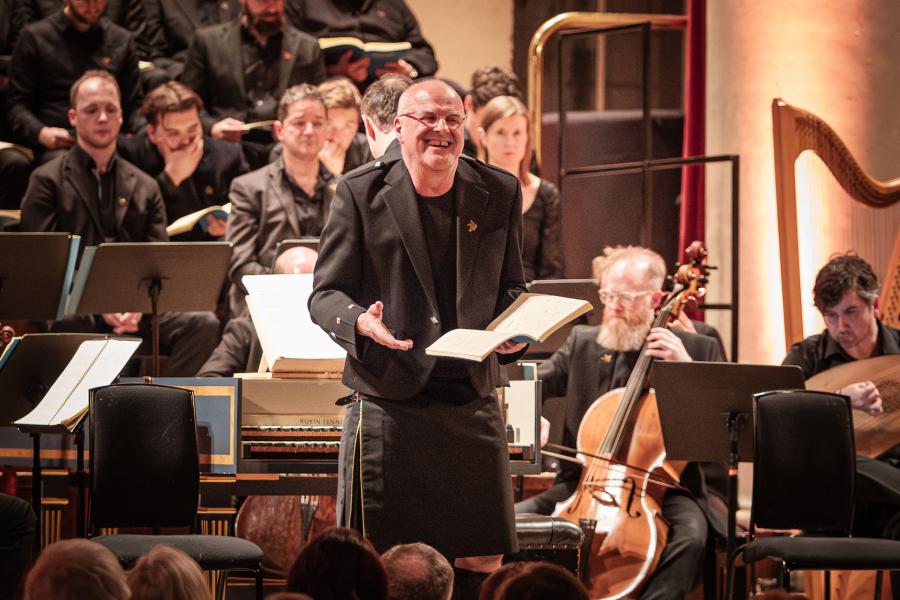
This auspicious outset for the Festival was anchored by stellar performances from bass Christopher Purves, in the role of the wrathful, depressive ruler that he has made his own (pictured below), and counter-tenor Hugh Cutting as the heroic young champion, David, who nurtures his own passion for power. Just as vital, the Arcangelo chorus mastered the rainbow palette of tone, colour and feeling Handel gives them in one intensely scored number after another. Here the gap between oratorio and opera matters: on the lyric stage, the chorus tends to comment. At Smith Square Hall, they led the charge and fixed the mood.
What happens after David has slain Goliath, that “Monster Atheist” of the Philistines, and Israel has won its famous victory over thuggish enemies? Charles Jennens, often lambasted for the clumsiness of his Messiah libretto, shows a dash of dramatic genius in his scenario for Saul. Short-lived triumph – complete with resplendent Hallelujah chorus in the opening scenes – yields to doubt, rivalry and wrath as young David refuses to do irascible Saul’s bidding and, after he “Ten thousands slew”, tops the popularity polls among the people.
If the shifting, dialectical stand-off between Saul and David fuels the work – as the golden-boy warrior-musician first resists the old man’s bullying rage, then himself picks up the habits of imperious command – then the three intermediaries between them also have decisive parts to play, and sing: Saul’s daughters Michal and Merab, and David’s beloved companion Jonathan.
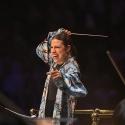
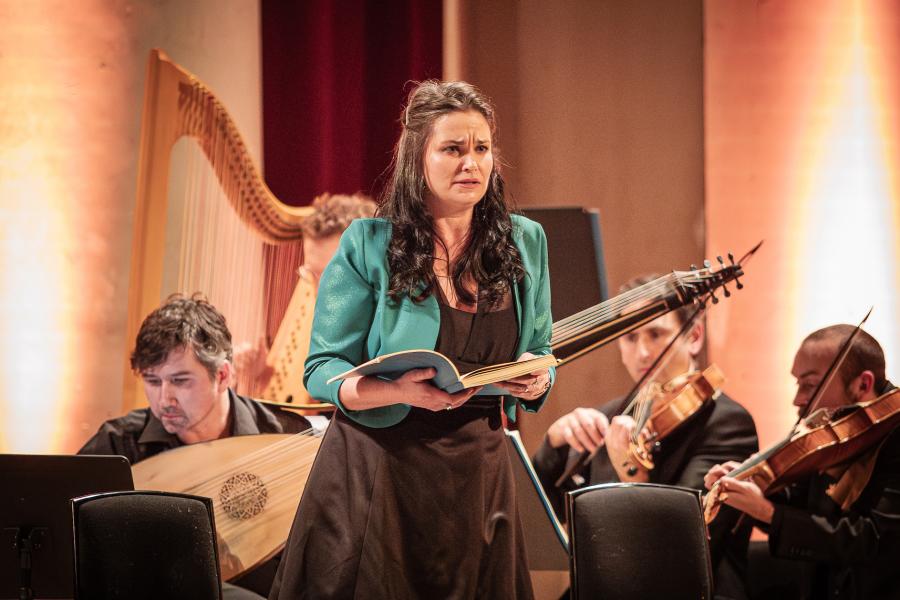
Jessica Cale, as Michal who falls for David despite his “plebeian” origins, overcame some initial wobbles to project a tender nobility in airs such as “Let the guilty tremble” and, supremely, her lovely final lament, “In sweetest harmony they lived”. Yet she sometimes seemed upstaged by Emöke Baráth’s emerald-jacketed Merab, the “bad sister” who scorns the low-born slingshot ace and, in her glittering hissy-fits of coloratura vanity, acts as a chip off the old Saulian block. But if Baráth (pictured below) revelled in the acrobatic arrogance of a piece such as “My soul rejects the thought with scorn”, she could also soften winningly into her later prayers for reconciliation, above all a heartfelt “Author of peace”.
Cohen eschewed any fancy stage business but this was by no means a static park-and-bark show. Judicious movement and gestures intensified many musical effects. Jonathan embraced David, visibly as well as vocally: Handel, even the primly pious Jennens, do justice to the couple’s affection, for so long the “respectable” archetype of same-sex love in European art. Linard Vrielink’s Jonathan brought expressive nuance and authority to his showpieces, both a key actor in his own right and an observer who voices the work’s changing weather of emotion.
However, it was inevitably the crackling face-off of Purves’s Saul and Cutting’s David that electrified the Hall. Lear-like, Purves roamed, raged, blustered, cursed and brooded, utterly in command of lines that he often – controversially, perhaps – flattened into a sort of near-tuneless Sprechgesang. Melody itself expires along with his fragile sanity. His snobbish outrage at the “upstart boy”, the common “stripling” whom he knows will usurp him, spat with menace while managing to dodge full-on pantomime villainy. Like Lear, Saul must draw from us pity as well as terror. Purves consistently did.
Cutting, in contrast, incarnates celestial melody and harmony, from the fine-spun long-lined glory of his initial appeal to Saul, “O King”, through his duets with Michal and the stand-out gravity and grace of “O Lord, whose mercies numberless”. It’s an oratorio, yes, but not a liturgy: Cutting, wonderfully assured and calmly powerful across his counter-tenor range, never let such Victorian favourites sound merely reverent. He lent each air character, flexibility and tonal variety. We had even more to savour: a non-absurd turn as the Witch of Endor by Matthew Long, formidably spine-chilling rather than silly, and – luxury casting, this – the tremendous bass-baritone Neal Davies as Samuel, whom the witch conjures at Saul’s behest but who delivers his resonant prophecy of doom.
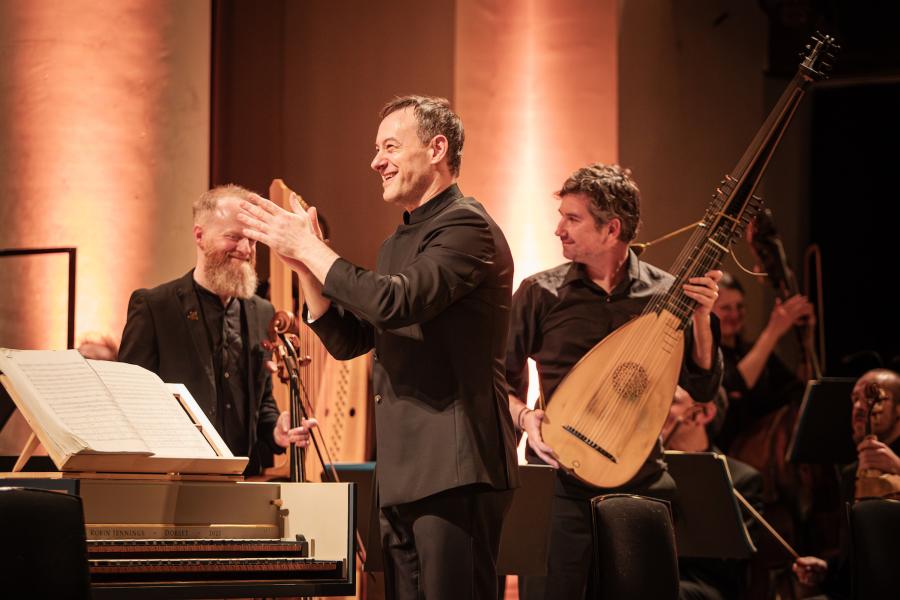
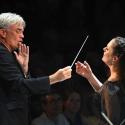
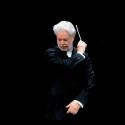
Briskly driven by Cohen (pictured above), the chorus proved a true glory of the night. They made the scarily majestic invocation of “Envy! Eldest born of hell” bristle with danger and moved with exact diction and a bracing dynamic range from triumph to tragedy – from the exultant narrative of Goliath’s defeat to the fugal tapestry of dread they weave as Saul loses his wits (“From crime to crime he blindly goes”) and the impassioned elegy of “Mourn, Israel, mourn thy beauty lost” after the Amalekites slay Jonathan and Saul.
Magnificently sung, the unhinged aggression of their final bloodthirsty exultations – “Go on, be prosperous in fight” – even made me wonder if this could be Handel’s version of the bitter sarcastic parody of rejoicing that closes Shostakovich’s Fifth. In any case, the orchestral contributions abounded in richly contrasting colour and texture: an ominous trio of trombones, delightful obbligatos from flutes and recorders, the Witch’s spooky bassoons, Thomas Dunford’s lute, Oliver Wass’s harp (enchanting as David’s magic lyre), Stephen Farr’s carillion chimes and – not least – spectacular organ toccatas by Tom Foster.
However visionary the director, in the opera house such transformative musical brushstrokes will often find themselves put in the shade by the staging. Arcangelo’s high-definition performance showed that Saul needs no concept, and no costumes, to thrive. All the drama – all the tragedy – lies ready to spring at our throats from the score.