

Fast is fine in Beethoven, so long as you find breathing-spaces, expressive lines and crisp articulation within it. The Scottish Chamber Orchestra's febrile new chief conductor, Maxim Emelyanychev, started the "Pastoral" Symphony last night with a brisk but detailed walk which was interesting in itself, especially given the level of commitment from the players, but a breathless rapidity saw diminishing returns even in a symphony which ought to be able to take it, the Seventh. There's clearly an excitement about what's going on in the new partnership, but is it enough?
It should have been a joy and a privilege to hear these two symphonies in one concert as an instalment of the SCO's complete cycle – remember that Beethoven’s marathon benefit concert of 1808 included the Fifth and the Sixth, a different exercise in contrasts – but Emelyanychev’s bid to bring them closer told us more about him than about the music. Nature lovers might be wary of taking a country jaunt with this guy; fine to start at quite a pace - Ilan Volkov first opened my ears to the possibilities in a glowing performance with the BBC Scottish Symphony Orchestra - but wouldn’t there come a point where you’d want to say, “shut up and just take in the surroundings a bit”? Namely, when the babble you want to hear is that of a gentle brook and not your companion’s?
Yes, that adorable second movement is marked Andante molto mosso, and dynamic levels were beautifully graded, but just when it needed to expand a bit, Emelyanychev sped ahead. It was bliss when the SCO’s superb first flautist, André Cebrián, got the green light to sing his birdsong freely, echoed by the cuckoo of clarinettist Maximiliano Martín - excellent throughout. The scherzo’s bucolics tumbled crisply, but the whole up to that point stole the thunder – literally – of a storm, oddly less than graphic. And the heartsease of the shepherds’ thanksgiving just didn’t shine.
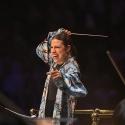
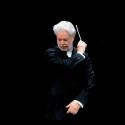
A tendency to hit the strong beats meant the rest sometimes got swallowed upEmelyanychev would probably be the last on the dance-floor, but you might laugh a bit at his flailing limbs. Tthe manner, mobile on a level with the players – no podium, and no baton – can be tiresome; at times you have to stop watching and just listen. The Seventh’s dithyrambs and orgies need tighter discipline; the opening chords of the outer movements weren’t quite together, and a tendency to hit the strong beats meant the rest sometimes got swallowed up (a special danger when your string body is smaller than that of a symphony orchestra).
There didn’t seem to be enough moulding of the crescendos in the first-movement Vivace, though those in the Allegretto were good; again, plenty of dynamic interest and riveting colours in the lower-string start held the interest. No faulting the third-movement Presto; we’ve all got used to the horn and woodwind swellings being twice the speed at which they used to be taken. But the underlying power of the finale never broke; curious that the last time I heard this work, it was conducted by the (then) octogenarian Bernard Haitink, a conductor of minimal movement, but the force he conveyed was overwhelming. Comparisons were also unfavourable with previous SCO conductor Robin Ticciatis Beethoven Five in their 40th anniversary concert; that had a much finer showing from the valveless horns. It will be curious, all the same, to see how Emelyanychev develops, especially since his choices for the 2020-21 season include Tchaikovsky’ “Pathétique” Symphony and Rimsky-Korsakov’s Scheherazade. Quirky indeed for a chamber orchestra.



Add comment