

Settling into my seat in this most intimate of houses, I realised that I had never seen a play written by Nobel Laureate and Academy Award winner, George Bernard Shaw. Nor did I know what his very own adjective, Shavian, connoted with any certainty. Nor did I know why an actress chose to go by the distracting stage name, Mrs Patrick Campbell.
Partly that speaks to the limitations of my own experience (though when lines were read from the proto-script of Pygmalion, I was word-perfect, albeit from My Fair Lady) but it also speaks to the fact that Shaw has long fallen out of favour. His outspoken, ideological views on everything come across more as hectoring than committed these days, the legend overwhelming the playwright. That 2026 mood music suggested it was a curious choice to revive a near 70-year-old play; that every seat was taken suggested otherwise.
Jerome Kilty constructed the play from the decades-long correspondence between the pair, an approach that sacrifices naturalism in favour of authenticity. It’s telling that the dialogue really only springs to life in that marvellous scene when Shaw is rehearsing Mrs Pat (the full name proved too burdensome even for Edwardians to use) as Eliza Doolittle. The dynamic is almost diametrically opposed to the one in the play, as the posh woman fails to catch the Cockney vowels and is berated by the playwright. Rather meta and very droll.
Much of the 110 minutes run time is significantly more formal, the epistolary roots of the script lending a stilted tone to dialogue that is occasionally a little tough on the ear, but nevertheless catches the distance between them. They crave each other’s attention, Mrs Pat lapping up the wordsmith’s flattery and GBS transfixed by her talent and regal beauty. But Society being Society, even these reciprocal doe-eyed looks and love(ish) letters risked catastrophic opprobrium and professional suicide. Every billet-doux came with a hefty side order of billet-don’t.
That cut hard when Mrs Pat announced, with cruel certainty, that she had married her other main admirer, George Cornwallis-West last Wednesday, GBS being already hitched to the unfortunate Charlotte, permanently indisposed of course. Plenty in the audience will be triggered by that kind of finality, hopes dashed! The tragic love triangle opera delights in, never gets off the ground.
After a first half often tonally light in its verbal jousting, the second half (thank you for the interval, Stella Powell-Jones, directing) turns darker. GBS chases Mrs Pat to the seaside, veering close to stalking/coercive territory, and she goes off for a doomed attempt at Hollywood stardom. Both live on into an advanced age and reconcile to some extent, but they really should have been bickering (and been compensated by) shared children. When Mrs Pat’s son with her first husband was killed in action in 1917, GBS met the news with an astonishing lack of empathy, his commitment to political theory overriding his obligation to the person he loved - a not uncommon error on the Left even today.
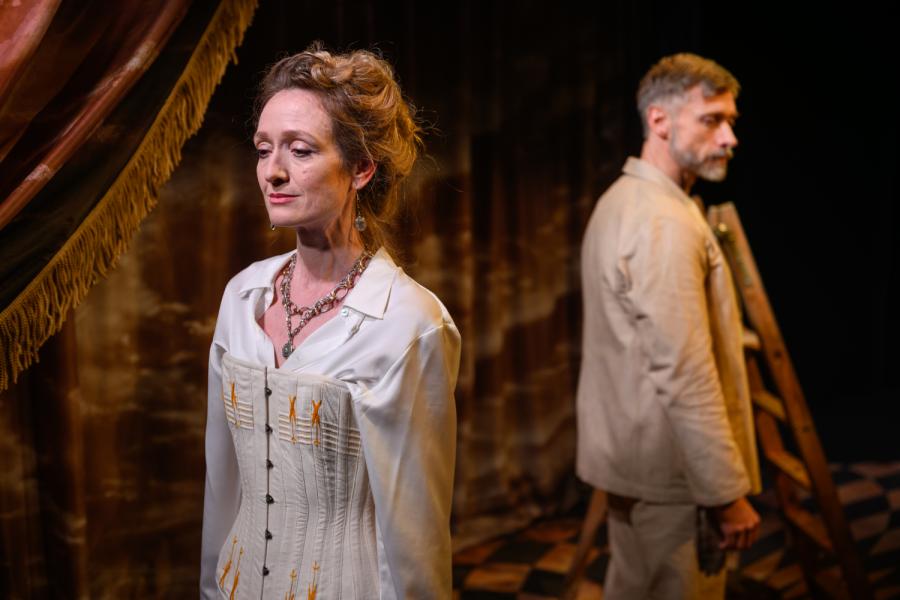
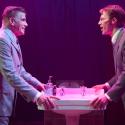
Rachel Pickup (pictured above with Alan Turkington), inexplicably wearing a corset like a Jean Paul Gautier-costumed 1980s Madonna, has the handsome, occasionally haughty, look of a woman who has always been able to wind men round her little finger - and always will. Her line readings are wonderfully clear - you readily believe this was the actress who enchanted houses from Shaftesbury Avenue to Broadway. There’s insecurity too, GBS being so renowned a public intellectual, unburdened by false modesty, and she continually doubting herself.
Alan Turkington, wearing a tee-shirt adorned with a sketch of GBS (something you think the man himself might have done were it available) affects a soft Irish accent that can fire into fury at little notice. It’s easy to see how he acquired his spiky reputation, but you catch the wit and the charm too. Not quite the unhinged look in the eyes that attends so many photographs, though.
Ultimately, the structure undermines the norms of a “Will they? Won’t they?” romcom, creating an absence of heart just where it’s needed. We know they don’t and, with the text of the letters the source of the speeches, the chemistry that would suggest that they might only ever fizzles, always coming up short of igniting. With the passion literally held at arm’s length (at the end of a pen or typewriter) what’s offered across the fourth wall is neither the vicarious delight of consummation, nor the aching tragedy of lost unrequited love.
Quite what the play has to say about today, I was unsure, but maybe it just doesn’t (no doubt to GBS’s dismay if he’s looking down). Maybe it’s just a pleasing diversion on a rainy night in London - and there’s nothing wrong with that.







Comments
Why does a play have to "say…
You're right - as I hope I…
You're right - as I hope I made clear in my closing paragraph. But Shaw spent a long life continually "saying something" so I don't think it's entirely unfair to expect the play to also join in a little with that element of theatre.