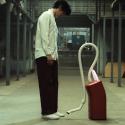
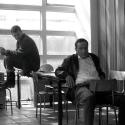
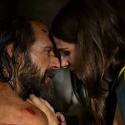
Whatever you make of Taiwanese director Tsai Ming-liang’s Stray Dogs (Jiao you), it’ll likely have you looking at your watch. If you’re hypnotized by its almost narrative-free, stretched naturalism – stretched so far as to become effectively stylization – part of the interest will be in knowing just how long the director holds some of his crucial scenes; the closing one, wordless and virtually still, must come in at almost a quarter of an hour. If it’s mesmerizing self-indulgence that hits you instead, the question may be when to head for the door when this distinctly testing 138-minute work exhausts its welcome.
Stray Dogs won Tsai the Grand Jury Prize at the Venice festival two years ago, and he has hinted it may be his final work, at least in the traditional feature format, capping a distinguished quarter-century career as one of the pre-eminent Asian directors, who’s been regularly acclaimed at Cannes and Berlin as well as on the Lido; it also, apparently, witnessed unprecedented numbers of walk-outs from festival screenings there.
If there’s a middle ground to be found between such diverging opinions, it may suggest something about Tsai’s future directions. Stray Dogs offers hints towards the kind of video artwork that’s become standard art-gallery or museum fare, but which, if most exhibition-goers were to answer honestly, very rarely gets watched in its entirety. Character and story have not gone entirely, however: this is a drama about two children, a boy, Yi Cheng, and girl, Yi Chieh, (played by brother and sister Lee Yi Cheng and Lee Yi Chieh, who are the director’s godchildren), their father (Lee Kang-sheng, Tsai’s long-time collaborator), and a mother figure. The fact that the last (if indeed she is the same figure) is played by three different actresses, and that the worlds they are associated with on screen are different ones, complicates any traditional approach to story-telling.
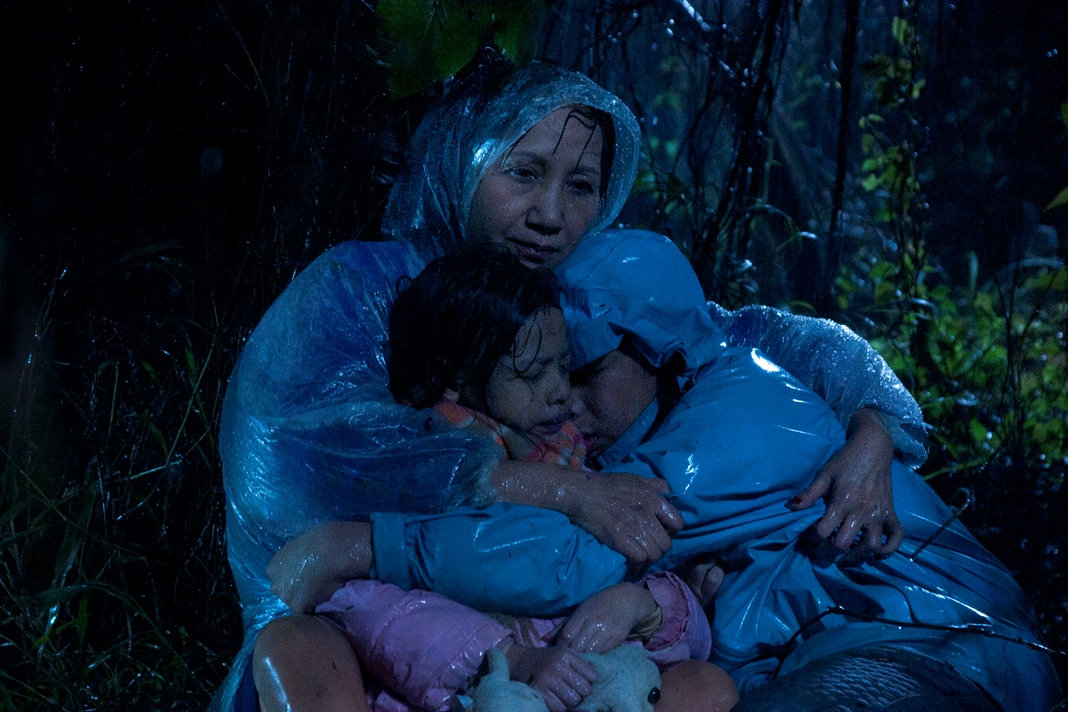
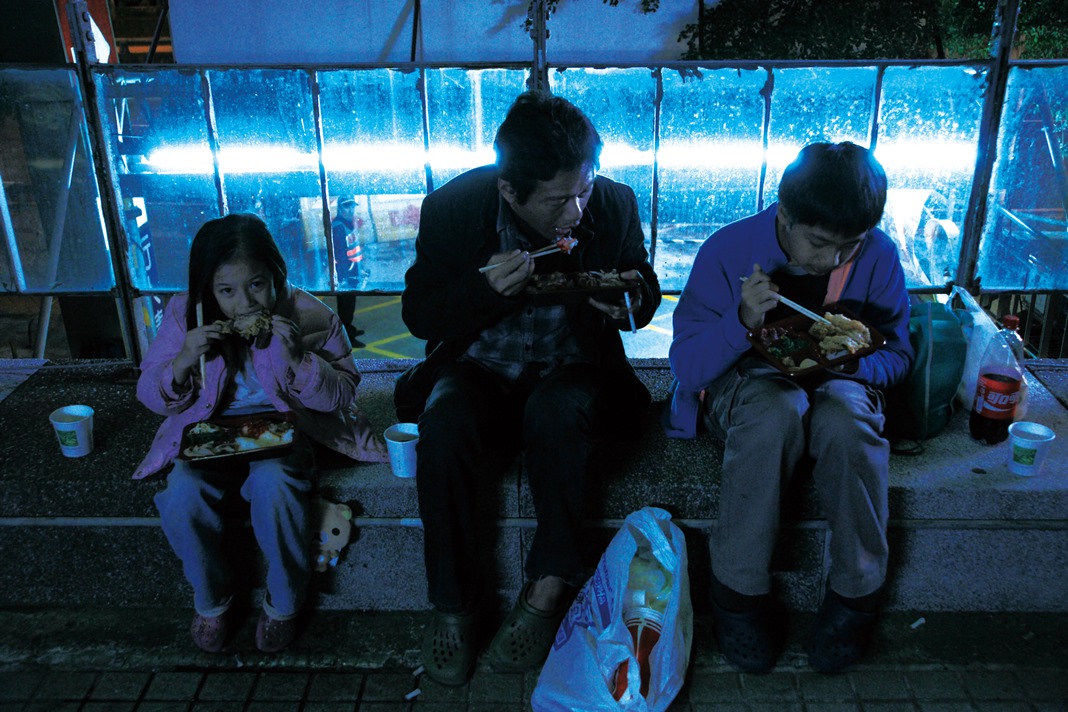 The players’ place in their visual environment is almost as important as who they are. The setting is a downtrodden Taipei, dark and wet in its exteriors (a lot of rain does fall, pictured below, which has earned the film comparisons with Andrei Tarkovsky’s Stalker, though surely rather more happened in that film, and the Taiwanese director’s debt to the Russian master is much more broad than it is particular). Lee’s character supports himself by holding up advertising boards through long, motionless hours – surely the occupation of distressed city existentialism par excellence – passing on whatever he earns to his son to prevent him drinking it away. We see them feeding on supermarket throw-aways (the three, pictured above), while the mother seems to have a job in that area (again, depicted as some sort of anonymous purgatory), and using such facilities to wash.
 Their living quarters, for most of the time, appear to be in a disused industrial facility, whether unfinished or abandoned we never discover, where the mother also feeds the stray dogs of the film’s title. It doesn’t require much extrapolation of Tsai’s social themes to conclude that his human characters are no less vagrant than the film’s four-legged ones. Yet, in later scenes, they’re inhabiting a much more human dwelling, distressed though that is too, which hints at a more settled life, a birthday celebration included.
The final scene also makes clear that this dominating interior location, for all its dereliction, includes a mural, seemingly a variation on a traditional Chinese landscape, that fascinates the couple’s closing attention: he drinks, periodically, while tears falls, painfully slowly, down her face (she’s played by Chen Shiang-chyi at this point). If you’ve stayed with the film to this stage, the effect really is hypnotic. A slightly earlier scene, timed at around 11 minutes, is no less engrossing, though in a more brutal way: the father engages with a raw cabbage head, alternating between nursing it, almost like an object of love, and devouring it, his tears falling more intensely than those of his partner in the finale. Stray Dogs does have something extraordinary to it, but it left me, finally, almost as cold, if not as wet, as its protagonists on Taipei’s unforgiving streets.
Overleaf: watch the trailer for Stray Dogs