

E Jean Carroll is the all-American modern woman: Miss Cheerleader USA 1964, gonzo journalist, TV counsellor, glossy magazine agony aunt and, latterly, the victor in two civil suits against Donald J Trump. Currently he owes her almost $83 million. Ivy Meeropol’s documentary also shows the price Carroll has had to pay for her choices.
Why did this woman in her late seventies decide to sue, 30 years after the assault? The documentary goes a long way towards answering that question, though essentially the answer is that Trump repeatedly defamed her after she made allegations of rape against him in a 2019 book. He had assaulted, not just her body, but her integrity as a journalist. That, she says solemnly, she couldn’t let stand,
Those unused to the eccentricities of her brand as a TV “advice lady” — Trump’s description of her, she says, the day he sexually assaulted her — will be amazed at her former athletic style in front of the Ask E Jean cameras, a confident, tall blonde woman who clambers over the back of the sofa on the set, rushes off unscheduled behind the scenes of the show to film the legion of women working there, before settling down to give sage advice to her troubled guests, each with a story of spousal abuse, sexism, coercive control, depression and the like. It was the 1990s, and women, she notes in one of several interviews she gives to the film-makers, were starting to question their lives.
Meeropol has carefully mined the footage from this TV series for grimly ironic quotes. We see Carroll doling out nostrums to her guests, urging them not to give any man power over their lives. Yet, as the film shows, her advice was still hard for women in the 1990s to follow, including her. Riffling through old copies of Elle, where she worked as an agony aunt for 27 years, she throws them down, disgusted with what she had written there, much of it, she admits, recycled from her childhood passion for the advice columns Dear Abby and Ask Ann Landers,
A biodoc about Carroll before 2019 would offer reams of documents and miles of footage anyway, as she has led an exceptionally interesting life, bombing around Aspen with a coked-up Hunter S Thompson in his red Pontiac, taking Fran Lebowitz camping for Outside magazine, frequenting Elaine’s nightclub with other starry writers. But what makes this documentary compelling is how even this outspoken, “invincible old lady” (her description) was brought so low by her experiences both before and after her initial court hearing that she almost didn’t embark on it at all.
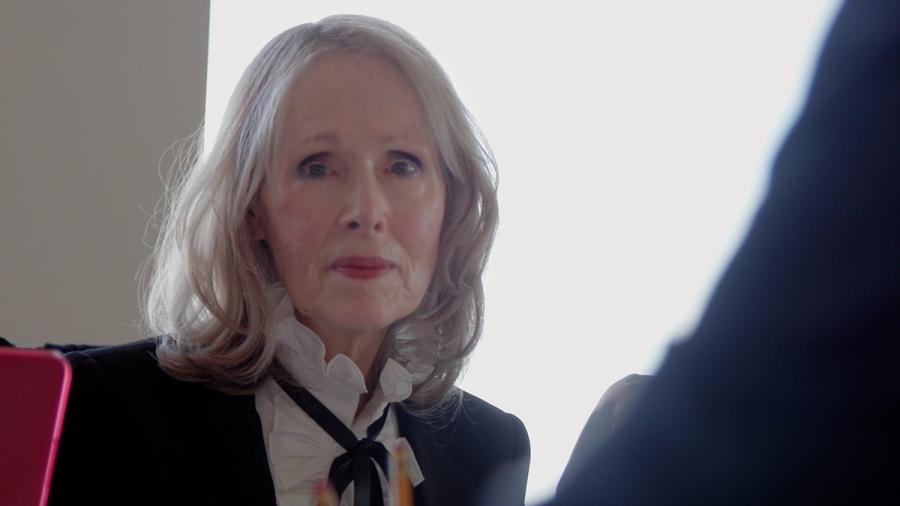
It was the Harvey Weinstein revelations, she claims, that first made her rethink her priorities, the avalanche of other MeToo allegations. The second trigger was Trump himself, who initially reacted to her claims by calling her evidence a total fabrication, a “hoax”. And anyway, he infamously, and irrelevantly, said, “She’s not my type.”
Clearly, Carroll’s team had decided from the outset to allow cameras to follow her lawsuit against Trump, so we see her elaborate backstage preparations, even using the same make-up artist and hair stylist from Ask E Jean for her court appearance (pictured below) so she would look as much as possible like the woman who crossed paths with Trump in the revolving door of Bergdorf Goodman that day.
The same cameras, however, chart her physical deterioration three years later, after a jury unanimously awarded her $83.3 million in damages in her second suit against Trump, this time for a TV interview right after the first trial, in which he poured scorn on the result and defamed her all over again. His supporters also weighed in, a shocking troll-fest of vicious insults and death threats: what she calls “an avalanche of slime”. She herself notes how her face was by this point haggard. If anybody doubts the impact on a woman of accusing somebody of rape, even a tough woman, they should watch this film.
It’s also a salutary reminder, as newspaper lifestyle pages look back with fanboy affection at the 1990s in their latest search for the “ideal” decade, that many women in that era were still part of the Silent Generation: motto, suck it up and shut up if you want equality with the big boys. As Carroll astutely recognised at that time, every woman has a list with at least three names on it: “the most hideous men in my life”, the men who sexually assaulted them, when and where.
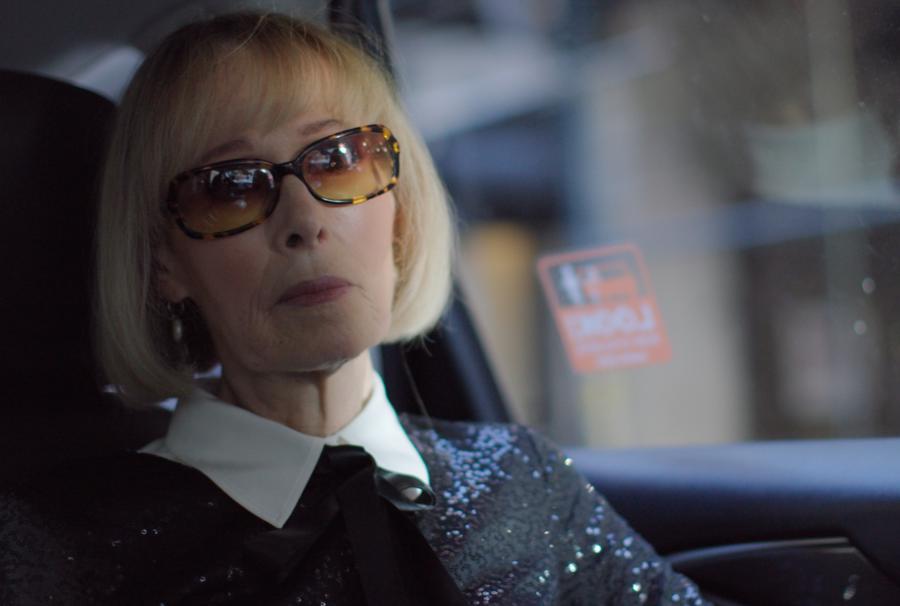
This is a film that’s chummy with its subject and her team, which might make it dangerously parti pris. Since almost everybody working on it, as with the Ask E Jean team, is female, I would hope it is determinedly on its subject’s side, though not dangerously so. It doesn’t spare Carroll when she’s full of anxiety, stutteringly prepping her testimony for the second trial, knowing Trump will be there. And by her own admission it shows how she has had trouble relating to men again, the woman who specialised in writing about sex suddenly finding she had no taste for finding a partner any more. On the other hand, she says she has regained her “human being-ness”, even while living in a rural cabin somewhere in New York state.
For an audience that hasn’t been saturated in this story, this documentary is a satisfying portrait of its funny, spunky subject that encapsulates the key moments in her fight for her integrity, the finest of which is the one from Trump’s deposition for the first trial. He’s being asked to identify who is in a 1987 photo of him meeting Carroll and her TV anchor husband, John Johnson, at an event. His answer is laugh-out-loud ludicrous, but also chilling and troubling.






Add comment