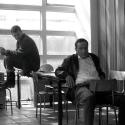
The completion of the Berlin Wall in 1961 severely damaged the East German industrial economy, the fallout soon affecting the GDR’s film industry. December 1965 saw the 11th Plenum of the Central Committee of the East German Socialist Unity Party. Nominally a forum where the country’s economic future could be discussed and planned, the gathering also addressed perceived deficiencies in the GDR’s cultural output. Books, plays and music were attacked, and 11 films made by the state production house DEFA, some still under production, were taken out of circulation.
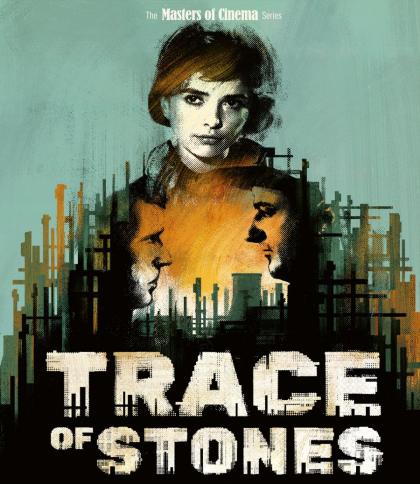
One of these was Frank Beyer's epic Trace of Stones, which attracted positive attention at preview screenings before the authorities removed it from circulation days just after its July 1966 release. Fake protests against the film’s supposedly negative portrayal of GDR life were organised, and a review in the Party broadsheet Neues Deutschland informed readers that audiences had demanded its censorship.
Based on a bestselling novel by Erik Neutsch, Beyer’s adaptation is equal parts black comedy, political drama and love story. Eberhard Esche’s uptight Party secretary Horrath pitches up at a huge, disorganised construction site and rubs up against Manfred Krug’s Balla, a Stetson-wearing, hard-drinking maverick whose gang (named, naturally, the Ballas), break the rules but get the job done. Imperceptibly, Beyer makes us reassess our opinions of the two men.
Early scenes show Balla behaving like a thug, asserting his physical authority in a lawless frontier town. He’s frequently very funny, notably when he and his mates swim naked in a duckpond and drag a police officer into the water with them, or when he challenges Horrath to take part in a violent clapping game, Esche’s passivity disconcerting. Into this testosterone-filled environment walks Krystyna Stypułkowska-Smith’s petite engineer Kati, told on arrival that she shouldn’t climb ladders as the men won’t be able to stop themselves looking up her skirts. “It’s like the Middle Ages”, she mutters.
Horrath’s Party role means that he’s charged with judging others’ morals, though it’s him, married with a child, who enters a relationship with Kati which results in her getting pregnant. Balla, wearing his non-membership as a badge of honour, ultimately turns out to be the more honourable character. Beyer shows us rather too many smoke-filled committee meetings for my liking, but these make the flashes of humour more effective; look out for a scene where Balla and his cronies exchange bottles of schnapps with one another.
The film looks terrific, Beyer and cinematographer Günter Marczinkowsky’s location footage striking, the camera following workers up rickety scaffolding and showing how physically demanding their jobs are. We also get a fascinating insight into the mundane details of everyday life in East Germany, its furniture, domestic appliances and grubby trains. That we can watch Trace of Stones at all is remarkable, a single print surviving in an archive and screened to a rapturous reception at the 1990 Berlin Film Festival. Eureka provide good bonus features in addition to Michael Wedel’s booklet essay, including extended documentaries on the 11th Plenum and Frank Beyer, plus an affecting 1978 short about an East German children’s home, also banned until the 1990s.