Czech animator Jiří Trnka’s rise to international fame mirrored that of his contemporary Karel Zeman, both filmmakers producing work as sophisticated as anything from the Disney studios but utterly different in style. Trnka (1912-1969) was a polymath, a gifted puppet maker, graphic artist, illustrator, sculptor and costume designer whose earliest shorts featured conventional two-dimensional drawings. Stop-motion animation offered more possibilities; however, one reason for Trnka’s preference for puppets being that it was possible to show figures in a state of stillness, of contemplation. His wooden characters tend to have painted fixed expressions and closed mouths, their feelings conveyed by gesture alone.
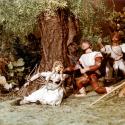
The first of Trnka’s feature-length film, 1947’s The Czech Year (Špalíček) (pictured, below) began life as a nativity-themed short, Trnka adding five more segments which collectively depict a year’s rural folk traditions. Key to the film’s success is long-term Trnka collaborator Václav Trojan’s near-continuous score, a stream of idiomatic arrangements of Czech folk songs performed by a Prague children’s choir. The opening Shrovetide sequence features beautifully choreographed folk dances performed by a host of masked children; though their appearance is more obviously toy-like than characters in Trnka’s later work, their movements always seem real.
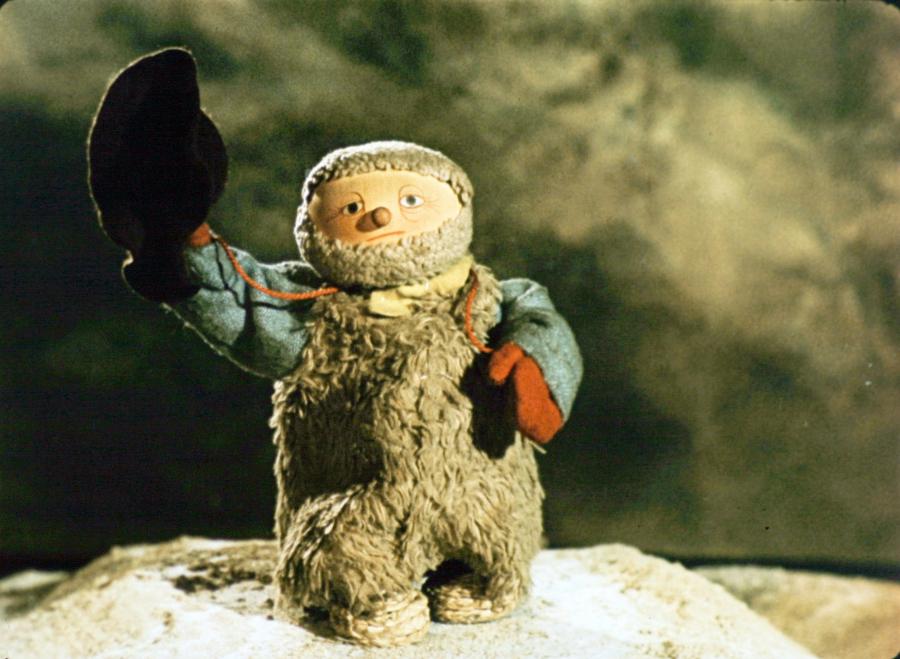
A celebration of an October feast includes children singing gleefully about slaughtering a pig followed by the mass-production of pies, though the most affecting segment depicts the stoic Saint Prokop resisting satanic temptation while tilling the soil. Even Trnka’s most peripheral characters and animals are in a state of constant movement, adding to the impression that we’re observing live action.
Released in 1953 and darker in tone, Old Czech Legends (Staré pověsti české) was based on a collection of stories by Alois Jirásek, a 19th century writer whose oeuvre was heavily promoted by Czechoslovakia’s Stalinist government keen to present an ‘official’ version of the country's past. Trnka was initially reluctant to take on the project, his adaptation drawing on historically accurate source material besides Jirásek’s text. A whistlestop speculative tour through early Czech history, it begins with the death of the mythical Father Čech, a Moses-like patriarch leading his people to the Bohemian promised land. Trnka and Jiří Brdečka’s screenplay throws threats both physical and supernatural at the nascent Czechs, a transparent child-snatching witch particularly spooky.
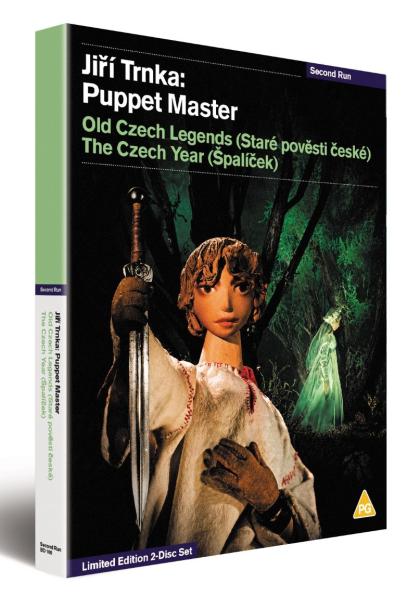
Unlike the earlier film, Old Czech Legends features a narration with some characters do speak. Trojan’s powerful, austere score is terrific. There is a linear narrative, each section telling the story of a successive Czech leader, and despite the serious tone there are some witty moments. Look out for the avaricious Duke Křesomysl tapping his fingers at the sight of more gold, and our introduction to the cowardly Neklan, persecuted by his own interior monologue as Trnka’s camera comes close to pinning him against the wall. The final battle scenes have a terrifying immediacy, and that Trnka’s puppets are less stylized than those in A Czech Year will again make you forget that you’re watching an animated film.
If, like me, you’re left wondering how on earth some of the film’s effects were realised, Second Run include a bonus 1955 documentary showing Trnka at work, his studio cluttered with brilliantly realised sets, the director painting backdrops onto sheets of glass while his animators scurry around in the background. It’s wonderful to see Trnka creating the aforementioned Neklan, the puppet coming to life once Trnka has given it a painted face. Two short documentaries by historian Evan Chester are useful, but the best bonus is Trnka’s astonishingly bold final film, the 1965 short The Hand. Predictably, this sinister tale of a wide-eyed potter bullied by the state didn’t impress the Czech authorities, and it was suppressed for years afterwards. Excellent essays by Peter Hames and Jonathan Owen add to the appeal of this two disc-set, and the restored prints glow. A wonderful release.