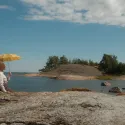
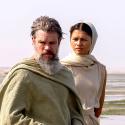
I would suggest watching River on the largest possible screen, so you can bask in the breathtaking beauty of the visuals. Directed by the Australian Jennifer Peedom, who won awards for Mountain and Sherpa, the documentary celebrates the magnificence of rivers and reminds us that we are utterly dependent on water for our survival. “Humans have long loved rivers,” says narrator Willem Dafoe but, he asks, “as we have learned to harness their power, have we also forgotten to revere them?”
The answer, of course, is “yes” and the film reveals our propensity for treating rivers merely as resources – exploiting them for our immediate needs without any regard for the longterm consequences. Defoe gives us some startling facts. For instance, we’ve impounded so much water behind huge dams that we’ve actually slowed the rotation of the earth.
Damming rivers may control flooding and provide a source of electricity, but a dammed river is also a dead river – low in oxygen and more likely to support toxic algae blooms than fish. Downstream meanwhile, deltas and flood plains are deprived of nourishing silt, which accumulates, instead, on the bottom of reservoirs where it is a nuisance rather than a boon.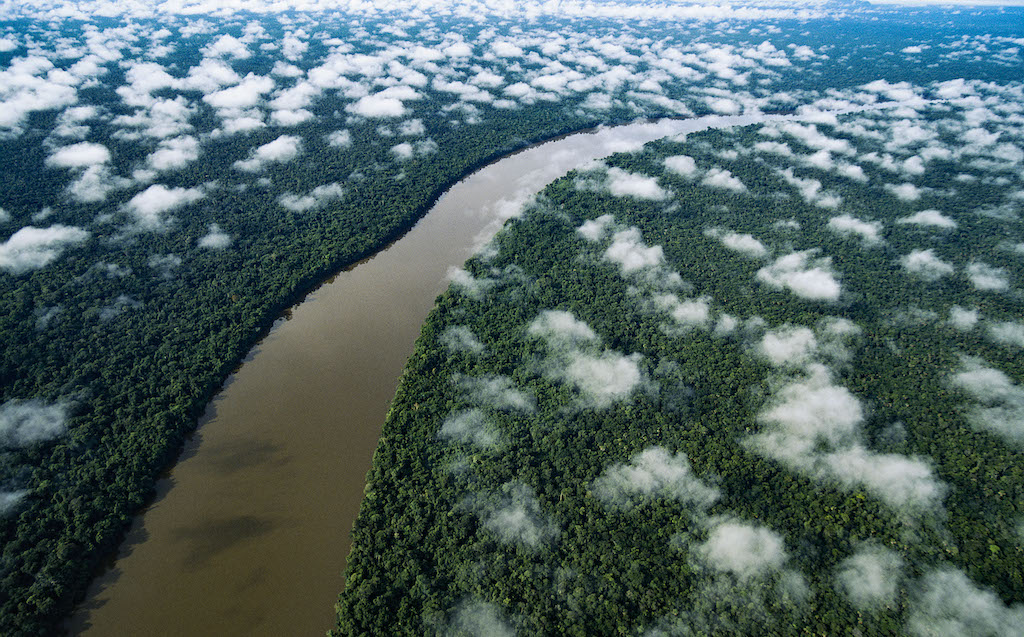 And our ability to control the flow of water gives us a false sense of security. By damming, piping, and channeling our rivers, “We’ve made the desert bloom”, says Dafoe, but also fostered “the delusion of infinite abundance.” Instead of providing an endless supply of clean water, though, our rivers are so dangerously polluted with chemicals, sewage, and plastic waste that many have become “unswimmable, undrinkable, even fatal.”
Onto the wall of a vast dam we see protestors pasting the slogan “Free the River” alongside a woman brandishing a sledgehammer above a large hole and a giant pair of scissors cutting through the wall. Next follows footage of water bursting through a breached dam and cascading down the valley below as Defoe tells us that “rivers possess miraculous powers of recovery; given a chance the life pours back. After years imprisoned behind concrete, the sediment is freed to carry on downriver and nourish the land again.” Is this apparently mild-mannered film actually a call to arms, I wonder?
Visually, the most glorious section comes as a surprise. “The sky has rivers – Amazons and Niles of vapour”, declares Defoe. “Together these sky rivers hold more water than all the streams and rivers on earth combined.” Cue orgasmic footage of broiling clouds resembling waves or cascading waterfalls as they pour over mountain tops and scud across vast tracts of sky. And lightning flashes through storm clouds as they funnel into swirling black vortexes.
Written by Jennifer Peedom and Robert MacFarlane, the message of the film is crystal clear. “The fate of rivers and the fate of humans are inextricable. The lives of our rivers now will determine the destinies of generations to come… . Look after the river and the river will look after you.”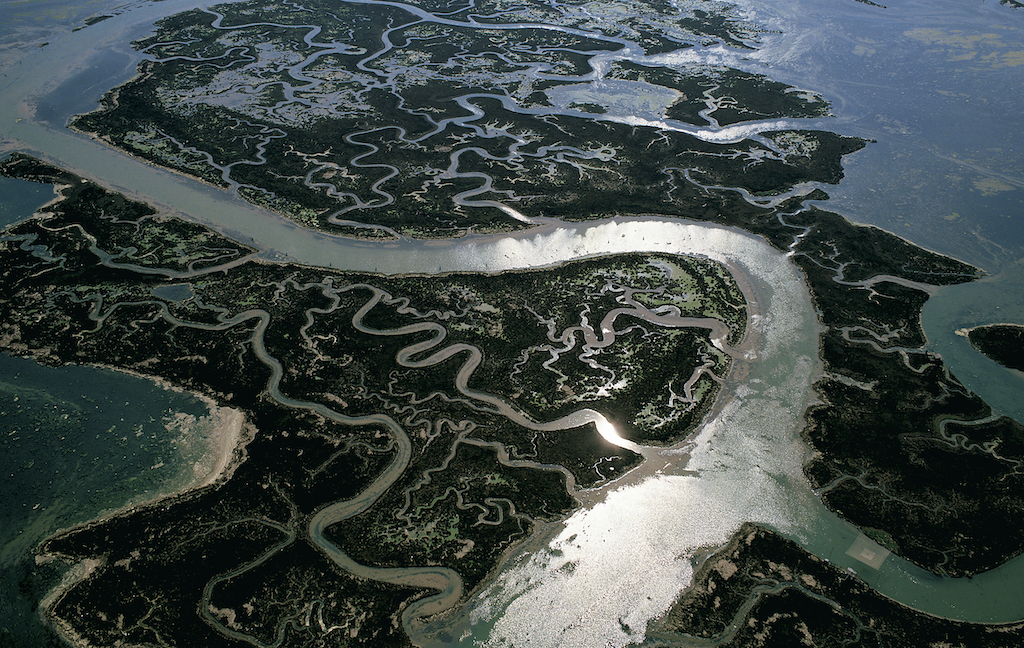 Since I agree wholeheartedly with the message, why can’t I endorse the film with heart and soul? The problem is the soundtrack. Rousing music played by the Australian Chamber Orchestra – including Bach’s Chaconne and Water by Johhny Greenwood – drowns out the various sounds of the natural world. Watching waterfalls plunge over rocky ledges to sweep down narrow canyons is so exhilarating that I don’t need the added stimulus of violins plucking at my heart strings and manipulating my emotions.
This complaint is not a trivial one. Nature not only looks beautiful, it also sounds extraordinary! And using music to augment natural sights and sounds, as if they were not interesting enough in themselves, undermines the very premise of the documentary. The film argues, after all, that human interference is the problem – we need to learn once again how to respect, understand, and revere nature. Listening to its sounds as well as watching its patterns, therefore, seems to me a necessary starting point, rather than an optional extra.
- River is in cinemas from 18th March
- Read more film reviews on theartsdesk