David Mackenzie’s second superbly marshalled thriller in a year makes an unexploded bomb the backdrop for a London heist and its chaotic aftermath. Like his Riz Ahmed/Lily James crime film Relay, Fuze’s multi-faceted narrative roots outrageous twists in character and professional process, found here in feuding squaddies, cops and thieves.
An opening swoop towards London’s gleaming high-rise skyline ends at the building site where a Luftwaffe bomb is unearthed, snub nose shark-like in the soil. Initially disorienting, parallel tales follow. Police Superintendent Zuzana (Gugu Mbatha-Raw) evacuates Edgware Road’s predominantly Arab populace into Hyde Park, authentic locations which offer a tangy, unfamiliar sense of place. Meanwhile Major Will Tranter (Aaron Taylor-Johnson) tackles the explosive, and a gang helmed by X (Sam Worthington) and Karalis (Theo James, pictured below) rob a bank under cover of eerily empty streets. X’s menace and Karalis’ competing bravado tighten nerves while ransacking a vault for uncut diamonds, as the macho but unstable Major sweats over the ticking bomb and the Superintendent senses something’s off.
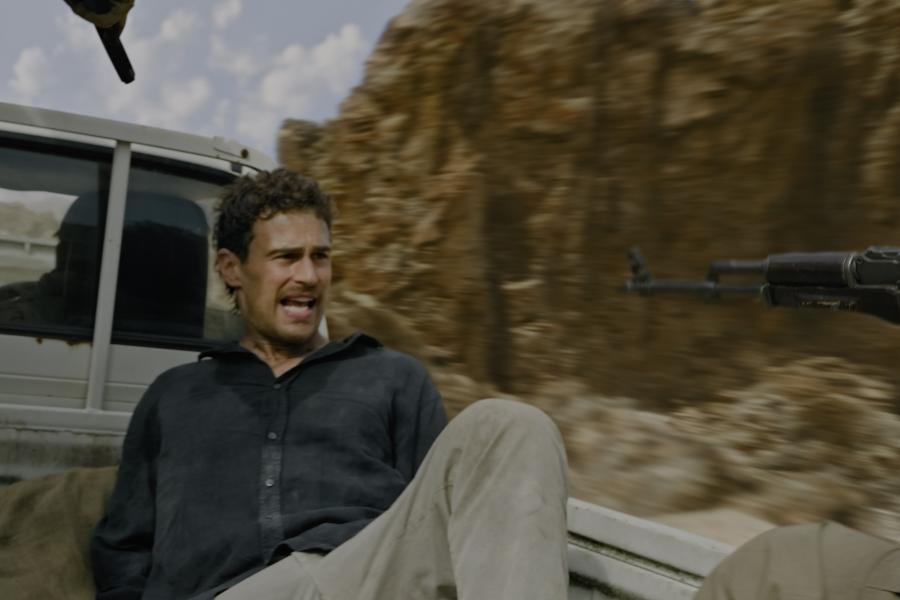
Human mystery lay at Relay’s heart, as Ahmed’s mutely efficient fixer was derailed by empathy into risky revelation, no longer playing the narrow percentages his role required. Fuze’s screenwriter Ben Hopkins, an idiosyncratic writer-director himself, treats character less profoundly here. The slightly off signals given by Taylor-Johnson’s revered war veteran and James’ mouthy South African, a heist mastermind who may have other plans, light subliminal narrative fuses which explosively pay off.
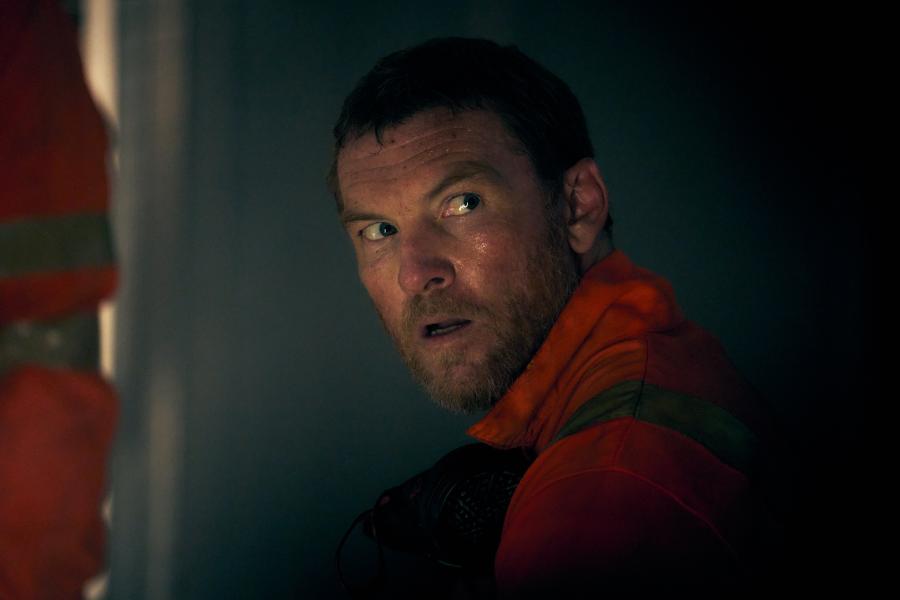
Worthington (pictured below), though he’s Avatar’s star, mostly operates at action cinema’s fringe, his ferocious presence seemingly distrusted. Following his frightening corporate thug in Relay, he provides Fuze’s sense of criminal consequence, mixing violent potential with ruthless professionalism. In a bit-part as Karalis’s urbane gangster cousin, Mohammad Afzal Ashabudin further ups the credible cost of the games being played.
Mackenzie and cinematographer Giles Nuttgens favour the immediacy of real locations and basic camera requirements, creating a hyper-verité style whose digital clarity unfolds in slivers of real time. Matt Mayer’s clean, accelerating edits propel time, space and relationships towards bloody singularity, as the scale and nature of deception grows.
Mackenzie’s early films Young Adam (2003) and Hallam Foe (2007) announced a director steeped in Scottish counter-culture values and comfortable with sex and violence. The Oscar-nominated Hell or High Water (2016) was the tautest treatment of a Taylor Sheridan script, with all its American heartland masculine and social codes. Though his dozen films skip curiously through genres and modes, right now he’s the sort of pulp auteur Cahiers du Cinema once lionised – a currently lesser Don Siegel, say.
Fuze references Britain’s role in Afghanistan and refugee stereotypes, and freshly sketches contemporary London before switching much further afield. Such depths mainly serve its capacity to entertain, as multiple staggering yet logical twists abandon the ruse of a low-key heist procedural to reveal a more carelessly anarchic caper. The Clash’s presence over the end-credits is well-earned.