Mario Bava’s Danger: Diabolik is a lurid triumph of style over substance, a film as insubstantial as its eponymous source material. The most famous of Italy’s fumetti neri (comic books aimed at adult readers), Diabolik, created by sisters Luciana and Angela Giussani first appeared in print in 1962. The books, a new one issued each month, featured a charismatic, amoral villain clearly inspired by French super thief Fantômas, their popularity inspiring scores of imitators. After the huge success of André Hunebelle’s mid-1960s Fantômas films, that it took so long to make a Diabolik feature is surprising: Bava’s Italian/French coproduction finally reached cinemas in 1968.
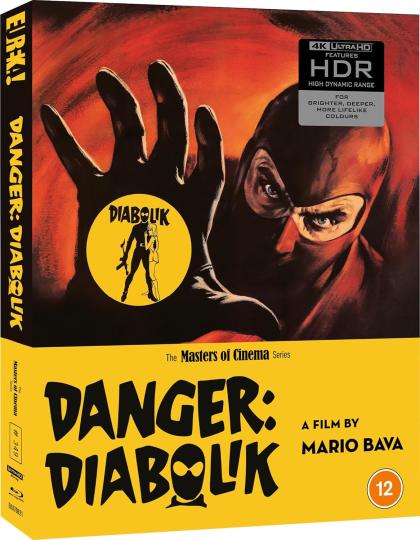
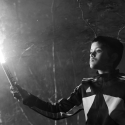
Bava was hired as a reliable director with a gift for ingenious special effects, working from a script which included sequences drawn directly from the Diabolik strip. Actor John Philip Law, whose expressive eyebrows helped get him cast as the leather-clad antihero, recalled years later that Bava wanted to make “a dark, violent, very Italian film” true to the comic book but was overruled by producer Dino De Laurentiis.
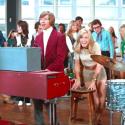
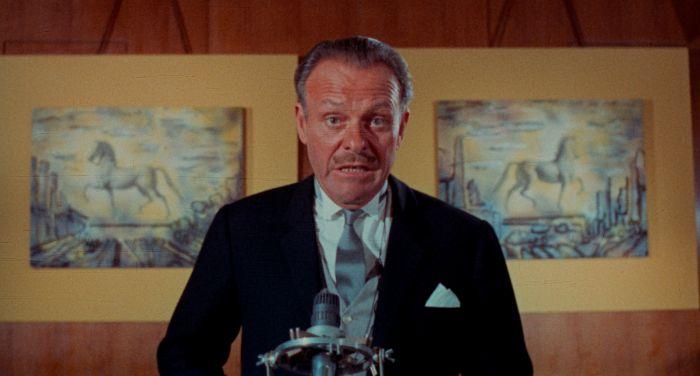
There’s not much plot, other than Diabolik attempting to steal banknotes, jewels and precious metals. He’s assisted by lover and co-conspirator Eva (Marisa Mell, in a role originally assigned to Catherine Deneuve) and doggedly pursued by Michel Piccoli’s Inspector Ginko, the action set in an anonymous European state where the currency appears to be US dollars and Terry-Thomas (pictured below) is a senior government minister.
Glimpses of sex and violence flare up but rarely disturb the film’s predominantly jaunty tone. Diabolik and Eva cavort on a revolving bed, covered in dollar bills. Supporting characters plunge to their deaths from a moving plane. That Ginko’s desperate attempts to capture his quarry will fail is a given, the final act following Diabolik and Eva’s attempt to steal a 20-ton block of solid gold.
It’s ridiculous, but compelling. Enrico Morricone’s score is terrific, and Bava achieves miracles with a modest budget, the special effects and model work holding up brilliantly. Diabolik’s underground lair, presumably a combination of papier mache and matte paintings, is visually spectacular, outshining Blofeld’s volcano in You Only Live Twice. There’s some appealing Mediterranean location work, Diabolik and Eva looking chic in a black Jaguar E-Type, their woodenness fitting the film’s aesthetic perfectly.
Academic and comics specialist Jochen Ecke states baldly in his entertaining booklet essay that Danger: Diabolik is too colourful and camp to succeed as an accurate adaptation of the Giussanis’ austere, violent strip. Bava’s closing shot hints at a sequel, but Diabolik lay dormant until a grittier 2021 revival directed by the Manetti Bros. Eureka’s production values are impressive, the restored HD print beautifully restored. We get a choice of English and Italian soundtracks (I preferred the Italian) and there’s an excellent booklet. It’s no masterpiece, but this influential romp stands out as one of the best cinematic comic book adaptations ever made. Eureka’s bonus material is generous and the short documentary From Fumetti to Film includes archive contributions from Law, happy to give us Diabolik’s demonic laugh four decades on.