

Carla Simón’s latest autofiction disinters the post-Franco plague of heroin and AIDS which killed her parents and that of Marina (Llúcia Garcia), her indefatigable 18-year-old surrogate in this lyrical story of shame, memory and love.
Simón was orphaned by AIDS contracted from sharing needles by the time she was six, and Marina shares this biography, being raised in Barcelona by her mum’s family. Discovering a document she requires for a scholarship to study cinema states her dad had no child, she contacts his Galician family for the first time since his death. The quest to correct the legal record becomes a voyage of discovery to coastal Vigo and a disputatious, diverse clan led by her grandparents, whose respectability requires her dad’s fate to stay buried.
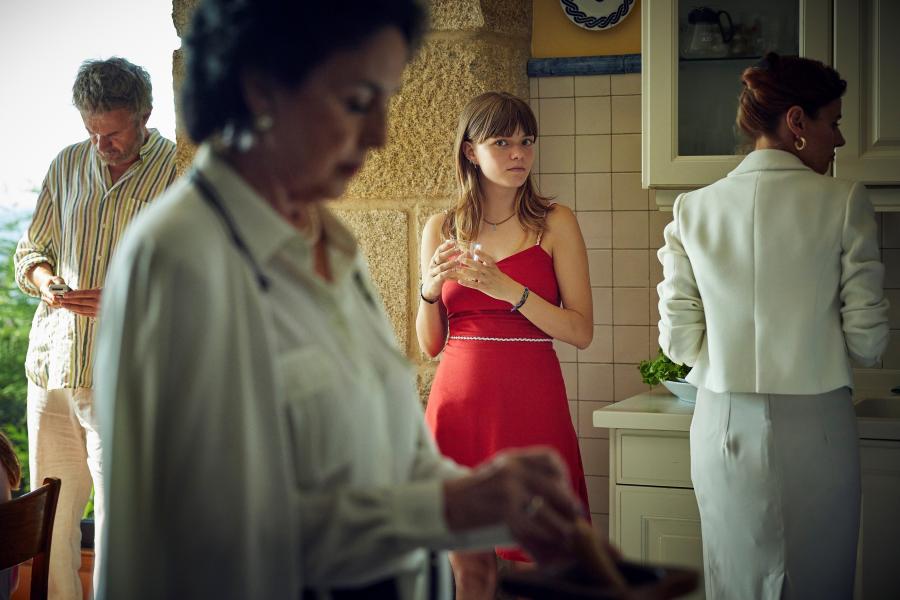
Marina is buffeted between chatty cousins, uncles and aunts who correct and complicate her background with a mosaic of contradictory, partial impressions. Garcia, a non-actor till Simón discovered her in the street, is a wonder. When she realises her dad lived years longer than she thought yet failed to meet her, dawning upset trembles across her face, holding a lifetime’s hurt.
Simón’s mum’s teenage letters home become Marina’s mum’s diary, a precious record of a lost era also caught in photos showing heedless Eighties hope following four decades of dictatorship, the same violent, sexy explosion which propelled Almodóvar. The photos are touching beyond their context, vividly capturing youthful promise and pleasure. One red-framed portrait of Marina’s parents seems to pull from the wall as if magnetised by her gaze. Uncle Iago (Alberto Gracia) physically manifests those days, keeping clear of his snotty parents, still hanging out late in bars, and bearing marks of using and wild adventure in a past he both longs for and mourns. “What didn’t they do?” he sighs with rueful fondness of Marina’s parents, before AIDS’ “massacre” of their circle. “It isn’t the same,” he complains bitterly of friends today.
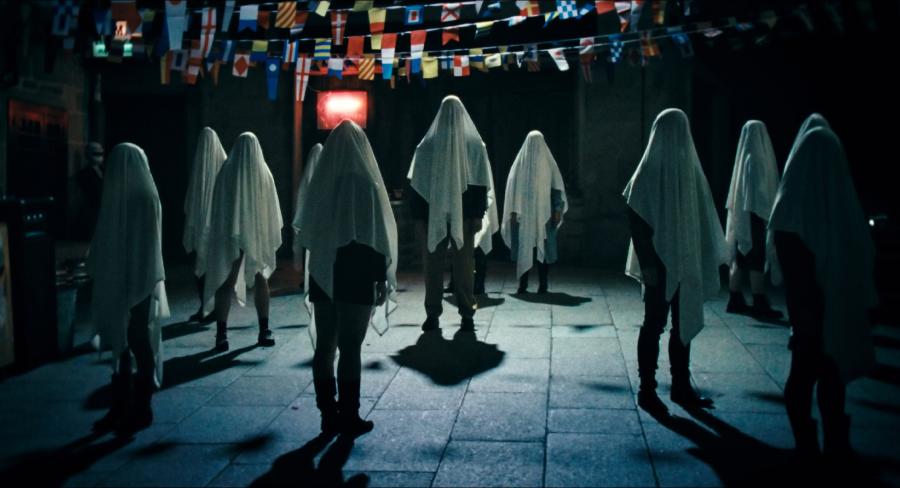
“Romería” is a Galician term for a pilgrimage to a shrine and a general celebration. Marina avoids drink and dope, but opens up to teenage discoveries in agreeably far from home Vigo’s torchlit backstreets where she carries on with her cousins, especially hot Nuno (Mitch). In the course of finding her mum and dad she matures as a woman and nascent filmmaker, joyfully seizing control of her story and video camera, whose initially jerky footage gains confident focus. It’s Simón’s origin story too.
A long, disorienting dream sequence sees Garcia and Mitch take the roles of Marina’s similarly young parents, sexily languorous, shooting up and sailing to Peru in an epic spirit journey which concludes Marina’s pilgrimage. Simón too sails past her films’ trademark veiled autobiography and sensual naturalism towards more fully imagined cinema. Carrying post-Franco scars, she is travelling into the light.










Add comment