

Sky Atlantic’s new thriller, Prisoner, is a tense and twisty story involving a sinister crime syndicate called Pegasus, whose boss is a sneery tycoon called Harrison Dempsey. This bunch are planning to cause mayhem and chaos across Europe.
However, there is one man who might be able to throw a spanner in Pegasus’s works. He is Tibor Stone, a professional hitman who worked for Pegasus, and is said to have killed at least 47 victims. Now, assisted by dogged prison guard Amber Todd (Izuka Hoyle), he’s prepared to give evidence in court which could bring down Dempsey and scupper the Pegasus operation... if they don't kill him first.
Stone is played by Tahar Rahim, the French actor born in Belfort in north-eastern France in July 1981, into a family originally from Oran in Algeria. He has delivered a string of unforgettable performances, not least his starring role in Jacques Audiard’s film A Prophet (Un Prophète, 2009), where he played Malik El Djebena, who falls into the clutches of the Corsican mafia. The performance won him a couple of César awards and a BAFTA nomination.
Other career highlights include his performance as Paul Barras in Ridley Scott’s Napoleon (2023), the title role of Charles Aznavour in biopic Monsieur Aznavour (2023), and his appearance as doomed junkie Amin in Julia Ducourneau’s horror-drama Alpha (2025). And then there was his star turn as the serial killer Charles Sobhraj in The Serpent (2021, BBC One / Netflix).
Happily, in the flesh Rahim is nothing like a serial killer (or for that matter Charles Aznavour), but is a friendly and enthusiastic raconteur happy to roam freely over his extensive career on the large and small screen. Here we go...
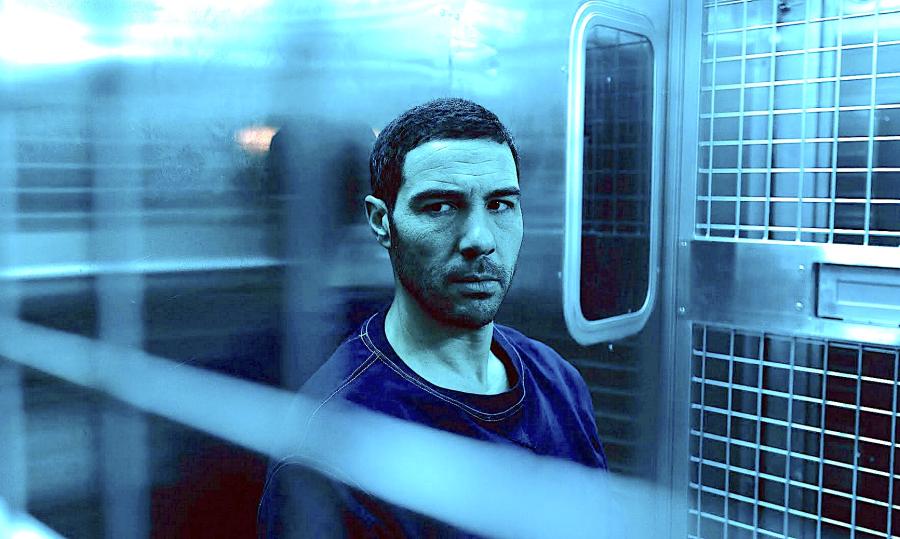
ADAM SWEETING: How did the role of Tibor in Prisoner come to you? Did they send you the script?
TAHAR RAHIM: Matt Charman, the screenwriter, sent me the first draft because, as you must know, in the TV series world, you don't get the whole package. You get the first draft and then there's another document telling you the story. Or you have a great long conversation with the showrunner, which happened to me with Matt. So I read the first episode and I'm like, ‘yeah, there's a good story, good character, but there's some stuff that I don't buy’. And he goes like, ‘yeah, what don't you buy?’ I'm like, this and that. And he goes ‘okay, let me surprise you. I'm going to tell you why this and that’. And then I'm like, ‘tell me more’.
And when I heard the whole story, and working with Matt, who's a great writer, the relationship we were starting to develop convinced me. He is so actor-friendly, listening to your suggestions, taking the right idea and make it even better. I felt confident enough and I said, ‘listen, let's go for it’. I've always wanted to be a part of an action film or series, but I never wanted it to be just a flat action thing. I've always thought that good action pieces are good because the action is not gratuitous. Action is something that's made to help characters or it’s rooted in the story, and that's the case in this show.
So you wouldn't want to be John Wick?
No, even if I like the first John Wick. I mean, it was simple. A man with his dog taking revenge. It was good.
They tell us that Tibor has killed at least 47 people, but he seems to have hidden qualities. In fact, he's quite likeable.
Oh, cool. I'm happy to hear it.
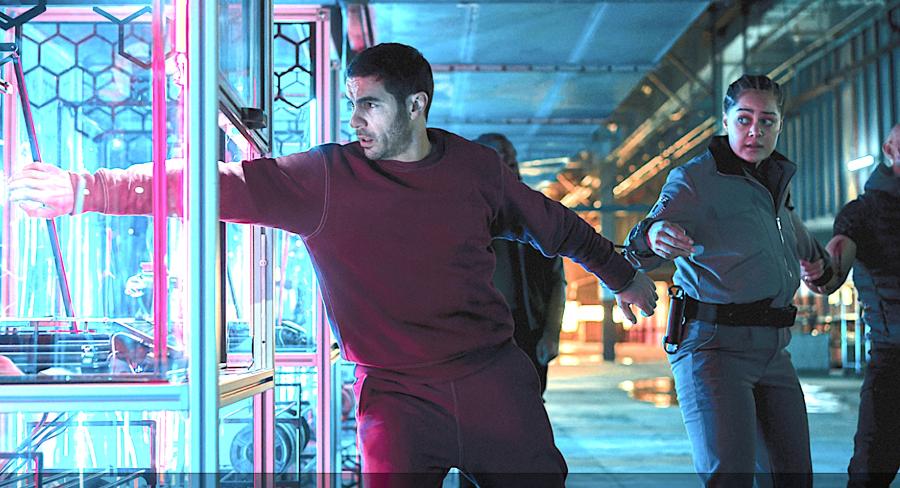
I think he has a sense of humour hidden in there. That scene when you hitch a ride in a truck and your co-star, Amber, is trying to kind of schmooze the driver, and you just say ‘here’s five grand’ and he takes the money.
I thought that was funny. Yeah, he's got a sense of humour. Because there's one thing that's important about Tibor and that needed to be clarified from the get-go. He's not a psychopath. He's a sociopath, which is really different, because you've got a lot of sociopaths at the top of the pyramid. And they don't carry guns. They have a lack of empathy, and they can change, especially when they reach their 40s. I know that because I like to work with my psychologist each time I have a part that's something a little not-so-light, I'd say. And that's how I learned this. And I watched some documentaries about it and everything. Yes, they're likeable, because every interaction they have with people is to turn it to their own advantage. And Tibor is so good at reading people, using their feelings to get what he wants and to push them to do something so he can use it against them.
Did you feel it developing as you went along, you had to put a bit more into the character, introduce different shades of humour?
Yes, I think it happens along the way, episode after episode. Because the relationship he and Amber have at the beginning is a survival relationship. And it'll turn into a strangely human relationship. They need each other. You'll know more about Tibor in episode four, how and why he became like this.
So the action genre can have a lot to say.
Absolutely. Great action movies can be masterpieces, carry an even bigger message or philosophy. Let's take The Matrix. For me, it's a masterpiece. There's a lot of action, but take the action out and you have such a deep, important movie. Brilliant concept, wow.
You've got a very good cast around you in Prisoner, including Eddie Marsan, Catherine McCormack, Sam Troughton and more. You're an exec producer, so did you have any say in casting?
I could have. I mean, I trusted them, I trusted Matt Charman. Obviously Izuka was very good, but the thing I deeply hoped was that she was nice, because when you're handcuffed to somebody for so long [as he is in the story], you better have a good partner! And she is even more than that. She's such a beautiful soul. Great actress, very committed to her job. Courageous... she's a soldier, and she was so good at the physical part that she had to lower her capacity to match the character. Because, of course, Tibor is well-trained and everything is a reflex. But for her, she was trained a little, but she couldn't fight like him. And she's very good at conveying emotions, as you can see.
I worried a bit about the baby who gets carried around everywhere, but I’m sure she was well looked after?
Yeah, of course. She's fine! We took a stunt baby. She's always wanted to do this.
You're obviously very comfortable working in English. How are you so good at it?
I love it, first off. And I work my ass off. Because when I was at school, I was quite good in English and with foreign languages. I grew up with Arabic and French at home. And I come from a suburb, and it was like a melting pot. That's why I'm so fond of working abroad and exploring different cultures. I've always wanted to work in English, because maybe the most important acting school I've ever had is the New Hollywood. I didn't feel connected somehow to French movies in terms of representation. And when I discovered the New Hollywood, it was a revelation. It's just a different place. Different language and different food, but it was just like us in my suburb. Yeah, they would speak the same way. They had the same issues. They come from the same social place. And they were anti-heroes.
We would tell stories of these people. And the golden age of Hollywood was finished. And I felt really connected to them. And that was my first school, and I had some dreams. And I know that the mythology in America is wide and vast enough to have so many different characters to portray. And in France, we don't have that mythology. And I just wanted to be a part of it. So yeah, I worked on my English so much.
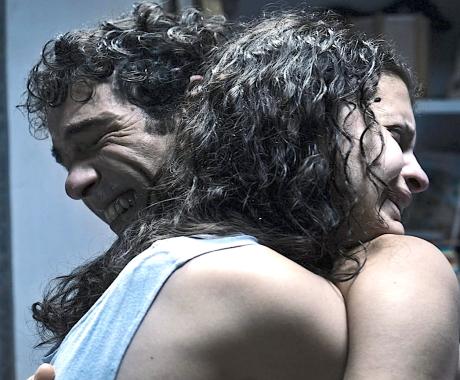
I saw Alpha. I thought it was very good but it freaked me out a bit (pictured above, Rahim and Mélissa Boros in Alpha).
Oh yeah? I can imagine. Thank you.
It got some brilliant reviews and others that were a bit kind of...
Both, yeah. I knew that it would divide the audience, because that's the way Julia Ducourneau makes movies. She wants to create an inner feeling that you can like her or not, but it's like an experience. You just have to sign in and let's go. But I understand why some people didn't get into it. I'm among the people who love it, because I love coming out of a movie and trying to find answers. I don't need to be reassured with answers at the end of the movie. I like it when I come out and I'm like, ‘what was it? Oh, maybe he is this, maybe he is a ghost of this and that’. And the themes she explores are really important. I think life, death, mourning, the way you carry trauma. She’s a great film maker, and my part was so beautiful. Amin is a fallen angel.
And you lost a lot of weight for the part?
Yeah, between 19k and 22k. That was tough.
Amin has a terrible drug habit. Have you met junkies and people who have those kinds of problems?
I did. I volunteered in a facility that helps people who are suffering from drug addiction. For weeks, I talked with them. And they allowed me in their most intimate moments. And they allowed me to film them and talk with them and record them. And it helped me a lot to build my character. Because I came to realise they are just wounded kids. You know, I think that we all have an emotional pocket inside of our bodies or souls that could be spiritual. And they couldn't fill it with love, the love they needed. So they found this product. They are sick.
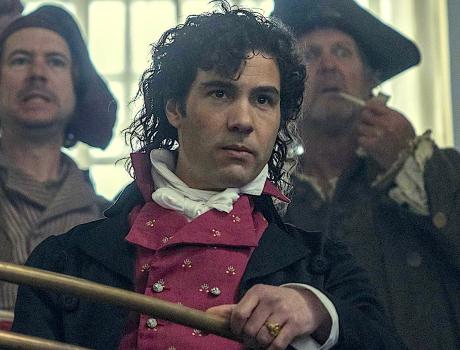
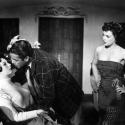
I’d forgotten you were in Napoleon (pictured right, Rahim as Paul Barras). What it was like being directed by Ridley Scott?
He's a big part of my inspiration. When I was a kid there were a lot of his movies. I remember watching Blade Runner on TV. Alien. Thelma & Louise – what a great movie. And I didn't know he directed it. And I'm like ‘wow, he's capable of doing this? It's so different’. And of course Gladiator, and The Duellists (1977) with Harvey Keitel, it was his first movie. He's a legend and I wanted to work with him.
So how was it working on Napoleon?
It's crazy. We shot it in Malta, which stood in for Toulon. Cannonballs, fights, you know, Ridley Scott stuff. And we would shoot the scene at the same time and we were on the same stage, in two different places. So Joaquin Phoenix was playing his part so far away I couldn't even call him because it was so huge. There were always four cameras, but in this specific scene there might be eight of them, and we would shoot at the same time, action, cut. Everything was happening at the same time, it was crazy, it was like being in Disneyland.
Ridley has got so much experience that he knows exactly what he's going to edit, so he would direct you exactly when you were acting the moment he would edit. It was quite impressive. And he left us a little room for improvisation, which was great.
When you're doing TV, does it feel very different from doing a movie?
The TV series grammar is different, it's inherent to the concept, and the rhythm is different. Apart from that, it's not so different. The good thing is when you make movies, you have more time to dig, you have more takes, more time to perform, to find the right angle or whatever for a sequence. Sometimes you've got like two sequences, maybe one a day in a good budget movie. In a series, you could shoot maybe five sequences a day, so you’d better be ready. But it's a great school for actors, to be thrown straight into it. You don't have time, so you’d better know your character well.
Are there times when you're about to do a scene, but you don't feel you're qualified?
Yeah, of course, always. Then you've got to trust your director and the editor, because you don't have time even though you're like, ‘I want to try something different’. There are always some moments where you go like, ‘I could have done it differently, it could have been better’. That's the way it is.
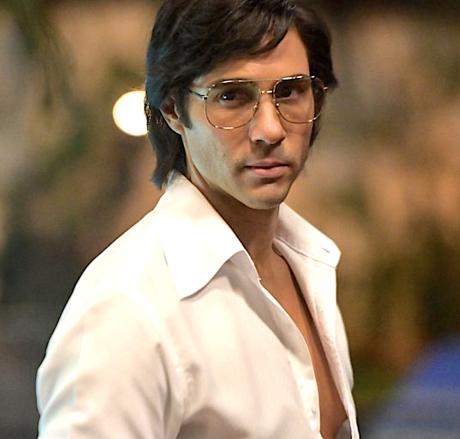
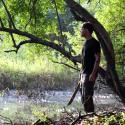
And you played serial killer Charles Sobhraj in The Serpent (pictured left).
I loved it. Because when I was 14… I'm the last of 10 siblings, and my big brothers were reading a book, The Trail of the Serpent, something like that. And I found it in my nightstand one morning. And I read the back of the book, and I'm like, ‘oh, good story’. And I read the book, and I was aspiring to be an actor. And later I remember having a conversation with my agents, and saying, ‘I want to explore evil in a character’. And a couple of months later, I had an email, and I read it was the serial killer Charles Sobhraj, and I'm like, ‘whoa! That's such a twist of fate!’ And I called my brother, and I was like, ‘you will never imagine who I'm going to play’. Yeah!
Making A Prophet with Jacques Audiard in 2009 was a key moment for you, wasn't it?
Absolutely. Mega. It was one of the most memorable for many reasons, because I really enjoyed and loved the experience and the adventure. And above all, it was my first feature, and a first time happens just one time. But that's what drove my path of acting, trying to find the taste of the first time all the time. That's why I love to jump from one universe to another one, trying to explore new fields of acting and trying to be versatile. Otherwise, I get bored.
Did you find A Prophet a very demanding experience?
It was, and I was scared to be fired every day. I didn't know a lot about the business at the time, so after six weeks, I thought I would be fired. Because I felt like ‘I'm not good enough, maybe he's not happy’. But I loved it, and we had such a great, magical relationship with Jacques. And the movie became what it became. It launched my career. It changed everything.
Do you ever write scripts yourself?
I tried, and I'm not a great writer. I'm a good collaborator. I like to work early in the script with my directors, like developing a great conversation. Because I truly think that when you work with a good writer and when you're an actor, if you're involved in helping the movie or the show, the best idea wins. I don't care about the credits or whatever, but when you talk, you can feed him, and then he feeds you back, and that creates a synergy, a fresh one. Movie history taught us that it creates great movies. The relationship between Scorsese and De Niro, even DiCaprio, that's what happened. They talk, they worked together.
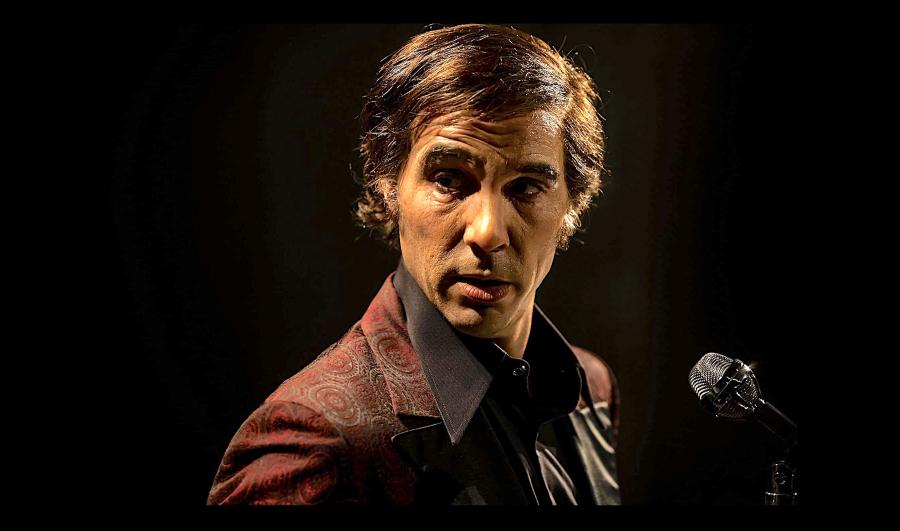
How did you get the role of Charles Aznavour (pictured above)?
What happened is that Charles Aznavour's son-in-law is like a brother to me. And he's married to his daughter. He's a music producer, movie producer, and they were prepping Aznavour. And I was talking with him. I was like, ‘look man, you've got to go to Armenia, find a guy who plays instruments, sings and speaks French and everything’. We were just talking like friends in the business. And then later I was back from America and I'm back in France and we have dinner. And he goes, ‘oh, by the way, they want you to play Aznavour’. And I'm like, ‘what? They're crazy!’
So I studied it for a weekend, watched documentaries about Aznavour and everything, and I felt like the challenge was so seducing that I couldn't miss it. So I called them and I said, ‘listen, I'll do it’. I wanted to quit hundreds of times while preparing, but I didn't tell them. And I worked so hard for eight months, piano, singing, finding his singing voice, his talking voice, his gestures. I thought there’d be someone else who would sing the songs, but I wanted to learn how to sing so it looks real.
And when I sang the first song, the director was like, ‘hey man, it's close’. And he goes ‘keep working’. And my vocal coach told me I could make it. And I'm like, ‘no, it's not going to happen. Let's keep working’. And at the end of the shooting they were like, ‘I got one good news and one bad news. What do you want first?’ I'm like, ‘the good news’. And he says, ‘you're going to sing in the movie’. I said ‘great, what's the bad news?’ He said ‘we'll need to re-record everything because you've improved so much that we have to record all of it again’. So I spent two days recording on set, and then I went back in the studio to do it again and everything. And I finally found out that we had so much in common, Charles and I.
- Prisoner is on Sky Atlantic and NOW from 30 April
- More film reviews on theartsdesk






Add comment