

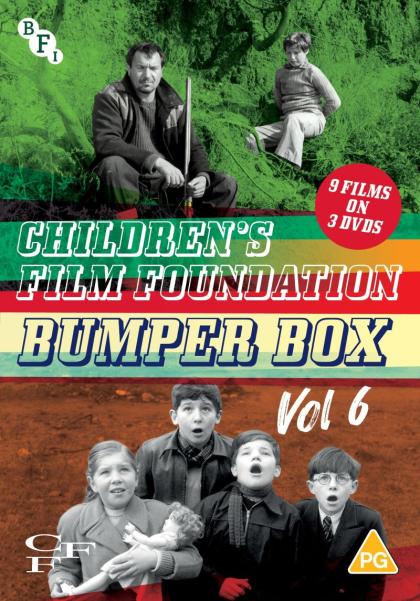
Freshly-exhumed from the vaults, this latest Children's Film Foundation selection follows an established template. We get nine pacy short features taken from different eras in the CFF’s existence (in this case, between 1954 and 1980), along with a selection of choice extras. BFI producer and film historian Vic Pratt’s booklet notes are worth this set’s purchase price alone: that “CFF films were good, clean, fast-moving fun: short, sweet, high on kid-based comedy hi-jinks and straightforward adventure; low on boring grown-ups’ stuff like romance or overly complicated plots” pretty much sums up their appeal, though Pratt rightly acknowledges that the organisation’s output does reflect the changes in post-war British society and attitudes.
1954’s Mystery on Bird Island, its plummy-voiced Ridunians (look it up!) outwitting a gang of egg smugglers in some style, is worlds apart from Black Island (1978), the latter focussing on two distinctly ordinary boys stranded on an island where a pair of escaped convicts are hiding out. Director Ben Bolt draws excellent performances from his young leads, with Michael Elphick and Allan Surtees superb as the villains. Look out for a heart-stopping act of kindness in the final minutes, Surtees’ shifty old lag reunited with his missing false teeth. Children in CFF films may argue and call each other names, but there’s an awful lot of empathy on display. 1980’s Danger on Dartmoor is a case in point, the developing relationship between Barry Foster’s man on the run and the three teenagers he encounters recalling that between Dickens’s Magwitch and Pip.
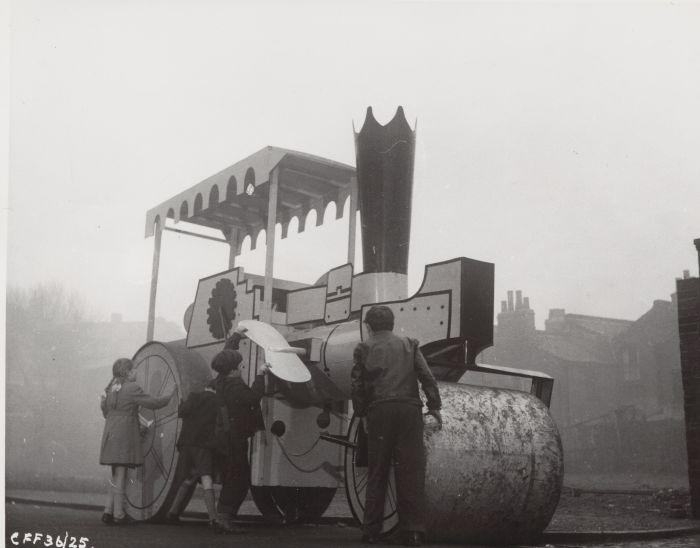
The Cat Gang (1958) and Rockets in the Dunes (1960), both entertaining, follow a similar template to Bird Island, with well-spoken children in picturesque settings having exciting scrapes. Though produced on low budgets, each makes excellent use of location footage. As does my personal favourite in this volume, One Wish Too Many (1957) (pictured above). Shot in a very grimy Bermondsey, its protagonists boasting authentic saarf London accents, it stars Anthony Richmond as a boy whose magic marble offers him the chance to have anything he desires. But, this being a CFF film, he uses it to redecorate the front room, give his best friend a doll and acquire a shiny toy steamroller. The classroom scenes, filmed in one of the London County Council’s gleaming post-war school buildings, are terrific, Sam Costa on fine form as a frazzled teacher, and there’s an action-packed final act.
The 1960s saw a shift to colour, and Davey Jones’ Locker, filmed in Malta in 1965, has a great funky soundtrack and the young Susan George among a cast chosen for their swimming abilities as much as their acting chops. The underwater sequences are impressive, the children performing their own stunts. Lionheart (1969) features an escaped circus lion hiding in the shed in young Andrew’s garden. A sequence where the boy has to retrieve a coat without being eaten alive is genuinely scary. Jimmy Edwards and Wilfrid Brambell are among the supporting cast, with Andrew’s mother played by Pauline Yates, better known as Leonard Rossiter’s onscreen wife in The Fall and Rise of Reginald Perrin.
Smokey Joe’s Revenge (1973) is a daft delight, its Chopper-riding protagonists restoring a feisty traction engine with, er, hilarious consequences, hoping to achieve success at the local Steam Fair. You’ll cheer when pompous oaf Mr Williams (Robert Downing) fails to take first prize and has his shiny car flattened by 20 tons of sentient cast iron.
Each of the three discs contains enticing extras. A 1956 edition of the CFF’s weekly newsreel includes a look at Battersea’s Pleasure Gardens and a trip down a South African gold mine. An episode from CFF series The Magnificent 6 and ½ (the 1968 forerunner to the BBC’s Here Come the Double Deckers!) is notable for some very stagey studio sets and a scene where a young goat nibbles a policeman’s trousers. 1976’s Chiffy Kids: Room to Let has a very irritating theme song but makes up for it with an appearance from the great Alfie Bass as a tramp. Another delightful package, then, beautifully restored and well-annotated.











Add comment