

A look at Darling on its 60th anniversary offers a sobering reality check on the "Swinging Sixties", a reminder of the fallacy of the decade’s gaiety and supposed liberation, especially for women.
This attractive 4K restoration reveals the film to be a very complicated animal indeed – both in its own time and through the prism of today’s very different political correctness and gender ethics. While John Schlesinger’s "classic" plays like a scathing satire of the period, I’m not convinced that this was entirely intentional at the time, which of course makes it even more interesting.
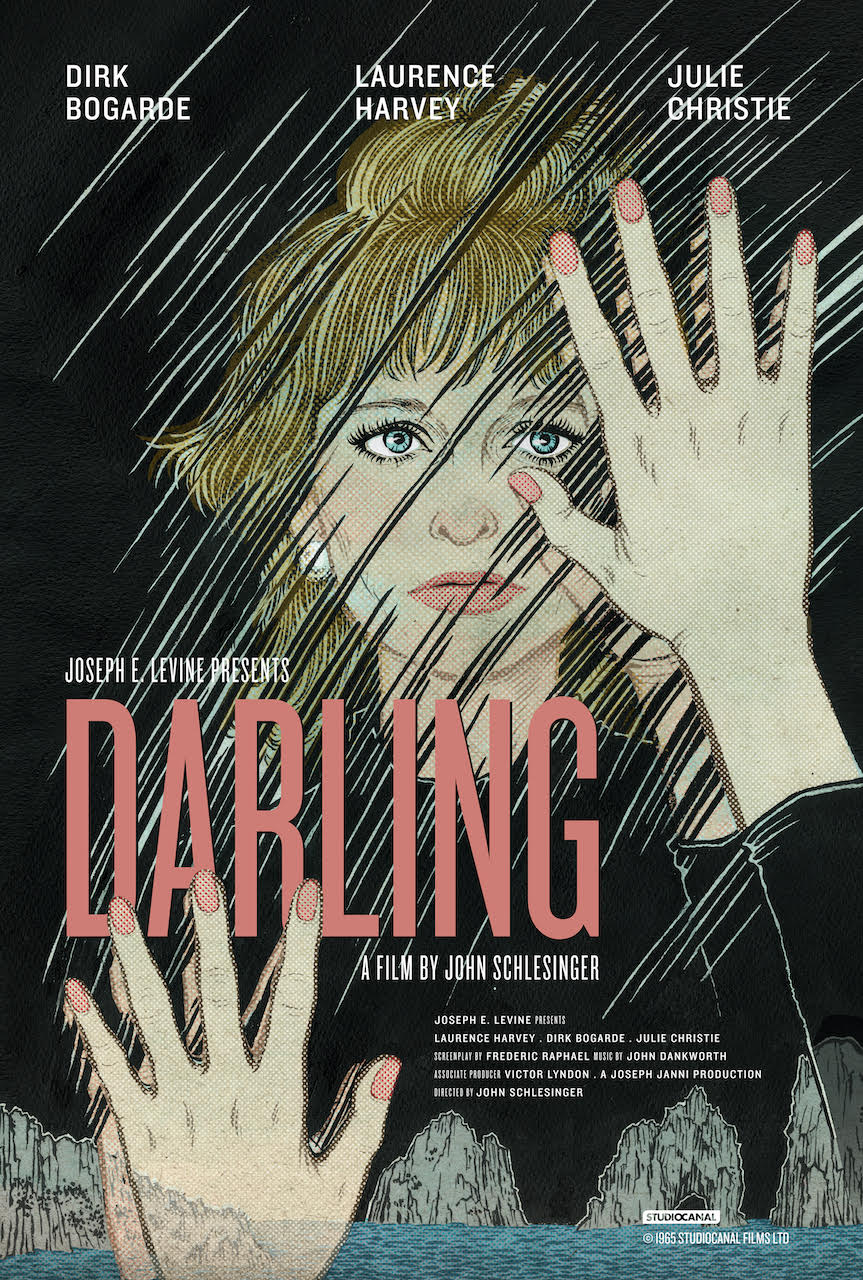 The film originated with Schlesinger and his long-time producer, Joseph Janni. Hot on the heels of back-to-back kitchen sink dramas, A Kind of Loving (1962) and Billy Liar (1963), there seems to have been a conscious desire to move away from social realism and the northern locales of those films to something more indicative of the flash and excitement that was taking place down South.
In his new interview for this disc, screenwriter Frederick Raphael puts it bluntly: “They were quite tired of the lower classes and the dialogue. They wanted to do something classier.”
For both director and star, a very tangible transition exists on screen, in the penultimate scene of Billy Liar, Julie Christie’s character looking out of the train window as it whisks her away from Bradford and towards a new life in London, leaving the timid Billy to mere daydreams of escape. The change of setting and style would consolidate Schlesinger’s reputation and make a star of Christie, who would win her only Oscar for the performance.
And according to a short audio interview with Schlesinger, on this disc, the germ of the idea came from the Billy Liar shoot, namely Godfrey Winn, the presenter of the radio show Housewives’ Choice that features at the start of the film. Winn, who was keen to write a script, related a real story of a syndicate of showbiz and businesspeople who had rented a flat for the "kept woman" they shared, who then committed suicide by jumping off a balcony.
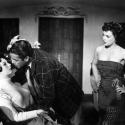
Perhaps the tragedy of this story sat uncomfortably with Schlesinger’s intentions; perhaps it was just too close to the plot of Billy Wilder’s The Apartment (1960). Either way, with Raphael the script now featured the character of Diane Scott, someone with far more agency than The Apartment’s Fran Kubelik and – for that very reason, perhaps – is presented with far less sympathy by the male filmmakers. 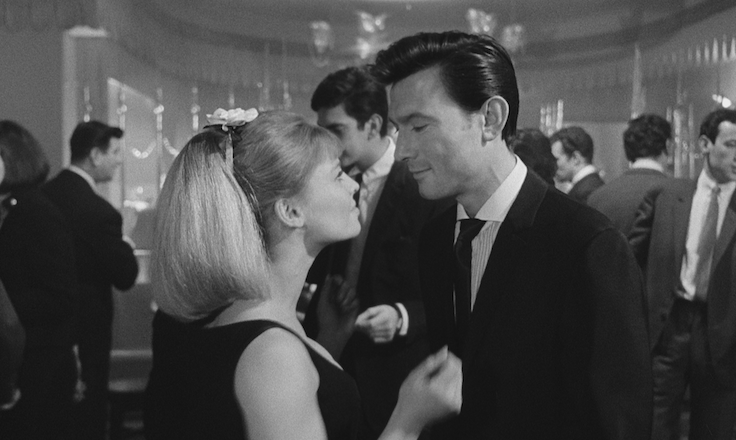 Diane is a young woman with ambitions; her problem, primarily, is that she isn’t entirely sure what those ambitions are, changing her mind – career-wise and romantically – from one moment to the next. She’s a model, a would-be actress, a socialite, smart and adaptable enough to move between worlds, her beauty and good humour very effective calling cards. She starts the film married, then moves in with journalist Robert Gold (Dirk Bogarde), with whom she seems genuinely happy, until his stay-at-home nature and her need to move onward and upward draws her towards wealthy and amoral advertising executive Miles Brand (Laurence Harvey, pictured above with Christie.) Eventually, an Italian prince will draw her away from London altogether.
Diane may be one of cinema’s first female anti-heroes, outside the very particular template of the femme fatale. She acts poorly, but Christie’s rich characterisation, full of spontaneity and charm, makes it impossible not to like her. Moreover, it's clear, ultimately, that the person she’s harming the most is herself.
At the same time, the film leaves an odd taste. On the one hand, it clearly manifests the appalling quality of the male-dominated worlds in which Diane is attempting to find her way; except for Gold and Malcolm (Roland Curram), a gay photographer who befriends her, the men – politicians, financiers, artists – are equally loathsome, the male gaze at its most abhorrent. On the other hand, the judgements rained down upon her, even by Gold, are disproportionately harsh – and would not be levied at a man.
This restored version comes with a pre-credits caution of “historical attitudes which some people may find insulting or offensive”. And the Blu-ray package pointedly features both the original trailer – loaded head to toe with acerbic swipes at Diane’s character – and the current one, in which these are entirely absent.
However socially aware Schlesinger, Raphael and Janni may have felt they were being, the fact that Christie was unhappy about the full nudity required of her, and persuaded nonetheless, speaks to their ethical inconsistency. One can make a narrative argument for that one nude scene, the clothes horse stripped bare of her camouflage at just the moment that she realises she's traded up a step too far. But there were other ways.
There’s an argument, too, that the filmmakers were doing their best, in the context of the period in which they were working – the film is quite bold and brazen for its time. And it conveys the Sixties well, whether through Gold’s work as a journalist (a sweet interview with a literary author; a vox pop with a homophobe made piquant by our knowledge of Bogarde’s own, closeted sexuality), Diane’s stunning wardrobe, or its depiction of what "swinging" meant for Parisians. 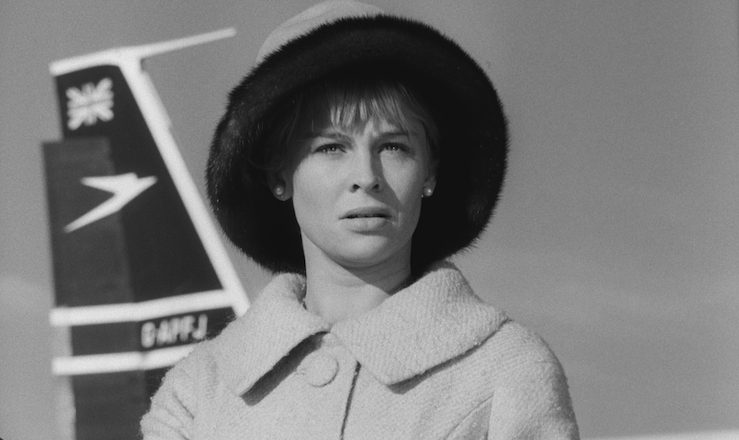 While the interviews with Schlesinger and Raphael aren’t revealing of anything other than a certain antipathy between the two men, fashionistas will find more value in an on-camera talk by Dr Josephine Botting on the work of the film’s designer Julie Harris, who won an Oscar along with Christie and Raphael; it is Botting who makes the astute observation that Diane is “more in control of her image than her emotions or desires”. A booklet includes an article on her designs, an appreciation of the director, and essays on “Darling’s insatiable anti-heroine”, “female ambition in the Swinging Sixties”, and the portrayal of the two men of the film, who contribute to one of cinema’s most distinctive love triangles.








Add comment