The Romanian New Wave continues producing cinema with a visceral power that’s hard to match anywhere in Europe, though to say it was alive and well would hit the wrong note, given the bleakness of the world it goes on depicting. Cristian Mungiu won the Palme d’Or at Cannes in 2007 for 4 Months, 3 Weeks & 2 Days, his lacerating abortion story set in Ceaucescu’s Romania, and last year his Beyond the Hills took high honours there again - the best screenplay and best actress awards, the latter shared between its two newcomer leads, Cristina Flutur and Cosmina Stratan.
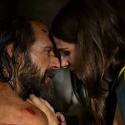
Alina, played by Flutur, has returned from a job in Germany to see her best (we wonder, only?) friend from their orphanage days, Voichita (Stratan), who has entered a country convent, a small community of nuns living in relative poverty and difficulty; she seems to have found genuine emotional security in her faith. Alina, by comparison, is lost, her memories of past closeness with Voichita the only thing in her life. Although Mungiu leaves the matter ambiguous, it seems that they had a physical relationship in the past, which for Voichita must end now that she has entered the convent. Alina plans to take her friend back to Germany, and live with her there.
The church cannot simply turn her away, and can only treat her with the resources that it has at its disposal
Alina is clearly disturbed - waves of grief have accumulated behind her - and her increasingly nervous states bring disorder to the convent; rather than absorbing tranquillity from the monastic life, it prompts her to fits, finally interpreted and falteringly treated in religious terms as possession. Based on a true story, the film's tragedy is in the fact that no one desires the ending that comes inexorably: the convent’s priest initially sends Alina to hospital, but treatment there is inadequate too (remember another early landmark Romanian film, Cristi Puiu’s The Death of Mr Lazarescu, and you'll understand). He tries to reconnect her with the foster parents, thoroughly well-intentioned folk, with whom she’s lived after the orphanage, but Alina refuses, insisting on returning to the religious community. The church cannot simply turn her away, and can treat her only with the resources that it has at its disposal, however wrong the diagnosis might be. This is not a film that condemns religion per se as a force in society .
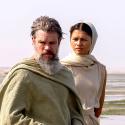
 Beyond the Hills has extraordinary poise, a sense of being in the right place throughout its almost two and a half hours screentime. The group of nuns (pictured right) are played as a muddled flock into which Voichita has become absorbed, while Alina has to stand outside (she has a spiritual rawness that recalls somewhat Emily Watson in Lars von Trier’s Breaking the Waves).
Oleg Mutu’s cinematography is revelatory, too, mixing the long scenes characteristic of Mungiu’s work with fuelled passion in quick, handheld work. He brings the light of the Dutch old masters to interiors, while Tarkovsky’s name inevitably comes to mind with exteriors. The light of this sheer visual beauty does at least shine in the darkness and confusion that Mungiu, like so many of his contemporaries, depicts as being the spiritual state of Romania today.
Beyond the Hills opens on Friday 15 March
Watch the Beyond the Hills trailer