In the English-speaking world we know most about France's Ursuline possessions of the 1630s through Aldous Huxley’s 1952 The Devils of Loudun, and of course through Ken Russell’s 1971 film The Devils. But a decade before Russell’s scandalous work, Polish director Jerzy Kawalerowicz treated the same subject in his 1960 film Mother Joan of the Angels, now re-released from Second Run in a restored version.
Kawalerowicz was at the height of his powers, heading up the Kadr state film unit, which was the effective central axis of the Polish film school, that took off from the mid 1950s as political restrictions on filming began to be relaxed (they would remain so for only a decade): the year before he had made his Night Train, which owed much to Hitchcock.
Here’s he’s on very different, eternal ground, in the stark territory of Dreyer, Bergman et al. An extra on this release by Michael Brooke suggests he might have seen that other film about convent life going badly wrong, Powell and Pressburger’s 1947 Black Narcissus. It seems very plausible.
But any film made in Communist Poland at the time about repression and redemption obviously had wider echoes. Kawalerowicz, an avowed atheist, pitched it to the Communist authorities as anti-Church. He ended up making one of the most spiritual films ever. Before it won the 1961 special jury prize at Cannes, the Vatican had sent a delegation there to challenge him. Ironies of history.
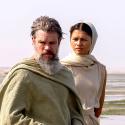
Outstanding performances in bleak black and white landscapes, captured brilliantly by cinematographer Jerzy Wojcik, from the director’s wife Lucyna Winnicka as the possessed abbess Mother Joan (she was pregnant at the time, and has some very physical action: the other nuns were apparently costumed to accord with her pregnancy). Chief exorcist Father Suryn (Mieczyslaw Voit), taking on her devils, excels, and doubles as the Rabbi from whom he seeks advice.
Extraordinary then. No less extraordinary today, in a version that restores the richness of its sharp images brilliantly.