Our most adventurous guitarist never does anything twice, at least not in quite the same form. Days after a recital in Dublin's Royal Irish Academy of Music, he included several items from that programme in a unique three-parter.
It started with a selection of international lute dances from the Scottish Rowallen Manuscript – talking about them in between, as he apparently didn't in presumably a different Dublin selection – in the Queen Elizabeth Hall foyer, before leading us in to the Purcell Room for Bach and Adès on guitar, and then out for Part Three in a differently organised foyer, featuring three works for electric guitar.
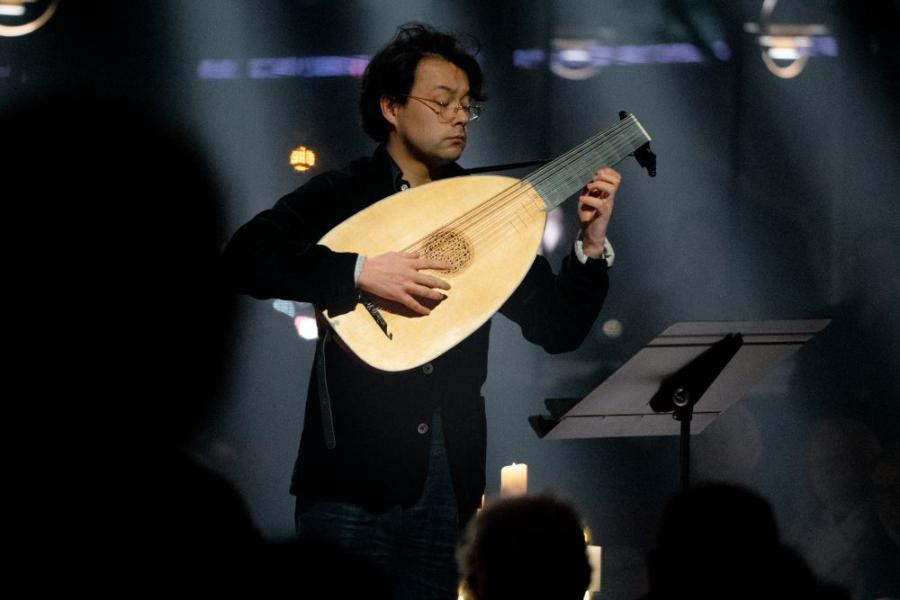
It didn't all work, but kudos to Shibe for trying. One overheard, rather than fully heard, the subtly dancing lute pieces (only the clavichord is quieter, surely). Shibe strolled around strumming on a creaky block of four platforms surrounded by candles, seats laid out on one side for those who claimed them quick enough, and bring-your-own for the rest of us to turn it into a concert-in-the-round experience. It started with his back to many of us, with the score in front of him, but to do him credit, once he noticed we were there too, he delivered quite a bit of the first part to us, with a noticeable drop in volume once he turned around.
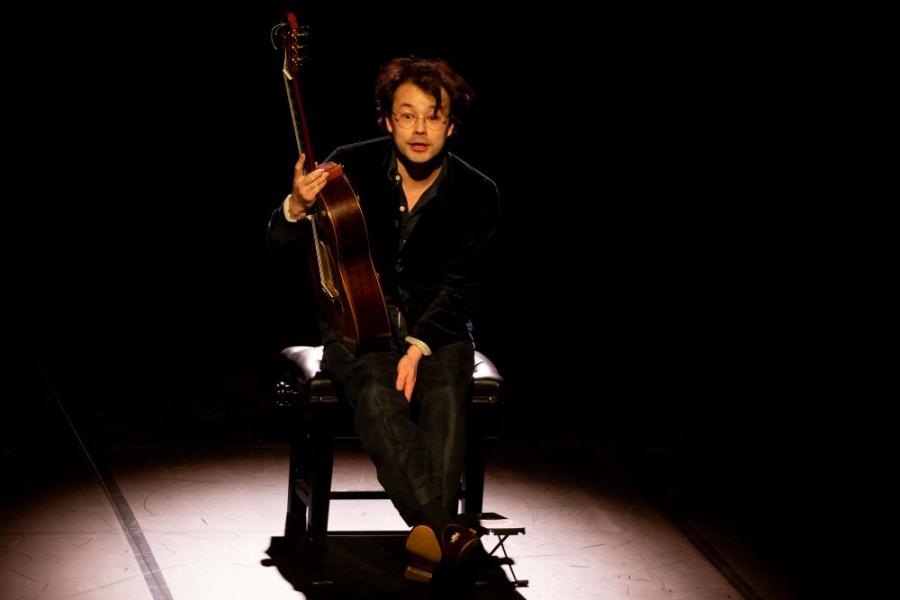
The undoubted highlight was Shibe's marvellous transcription of three movements from Bach's First Cello Suite in the Purcell Room, the guitarist illuminated by a single spotlight with the rest of us in darkness. Its continuity rather showed up the stop-start nature of Adès's Forgotten Dances, giving the concert its title, with retuning necessary between numbers. No masterwork this, though it does extend the range of colours available to the chameleonic Shibe, and whilst some movements felt like doodling improvisation, the semi-Passacaglia/Chaconne finale, in homage to Purcell (clear, but I didn't get the previous reference to Berlioz) rose to a serious challenge.
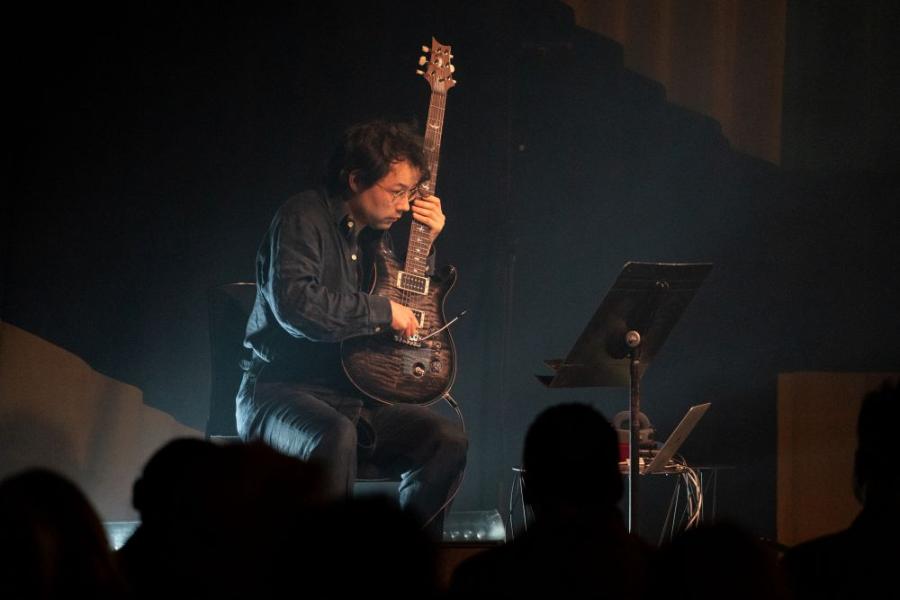
Shibe has previously stunned in electric dialogues with his recorded self, transcribing Julia Wolfe and Steve Reich, but this Part Three was quite different – mostly soft rather than loud – and only partially successful; as my companion pointed out, Shibe seemed to be enjoying much of it more than we were.
The arrangement of Wuorinen and Cage disciple Daniel Rothman's What bodies know truly mesmerised in its minimalism. The sequels. unfortunately, outstayed their dubious welcome. Carola Bauckholt's divining rod turned out to be an endless parade of sound effects, the sort of thing you used to get from the BBC Radiophonic Workshop, starting with on-edge skreekings, changing rather than evolving in to what sounded like a rainforest with birdsong. Way too long. Ditto Alex Paxton's Carpig ("= half car, half pig"), lively and stamping but baggy – not quite the vivacious finale Shibe was hoping for. Five stars for execution, three for programming.