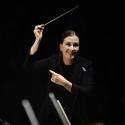
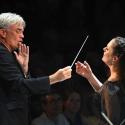
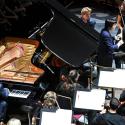
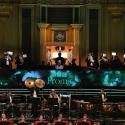
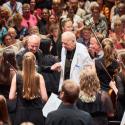
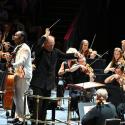
While we wish the great Mariss Jansons a speedy recovery, no-one of sound heart and soul could be disappointed by his substitute for the two Bavarian Radio Symphony Orchestra Proms, Yannick Nézet-Séguin, whose supreme art is to show the score's construction in the face, with gestures to match. Some of us, on the other hand, weren't quite so happy that Shostakovich's Fifth replaced a deeper, richer symphony, the mighty Tenth.
What, though, was not to like about the Beethoven? It's such a charmer, but it still needs careful handling, and hours of rehearsal time with the BRSO, unquestionably one of the world's top five among orchestras as Nézet-Séguin is among conductors, must have been spent on split-second changes of light - the way, for instance we seem to have gone back to a recap of the second theme, in the first-movement development, when it suddenly cuts away to a question from the two flutes. From Mozartian charm to Beethoven on proto-Eroica charge was allowed, but within strict bounds. The scherzo had exactly the right lightness in emphasis; the finale was energetic without a hint of bludgeoning, down to the careful judging of the very last chord. 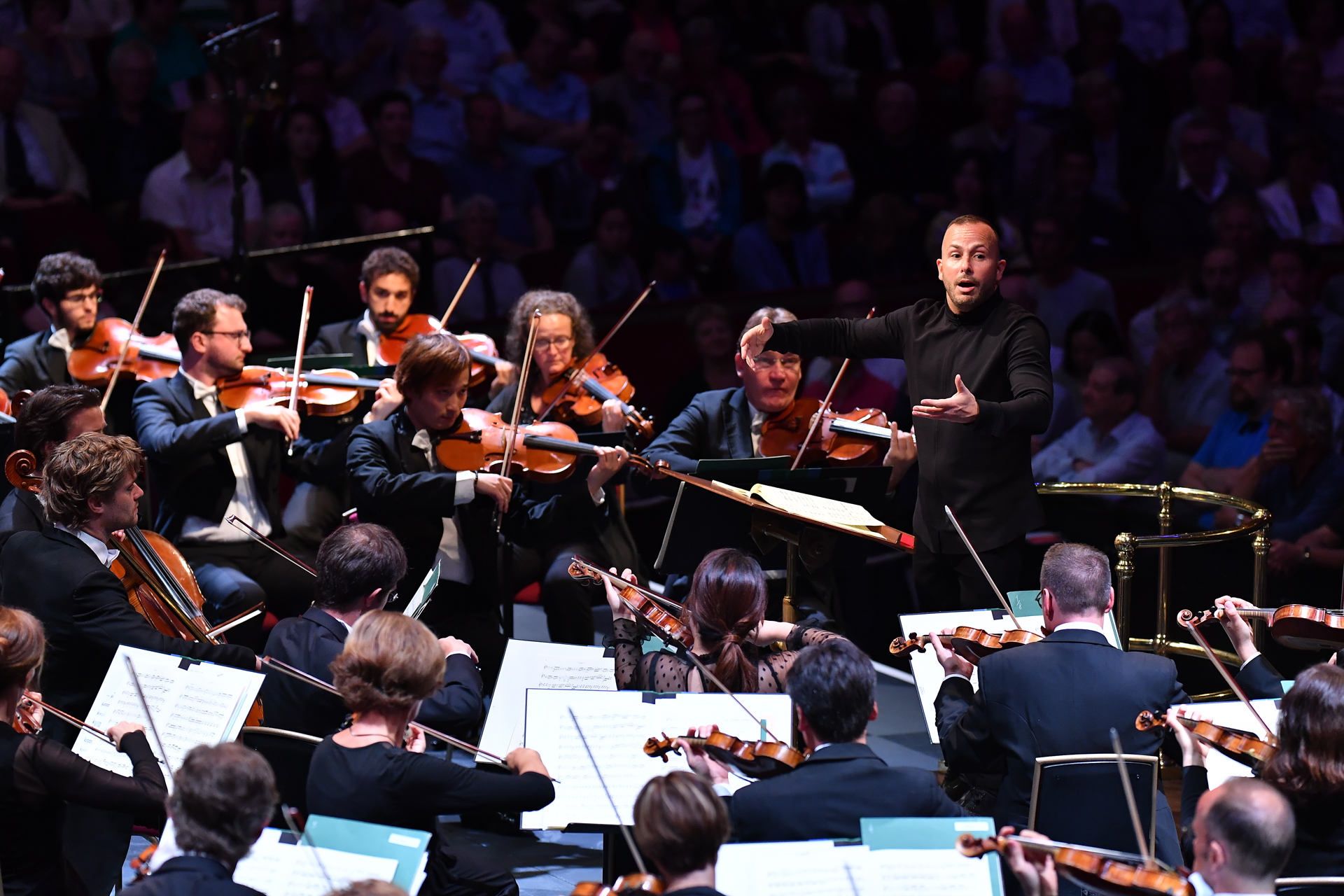 The beauty of the Shostakovich rested with its inner movements. Having left us wanting more edge to the supple string phrasing in the opening progression from sadness to shrill pain and back - though tremolos were fierce and intense - the Bavarians fielded double-bass playing of startling heft at the start of the Mahlerian scherzo, complemented by biting, E flat clarinet-edged woodwind; very individual characterisation, too, from leader Radoslaw Szulc. For the desolate Largo, the one movement that went deep with the Soviet audience’s unspeakable pain in 1937, Nézet-Séguin fashioned divided-string laments on the cusp of audibility, trusting to the Albert Hall to intensify them and draw the 5,000 plus audience in to listen carefully; the numb Orthodox chant at the heart of the lament has never sounded more like a murmuring crowd. Here, too, as in the first movement, first flautist Philippe Boucly was the fine-tuned star of the show; there can’t be a more sensitive principal in any orchestra in the world.
All the more appalling, then, that the faux triumph at the end of the finale has to sweep that all away. Maybe I’m just beyond interest as to whether it’s threatening or celebratory, but this gilded spaciousness seemed like a perfunctory grandeur. So much the worse that instead of a stunned, brief silence, the bravos and the standing ovation followed so immediately. It took the pure, misty waters of the Moscow river at dawn in the Prelude to Musorgsky’s Khovanshchina to wash out the bad taste; an inspired encore on Nézet-Séguin's part, especially since it appeared – I’m assuming, with the last-minute appearance of the celesta a giveaway – in Shostakovich’s glowing orchestration.