Precious few musicians can instill such a sense of intimacy into their playing as to have us believing that the Royal Albert Hall is the Wigmore Hall and that their performance is for an audience of one and not six thousand. Mitsuko Uchida is among the select few. Indeed there were feats of projection in pianissimo during her performance of Beethoven’s Fourth Piano Concerto with the Bavarian Radio Symphony Orchestra under Mariss Jansons that I’m not sure any other living pianist can achieve in quite the same way. It’s the quality of the soft playing, the limpidity and beauty of the sound, the distillation of atmosphere, the way notes hang in the air because phrasing and weighting is so subtly managed.
Perhaps there were a few more finger slips in this performance than we are accustomed to with Uchida - the finale especially seemed marginally to tire despite Jansons’ vigorous attentions - but there was more than enough here to excite the imagination, the articulation spry and meaningful, the contrasts between action and repose vividly drawn, and a first movement cadenza where a world of expression seemed to dissolve into the most expectant and luminous trills imaginable.
They emerged again, with unexpected menace, in the climactic solo passage of the slow movement, the start of which was sternly, weightily, announced by articulate Bavarian cellos and string basses. Uchida was truly in her own world here, unheeding of those string declamations (a stroke of unparalleled genius from Beethoven), and the arrival of the keyboard’s rapt melody sounded transfigured. What a truly great pianist she is. And as if to emphatically reinforce that view there was her encore - the ravishing trill-festooned Sarabande from Bach’s Fifth French Suite in G - where I began to wonder if I had ever heard a more beautiful piece of piano playing.
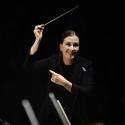
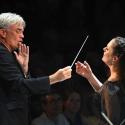
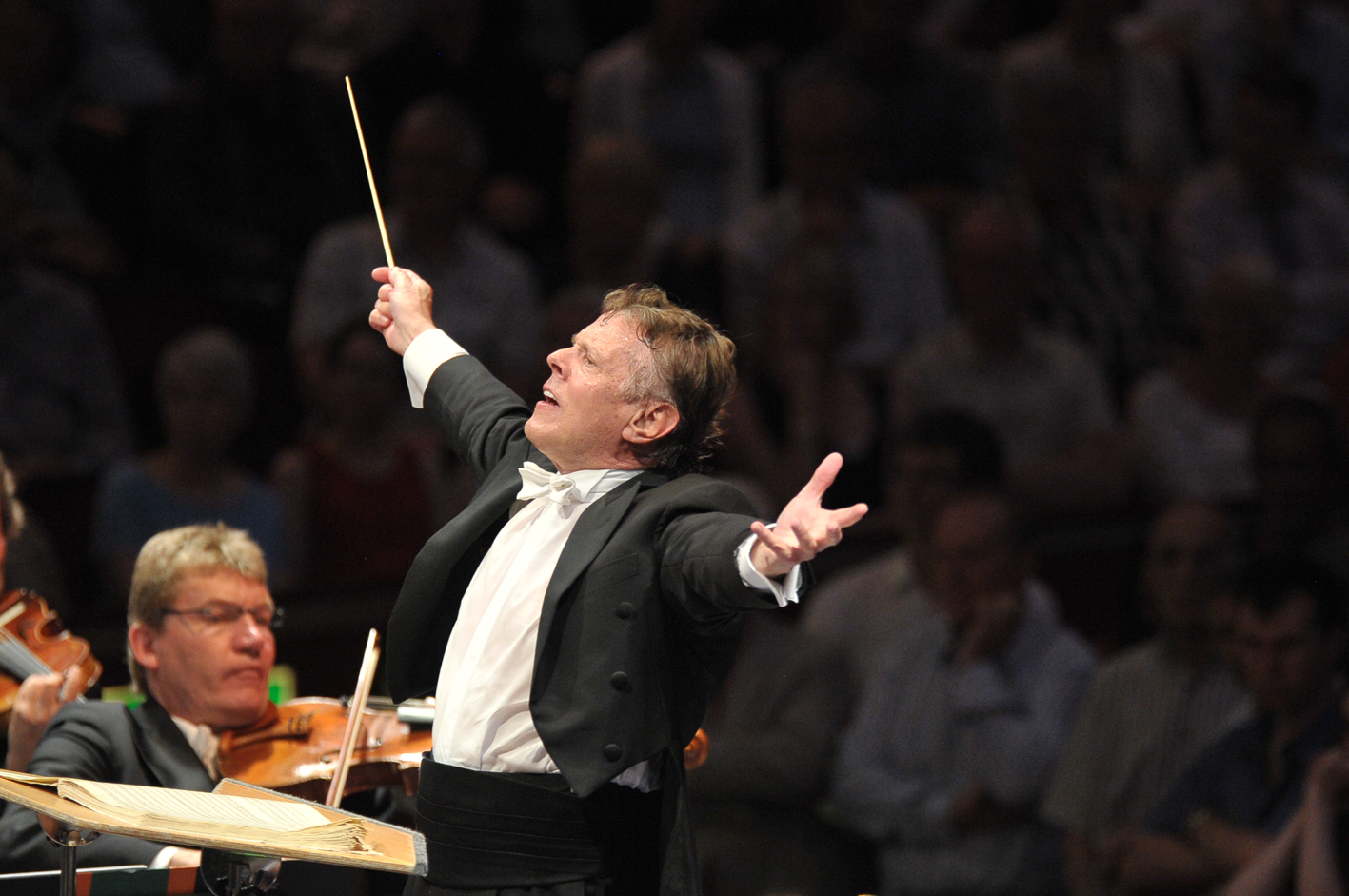 The main event for Jansons (pictured right) and his cultured Bavarians was that much-loved showpiece for the great and the good of international orchestras - Berlioz’ Symphonie fantastique. Jansons and his players caught the rapture, the fragrance, the headiness of the music, their homogenous blend wonderfully anchored in panting, seductive string basses with such star turns as the first oboe and first bassoon sounding eminently French in sensibility. Effective too was Jansons’ response to those quirky dynamic contrasts - subito piano/ subito forte - where the sound must suddenly evaporate and then with equal suddenness be reinstated and redoubled in intensity. The Scene at the Ball was elegantly turned and intoxicating, the scene in the country well managed for its “special effects” - oboe magically replying to cor anglais from offstage and the distant thunder of multiple timpanists forming ominous chord clusters.
But as the hallucinations became more grisly beneath the scaffold and amidst the cavorting hags of the Witches’ Sabbath I began to want more edge and more sheer brilliance from the sound, to say nothing of a degree or two more grotesqueness in the characterisation so that those fruity bassoons were less inviting, more malevolent, and the trumpets and growling trombones more brashly celebratory. Spooky glissandi in oboes and flutes and horn (later hand-stopped in grimace) caught the humour of the finale but the increasing rampant “Dies irae” was frankly a bit tame and it was only when Jansons did his usual trick of ratcheting up the tempo for the pay-off that the excitement really kicked in.
The encore took me and most everybody else by surprise - a weird and wonderful gypsy spoof from that master cartoonist, Gyorgy Ligeti - the fourth movement of his Concert Romanesc - which picked up deliciously on Berlioz‘ sense of parody and got full marks for originality even if it did need dirtying up a bit more.