Prokofiev’s Fifth is a symphony for which the conductor’s setting tends to be turned to either bright and light or dark and heavy. Perhaps because of the composer’s perceived joker role as set against Shostakovich the symphonic chronicler of Soviet tragedy, Vassily Sinaisky at the 2005 Proms made a glib, glossy showpiece of it.
It’s true that Prokofiev in 1944, as usual, mined material that hadn’t seen the light of day. A crowd scene from the original “happy ending” of his Romeo and Juliet ballet is re-engaged for the angular clarinet charge of the racy scherzo; a theme for wan Lisa, heroine of The Queen of Spades as musically depicted in an aborted film for the 1937 centenary of Pushkin’s death, becomes the grieving slow-movement heart of the symphony. Nézet-Séguin gave both their head, but emphasized how the snapping trumpets leading us away from the scherzo’s eerie-gracious centre initiate a reign of terror, and I’ve never heard the private suffering of the Adagio so chillingly subverted by brass parades and funeral marches.
The Tchaikovsky and Prokofiev performances made this one of the most electrifying orchestral concerts I’ve heard in some time
I’d thought Gergiev’s great coup there, the hushed return of the main theme after screaming discords, couldn’t be surpassed, but it was trumped here simply because the Rotterdam strings had already set up greater depth and pathos in the arching melody. What a joy to see that great violinist Marieke Blankestijn as leader, reminding us that the best of players in the role projects an authoritative energy almost as strong as the conductor’s.
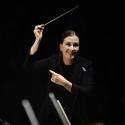
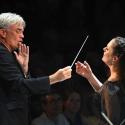
It helps to see every one of Nézet-Séguin’s animated expressions, as we could from the side stalls and you still can on TV: never showy or theatrical, always working towards decisive climaxes in Prokofiev’s outer movements and, indeed, in the shattering denouement of Tchaikovsky’s so concisely dramatic Romeo and Juliet Fantasy Overture. He even riveted my attention away from the antics of a May-September duo in front of me, the much older man determined to show possession of his trophy doll in the great love theme.
Not everything was orchestrally note-perfect. As I mentally noted how evocatively Nézet-Séguin shaped the spooky chords around the held violin note in the development, a trombone blooper almost made me shoot out of my seat; but the brass redeemed themselves in the symphony, with wry vibrato from the first trumpet capping so much of the more swaggery music. Rotterdam’s woodwind have always had bags of limpid personality, and shone through thicker textures.
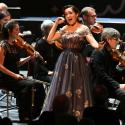
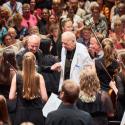
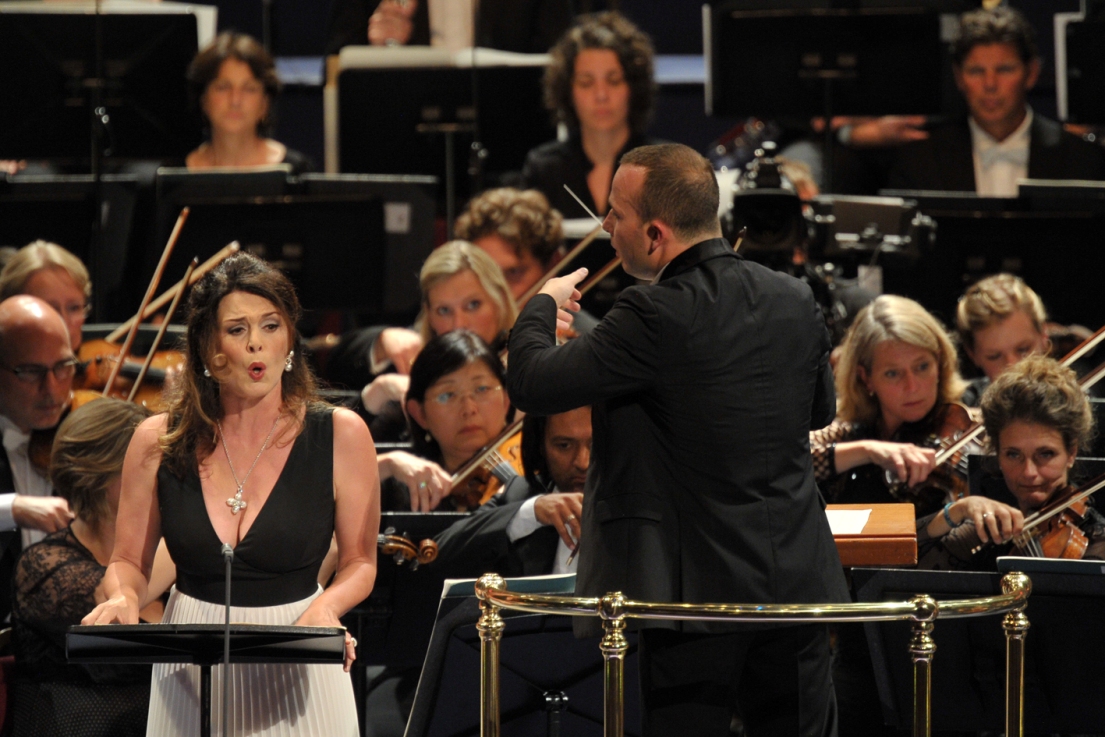 One star off, alas, for the other work on the programme. Anna Caterina Antonacci (pictured above right with Nézet-Séguin and the Rotterdammers) is a beautiful soprano to watch in action, and had delivered a riveting impersonation of Shakespeare’s Egyptian queen with Nézet-Séguin in Berlioz’s La mort de Cléopatre. But that was a couple of seasons back, and Wagner’s Wesendonck Lieder now suit her less well. The voice doesn’t have the right Wagnerian body; vibrato intrudes into shapely lines and since from our sightline the lovely lady was visually – and, to an extent, aurally – blocked by the conductor, the commitment couldn’t be seen as well as heard. Best were the softest of sighs Nézet-Séguin elicited from his wonderful strings in the two “studies” for Tristan und Isolde (though aren’t the other songs really a bit of a bore?)
Never mind: the Tchaikovsky and Prokofiev performances made this one of the most electrifying orchestral concerts I’ve heard in some time, and it was huge fun to have Shostakovich’s holiday mood from his film music for The Gadfly as an encore to prove that a galop doesn’t need to have nastiness between the lines, as Prokofiev’s in his symphonic finale certainly does. The pleasure was doubled by the late-night Prom of perfectly programmed Malian and Azeri music. But I’ll leave it to my colleague Peter Culshaw to write about that.
- Watch and/or listen to this concert for the next six days on the BBC iPlayer
- David Nice discusses Prokofiev's Fifth Symphony with James Jolly and Fiona McKnight on BBC Radio 3
- David Nice presents a Radio 3 Discovering Music on Prokofiev's Fifth Symphony
- Read theartsdesk's coverage of the Proms