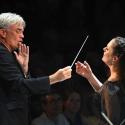
Mozart and Wagner were the opposite compass points of Richard Strauss’s classical-romantic adventuring, and Amadeus has often made an airy companion to the rangy orchestral tone poems in the concert hall. By choosing Haydn instead as the clean limbed first-halfer in two London Philharmonic programmes, Yannick Nézet-Séguin came armed with period instrument experience of the master’s symphonies in his dazzling debut concert with the Orchestra of the Age of Enlightenment. Last night’s feast also offered the wondrous spectacle of cellist Truls Mørk making light of the difficulties in Haydn’s Second Cello Concerto before transforming himself into the melancholy, visionary madman of Strauss’s Don Quixote.
Is this the most flawlessly inventive of Strauss’s longer orchestral works? It certainly seemed so in a performance exultant with the billowing phantasmagoria of these "fantastic variations on a theme of knightly character". Nézet-Séguin, the epitome of focused energy, built fluidly up to one magnesium flare after another, starting with the labyrinthine narrative of Quixote unhinged by too many chivalric romances – scary contributions here from the muted brass, later so audacious as bleating sheep - and turning the screw in the later variations which follow Cervantes’s novel after so singular a fashion. It was right that the wind machine should be more discreet than usual in our hero’s imagined flight through the air; the orchestra does all the work on the supernatural airiness here, and how, in this performance. Nézet-Séguin also blinded in the doom-beating homeward journey of defeated knight and squire. Tragicomedy of the highest order indeed.
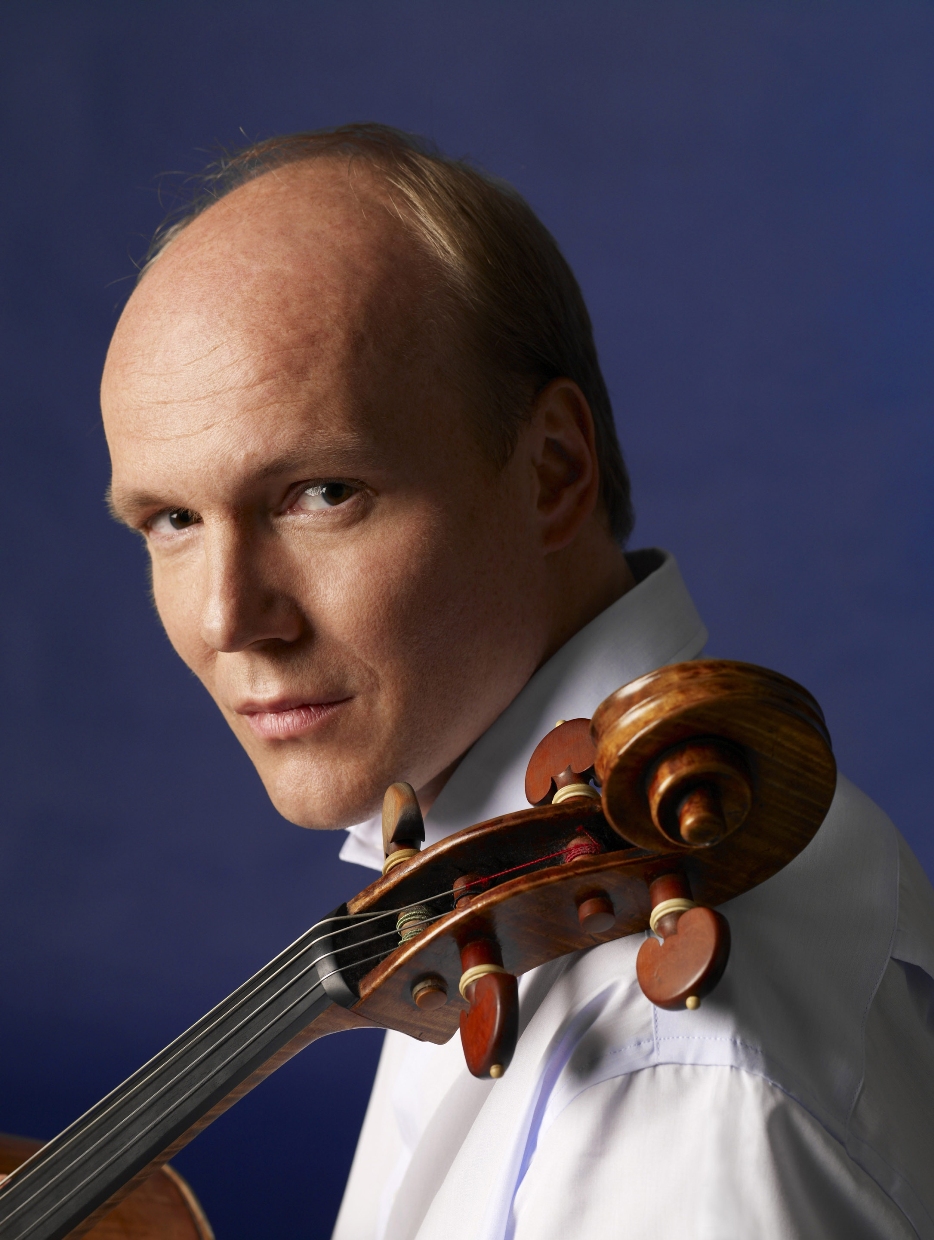 Yet what truly gives the work a depth unusual in Strauss’s orchestral music is the potential for imaginative interpretation in his writing for cello. Originally designated for an orchestral principal, and sometimes delivered as such in concert, the character of the long-faced knight really needs the nuance of a great soloist, and Mørk (pictured right by Stéphane de Bourgies) delivered at every turn: in poetic rising from the dust, in a hushed reaching out for transcendence in the night vigil at the very centre of the work, and in the noble long line which gilded a lovably sentimental deathbed scene.
We also had real luxury in a Sancho Panza of the very highest calibre from violist Lawrence Power: daringly headlong in his proverb-spinning, more than a match for his master. Among the many moments of vividly voiced comedy in this interpretation, the most delicious was the pizzicato exchange in which Mørk's knight and Power's squire flicked water at each other after emerging from the upturned "enchanted" boat. LPO soloists, from clarinet to tenor tuba, added immeasurably at every turn to the encyclopedic pleasures of Strauss's great opera for orchestra.
The impression was one of a cleansing alertness and vivacity throughout
Haydn’s simple palette was the perfect complement in an impeccably articulated revelation of the Symphony No 44, nicknamed "the Mourning" (Trauer) because the composer supposedly asked for the Adagio to be played at his funeral. Here that seemed very plausible, with the violins discreetly caressing their lines and elegant turns to a spellbinding effect that was all the better for the period-instrument rule of no vibrato. This slow movement and the trio of the minuet brought us out into the radiant light of major keys in the thick of so much E minor; but since Nézet-Séguin made no heavy weather of the symphony’s "storm and stress" origins, the impression was one of a cleansing alertness and vivacity throughout.
The D major Cello Concerto is hardly in the same original league, and an elephant trap can render the soloistic elaboration of much generic courtly material heavy going. But there was no danger of that given Mørk’s elegance, spot-on intonation and free-range first movement cadenza. And as it turned out, the plain speaking of this pretty music was the perfect breather before our cellist's Quixotic plunge through the lunatic looking glass.
- Nézet-Séguin's next Haydn/Strauss programme, following the Nelson Mass with Ein Heldenleben, is on Saturday 24 November