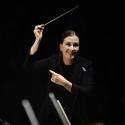
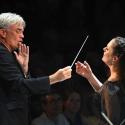
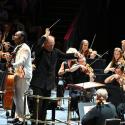
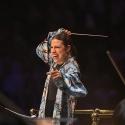
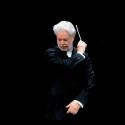
A showstopper for starters followed by dark depths, a quirky compilation after the interval: it’s what you might expect from Iván Fischer and his 42-year-old Budapest Festival Orchestra. All Prokofiev, too: the sort of thing we used to get from Valery Gergiev and visiting Petersburgers. Yet while Gergiev’s alliance with Putin means he’ll not be here again, Fischer has balanced criticising Orbán and keeping his Hungarian orchestra on the road.
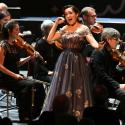
The nominal star soloist was Igor Levit, one of the few pianists in the world up to the colossal demands of Prokofiev's Second Piano Concerto, but as Master of Ceremonies we had the BFO's principal clarinet Ákos Ács alongside Fischer, and occasionally wandering in among the strings, to give klezmer freedom, and seeming improvisation, to the Overture on Hebrew Themes. Written in its original chamber version for ex-Mariinsky clarinettist Simeon Bellison and his six-strong Zimro Ensemble shortly after Prokofiev arrived in New York in 1919, its 1934 orchestration by the composer gives the distinctive Prokofiev clothing to the second theme - and a splendid horn solo - while the constantly repeated, if varied, sway of the main tune, with suitable elaborations from Ács, made this an unforgettable start to the concert. 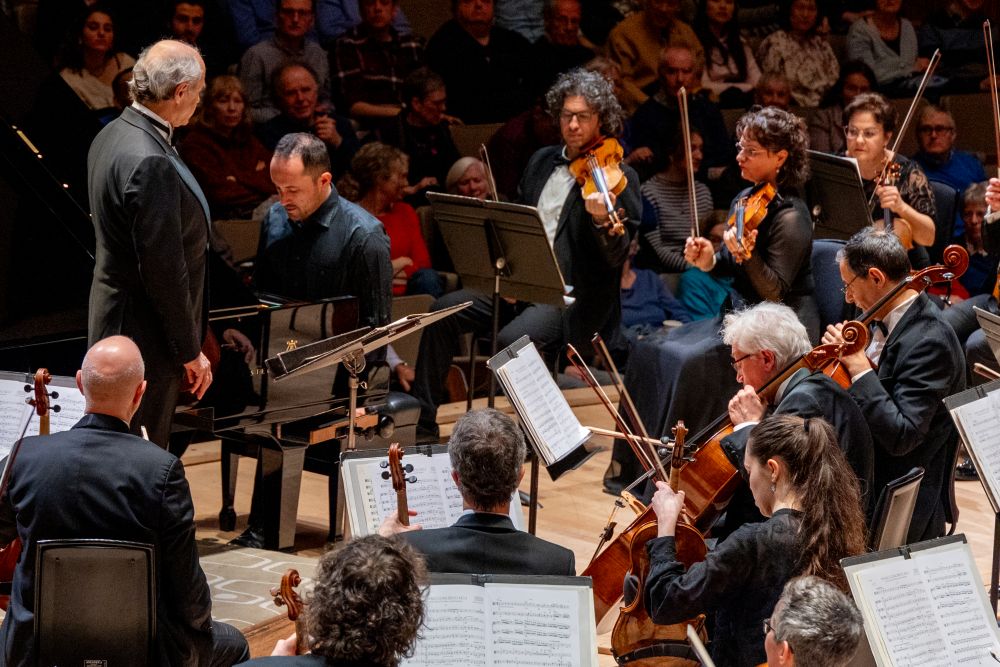 Levit then took us straight to the melancholy inner world of the Second Concerto (pictured above) in a way I've never heard from any other pianist. Of course he's up to the accumulation of thick, dissonant textures which spread to three staves in the central solo (one can hardly call it a cadenza, though the cue is surely that of Rachmaninov's Third Concerto), permissibly concealed a bit by the sustaining pedal and crowned by the absolutely hair-raising tone of horns and trombones at the climax before the abrupt end of the movement.
The ensuing toccata was almost too fast, but the catch-me-if-you-can-and-to-hell-with-absolute-precision partnership of Levit and Fischer made it work in performance. There's no let-up in the massive, proto-Scythian stomp of the ironically-named intermezzo, with the ever-personable and virtuosic Budapest brass chilling us with further blasts and Ács, back in the main body of the orchestra to suggest klezmer lilt again in several of the softer variations (I'd love to know even more about Maximilian Schmidthof, the fellow-student Prokofiev dearly loved who committed suicide during work on the concerto - is he pictured within?) Levit found more magic in the still eye of the finale's storm. And his encore was not more of the gentler side of Prokofiev, but something yet more perfect - the last number of Schumann's Kinderszenen, in which the poet-pianist spoke so softly, seemingly unruffled by the loud amplified thuds that twice interrupted the reverie. 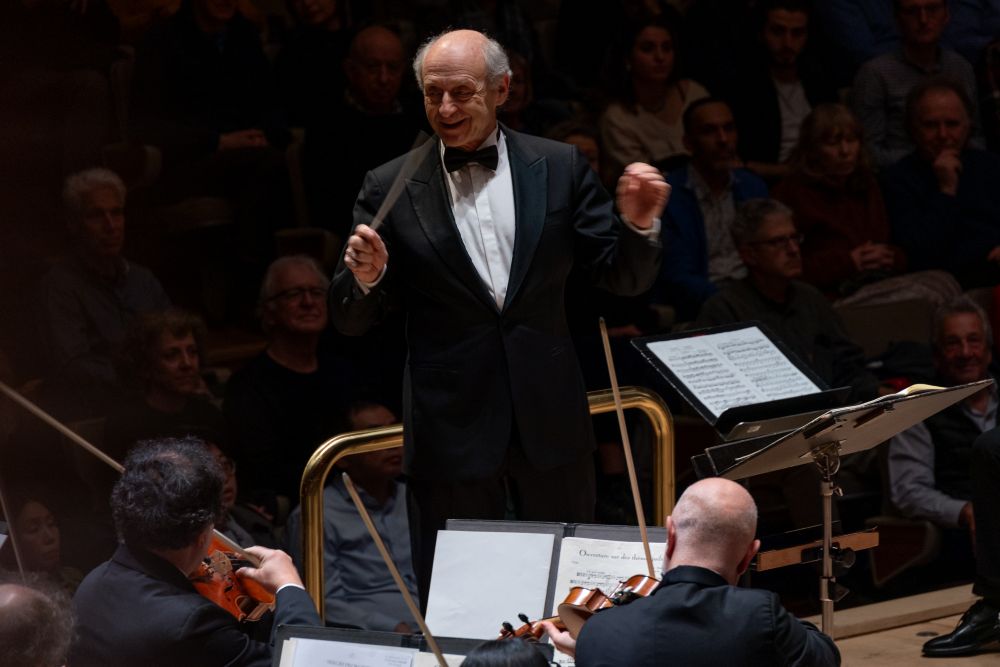 Those were presumably related to the microphone Fischer wielded before and between excerpts from Prokofiev's Cinderella (the composer's suite versions, I assume). His delivery always has charm - but why interrupt the close-to-midnight waltz to tell us about the monstrous clock scene that it runs up against? The selection was odd, too: we could have done without the brief Orientalia of Act Three, and definitely needed Prokofiev's introduction to the sorrows and dreams of his heroine.
Never mind: the razor-sharp intensity of the playing, with principal cellist Péter Szabó a special joy to watch, drove home what instrumental changes Prokofiev rings on every dance reprise. The Fairy Godmother's music unfolded its other-worldly beauty by degrees, and the final Amoroso rapturously glowed. Introducing the encore, Fischer told us rather mysteriously that the Gavotte from the "Classical" Symphony "starts young, and ends old", bearing out his conceit by engaging all the flexibility for which he and his orchestra with a voice are justly famous.