

Few sights speak so eloquently of loss, of an especially cruel and painful loss, as one glass of wine, half-full, alone on a table. A man speaks to a partner who isn’t there, wishes her back, but knows that she has gone. Then another woman materialises to speak of of the futures he could have enjoyed - but now will not - and of the many, many futures that hunger for life, shut out of our world by deliberate action and unintentional chance. They crowd him, but only a child, bouncing with optimism, emerges fully to insist that he, this potential human being, will happen.
Into her 80s but as innovative as ever, Caryl Churchill's new play, What If If Only (at the Royal Court), adds to the trend in exploring fracturing futures following the revival of Constellations in the West End, the remake of Dune soon in cinemas and the the Christmas Carols we’ll see once Dickens’ season rolls round. One might assert that the pandemic brings forward such thoughts: an encounter on a bus with a coughing passenger and one’s life goes one way; a two minute delay in finding one’s keys, a missed bus and a different future ensues.
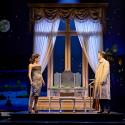
But maybe that’s too neat. Maybe it’s just that we all live with the knowledge that different futures always exist in our imaginations - the ones that got away, the luck, good or bad, that leads to what are now called life-changing sums of money or life-changing injuries, the temptation to which one succumbed and the other temptation resisted. Packed into 20 minutes of often repeated dialogue, James MacDonald’s direction pushes these thoughts on to us, Churchill’s words demanding that the ‘Someone’ named in the text be ‘Me’.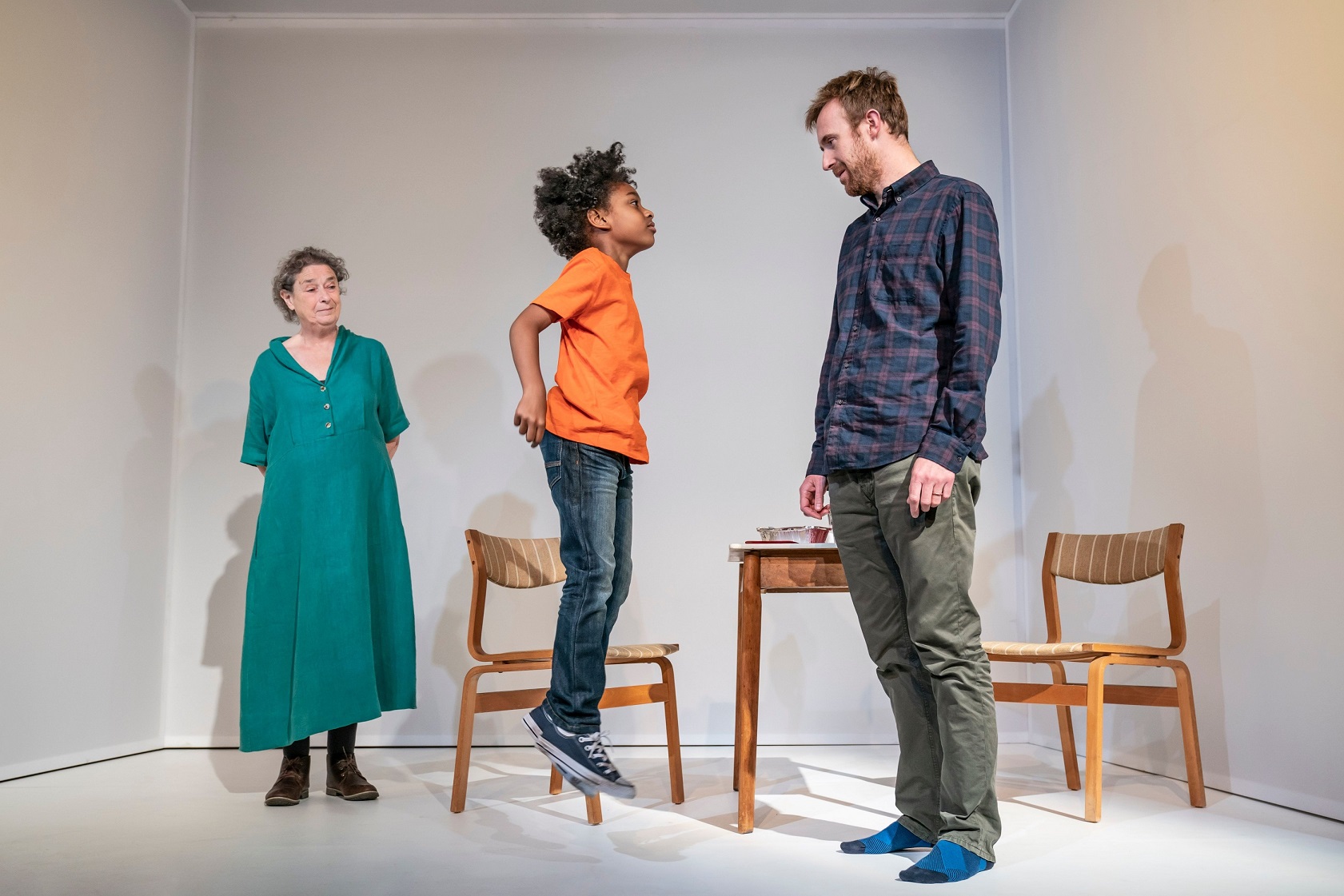 John Heffernan gives us multiple levels of grief, from the soft conversation with the woman whose absence fills the room, to his fascination with the apparition and her tales of futures that will crowd out any other thoughts, to the despair that overcomes him when this supernatural flicker of hope is extinguished. Linda Bassett (pictured above with John Heffernan and Samir Simon-Keegan) is all common sense and ordinary in her delivery of these extraordinary revelations, but we’re never quite sure if she is, like Casper, a friendly ghost, or a one come to haunt her interlocutor with further torments.
It might all be a little tricksy and twee were it not for Miriam Buether’s set design and Prema Mehta’s lighting which combine to create a space that is both a functional dining room and an institutional cell, mirroring the state of mind that consumes ‘Someone’ who must somehow escape the psychological prison of grief without denying its source. We’re never quite sure where we are - the absence is so much stronger than the presence that it breaches the fourth wall, disorientating us.
Thus we are compelled to consider our own losses, but, as Samir Simon-Keegan’s smiley, happy, boy reminds us, also our futures to come.







Add comment