Social engineering gets a bad press. The whiff of creating a eugenics-inspired master race by other means clings to it, so too agitprop induced brainwashing, the Republic of Gilead also hoving into view. That’s at the level of a society, but at the personal level, it’s scarcely better received, the thought of tiny protégés being force-fed learning, violin or tennis racquet in hand, both bigger than they are.
But I’m here (literally, right here, right now) because of such practices, the son of a panel beater and school dinner lady, who first went to a Russell Group university and later received lessons in the difference between matters "U" and matters "non-U" from an insider. A right Eliza Doolittle am I! And I’m grateful.
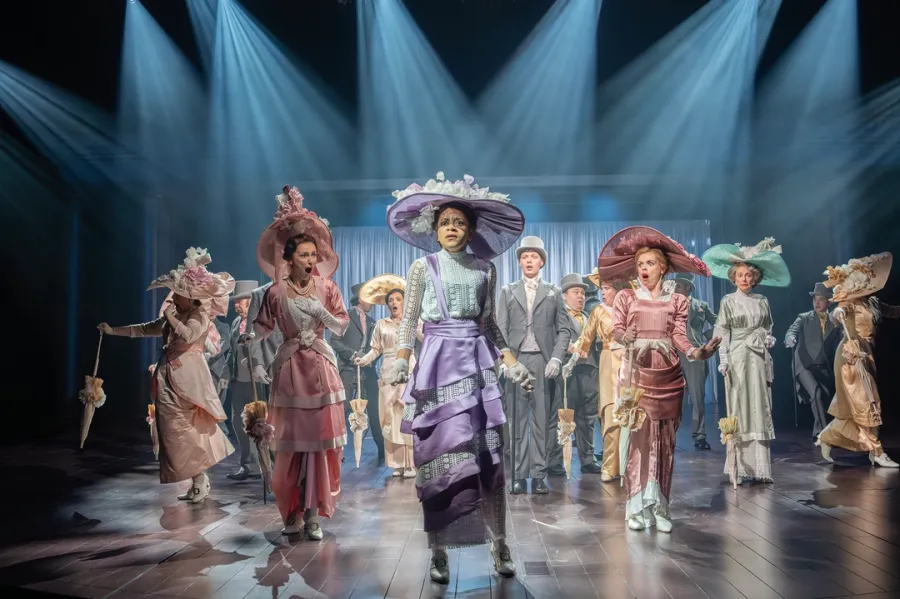
The more cynical element of social engineering is front and centre in George Bernard Shaw’s Pygmalion, the play on which My Fair Lady is based and, no matter how many interpretations the celebrated musical cycles through, that icky framing bet is still the animating origin of the narrative. Professor Higgins and Colonel Pickering strike a wager on the life (not quite, but it might as well be, as she herself confirms) of the feisty flower girl. She can be dressed in beautiful hobble skirts and gleam in Suffragist purple (splendid costumes by Peter McKintosh) but, to her benefactors, she’s not really much different from Dover, the racehorse she later implores to “Move your bloomin' arse!"
That said, we’re not quite in The Taming of the Shrew territory and there’s plenty of great shows, great plays and great art that we have to accept on their own terms (perhaps with a little smoothing off the raggedy edges of linguistic excess) and we’re not about to consign one of the 20th century’s most loved musicals to the cancelled bin just for that power move.
And what a lot we get in return!
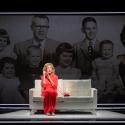
Right at the top of that list of goodies in this production is Keziah Ibe (pictured above with the cast) stepping into one of the British stage’s longest shadows, that of Dame Julie Andrews, and holding her own on her professional debut. A triple threat, Ibe acts, sings and dances with technical skill (her soprano belt is thrilling) and she finds the pathos critical to the empathy that must flow across the fourth wall for us to engage fully with Eliza. Higgins may spend most of his time treating her as a lab rat, but we love her.
She really needs to make that happen because Higgins is as hideous as ever, a bully, a cad and an example of a man who does know the impact he has on people but chooses to be that way because, protected by a carapace of wealth and education, he can. Making excuses or, rather, our putting up with him, is made harder by director, Rachel Kavanaugh, creating a Professor who is anything but professorial, except for his arrogance. Hadley Fraser goes full Rik Mayall as Lord Flashheart, manic energy and huge gestures filling the stage, not always to best effect, the impact of such an approach to the role very much a case of diminishing returns.
He is balanced by the decency and calm of Tony Jayawardena’s Pickering, but, the more Pickerings I’ve seen, the more patronising he appears, albeit coming from a good place. Ben Cullerton gives Eliza’s lovestruck suitor, Freddy, his naive brainlessness but could lean harder into “On the Street Where You Live”, one of the great songs in a musical packed with them. It’s the confession of a man crazy in love rather than a mid-range power ballad.
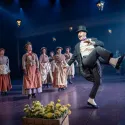
That accusation of slightly downplaying the source material could not be levelled at Gary Milner, who all but arrives in a Pearly King’s jacket (sans pearls, natch) as Eliza’s sponging old man, the dustman Alfred. “With A Little Bit of Luck” gets the full treatment, reminiscent of the unforgettable “Consider Yourself” from the production of Oliver that transferred from this venue to the West End a couple of years ago. Whether it needed quite so many reprises while sets were wheeled on and off during scene changes, I’m not so sure.
But Ibe’s warmth, singing and, ultimately her injection of fortitude into Eliza is what makes the show, nailing “Wouldn’t It Be Loverly” and “I Could Have Danced All Night” and transitioning the accent with perfect precision. A performance like that and a score like Lerner and Loewe’s is more than justification for the ticket price.
So, go in with your eyes open - as surely most of the house will - hold your nose at times and resist the urge to tell Fraser that ‘we get it’ and he can ease back now, and you’ll have a good time. But I was with the one person in the audience who gave a shout of encouragement to Eliza when she fought back after yet another verbal assault from Higgins. “You go girl!” Literally so, I trust, as she’s worth so much more than what she ends up with.