An innocently-intended Friday night out turns into something fearsome indeed in I See You, a Royal Court co-production with the Market Theatre, Johannesburg, that puts the tensions of post-apartheid South Africa under a sorrowful microscope.
At the same time, the interval-free, 80-minute staging marks the directorial debut of the Olivier Award-winning actress Noma Dumezweni, here suggesting that the soon-to-be Hermione of this summer's Harry Potter plays possesses yet further strings to her considerable bow. (The performer made headlines at this address late last year when she stepped with conviction and brio into the title role of the Penelope Skinner play Linda, replacing an indisposed Kim Cattrall.)
Dumezweni gets a corker of a performance from the excellent Desmond Dube
Thank heavens her production's portentous opening moments – a misstep amidst a mileu that needs to course with energy – aren't characteristic of what follows, which in turn falters only when playwright Mongiwekhaya allows his entirely fair message to sideswipe his narrative's necessary adrenalin rush. Interestingly, the play's examination of black-on-black aggression and violence finds an unexpected companion piece just now in the National Theatre's scorching revival of August Wilson's Ma Rainey's Black Bottom, as if to suggest that specific environments and countries may differ but the corresponding scars remain: there's even an element of Wilson's rhetoric when one character here references the "unbroken chain" to which he belongs.
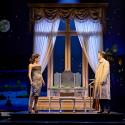
The situation on view in I See You is rife with provocation and comes, the playtext informs us, from a real encounter. Following a chance encounter in a club that leads to them driving off together, black law student Ben (Bayo Gbadamosi) and fellow teenager Skinn (Jordan Baker) are pulled over for drunk driving, an infraction that the confident Skinn thinks she can talk their way out of, persuasiveness ranking high amongst her apparent powers.
But this swaggering 17-year-old hasn't previously met Buthelezi (Desmond Dube, pictured below), a fiercely unforgiving policeman who has fought hard to get his country where it is today. A onetime ANC paramilitary, Buthelezi isn't especially keen to find that the young Ben seems not to appreciate his native country's growing pains and doesn't even speak what Buthelezi regards as the proper language in a land awash with them. It's no accident that the play's title is itself translated into three of the many tongues that exist within South Africa, Zulu and Xhosa included, and significant chunks of the text are performed in the third one, Afrikaans.
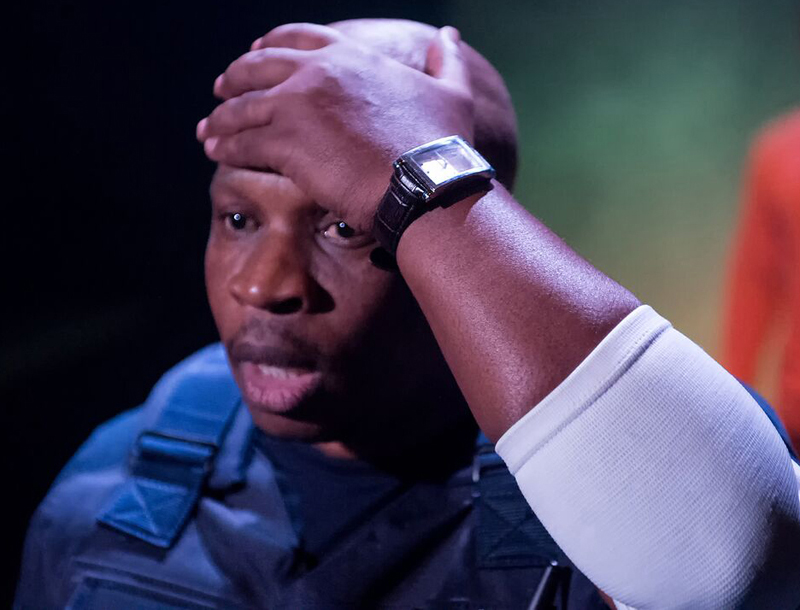 The young not-yet-couple are soon separated and Ben brutalised under Buthelezi's watch, while an increasingly panicky Skinn – not her real name – calls in what favours she can in an effort to reestablish contact. What ensues devolves into the essential set piece of the play in which Buthelezi and Ben face off so as to bring to the microcosmic boil a larger conflagration that presumably is being rewritten daily all around them, Ben voicing the fact that he not only sees Buthelezi but loves him as well. It's a volte-face of sorts that doesn't quite deliver the intended impact.
After a while, one is aware of the message wagging the dog of a scenario that ought to generate more tension than it does, and still would do if the characters spent less time delivering position papers in miniature ("no one is born free anymore," notes Ben) and more time expressing character on the wing. That said, Dumezweni gets a corker of a performance from the excellent Dube as a man for whom public posture exists at odds with private distress, and Baker shows a gift for lippy bravado that is to the Royal Court manner born even if attitude, as shown in this play, is powerless when confronted with certain kinds of action.