French director Maurice Tourneur (1876-1961) trained as an interior decorator and illustrator, the move into film a logical progression after working as an actor and designer in Parisian theatre. Emigrating to the US in 1916, he enjoyed a brief but successful Hollywood career before returning home in 1929 as a director ideally qualified to oversee the French film industry’s transition into the sound era.
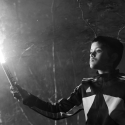
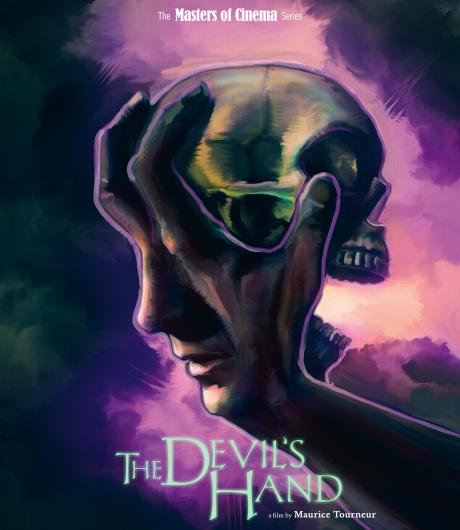
Released in 1943, The Devil’s Hand (La Main du diable) is a lively supernatural thriller, drawing inspiration from the Faust legend and WW Jacobs’s influential short story The Monkey’s Paw. That the film was produced under occupation by the Nazi-controlled Continental Films makes it doubly interesting, Samm Deighan’s bonus video essay The Devil in the Details describing how historical dramas and fantasies were genres less likely to prove controversial and provoke wartime censors. Tourneur’s screenwriter was Jean-Paul Le Chanois, a member of the French Resistance for whom this tale of a weak man selling his soul for material gain would have appealed.
It begins like a thriller, with Pierre Fresnay’s twitchy Roland Brissot striding into a remote Alpine hotel lounge. He’s missing his left hand and carrying a small package, his entrance followed by gunshots and the arrival of the police. After the package mysteriously vanishes, he agrees to tell his story to the hotel guests, that of a struggling artist who agrees to buy a sinister lucky talisman from Noël Roquevert’s chef. The warning signs are clear, from the whiff of sulphur in the restaurant to cinematographer Armand Thiraud’s superb use of shadows. Even Brissot’s faithful dog knows that something’s up, cowering when his master returns home carrying a severed hand in a casket.
Professional and romantic success duly follow, Brissot’s girlfriend Irène (a brilliantly sardonic Josseline Gaël) becoming his wife, Brissot now painting with his left hand and mysteriously signing each canvas ‘Maximus Leo’. The exhibition scenes prefigure events in Tony Hancock’s 1961 comedy The Rebel, though Hancock achieves his fame through deceit rather than satanic assistance. Increasingly visible is Pierre Palau’s charismatic Devil, a mischievous imp in a black suit and bowler hat, continually sabotaging Brissot’s attempts to regain his soul. Look out for a sequence near the close where the disconsolate painter flees to Monte Carlo and encounters the previous owners of the cursed hand, a series of beautifully lit vignettes illustrating each character’s fall from grace. That we know what’s coming to Brissot doesn’t make the finale any less satisfying, Tourneur tying up the loose ends in a little over 80 minutes.
Eureka’s restored print is pristine, the film accompanied by two interesting video essays and an overview of the director’s career by historian Barry Nevin. Tourneur’s son Jacques (1904-1977) returned to Hollywood in the early 1930s and became a successful director, his output including such cult classics as Cat People, I Walked with a Zombie and Night of the Demon. Alas, Maurice’s career ended prematurely in 1949 after a serious car accident, and he spent much of his final decade translating crime novels from English into French.