This Prom by the BBC National Orchestra of Wales and Nil Venditti featured a first half of Welsh composers, including the belated Proms debut of Karl Jenkins at the age of 80. It’s a sign of how Proms programming has evolved over the last 30 years that either of them gets a look-in and, even if I had some mixed feelings about their pieces, it can only be a good thing that they are now being heard in this festival.
The second half featured someone who has waited even longer than Jenkins for a first Proms outing – Louise Farrenc, who died in 1875 – alongside a guy called Ludwig van Beethoven, who has appeared once or twice over the years (actually 1,561 times, according to the brilliant online Proms database).
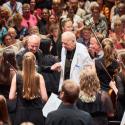
Grace Williams’s Concert Overture, her oldest surviving orchestral piece from c.1932, started promisingly, with a brisk and breezy opening for strings punctuated by brass interjections. But it soon ran out of steam, getting stuck in a harmonic rut, sounding a bit like a Walton off-cut. Williams, a particularly self-critical composer, wrote on the front page of the manuscript “not worth performing”, which is a bit harsh, but perhaps we should trust composers on this kind of thing? Conductor Nil Venditti, on Proms debut too, was full of vigour but I was unconvinced it was in a completely worthwhile cause.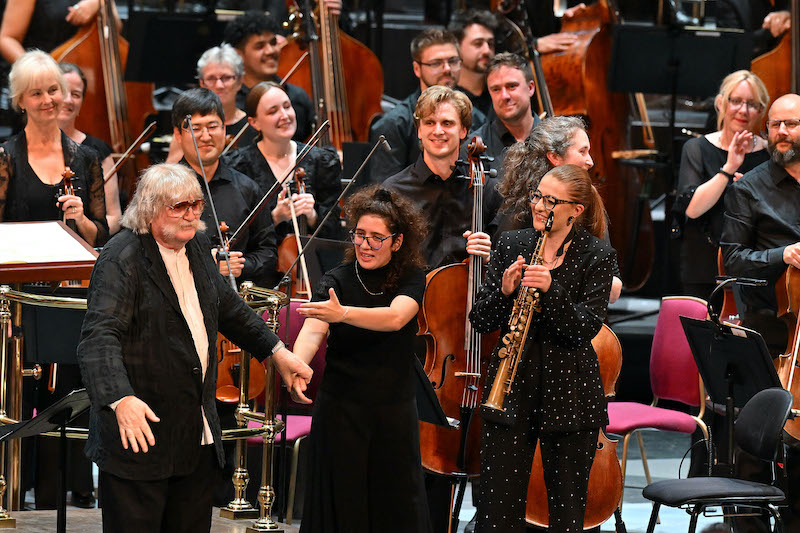 There was more to like in Karl Jenkins’s Stravaganza, a showpiece for soprano saxophonist Jess Gillam. Although Jenkins (pictured above by Mark Allan) can be the embarrassing uncle of classical music, the biggest virtue of the piece was that he wasn’t taking himself too seriously. (I reviewed his album One World for theartsdesk last year and boy is that grandiose.) Here for all the occasional cringey bit, the writing for both sax and orchestra was excellently crafted and the result well-balanced, the music engaging – especially in the second movement – and an ideal vehicle for Jess Gillam’s talents.
Her playing was as sparkly as her amazing suit, whether in fluid scale passages or in the beautiful cantabile of the second movement. This was scored for sax and strings alone, with a D sounded throughout, hummed by the otherwise redundant wind and brass. It was lovely. The last two movements outstayed their welcome a little, but Jenkins has a knack for a catchy riff and a showman’s panache, and Gillam gave it everything.
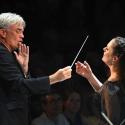
Louise Farrenc managed to make a career as a composer of orchestral music in the Paris of the 1830s and 40s – no mean feat – before the constant repression got the better of her. Her Overture No.1 is neatly put together, in a somewhat Mendelssohnian vein, with theatricality aplenty. Nil Venditti entered into the spirit of the piece, with its not-entirely-serious seriousness, and nods to Haydn, whose ghost lingered in the background. It is certainly time we were hearing Farrenc in the Proms – a symphony next? – and a nonsense that there was Paloma Faith at the Proms a decade before Louise Farrenc.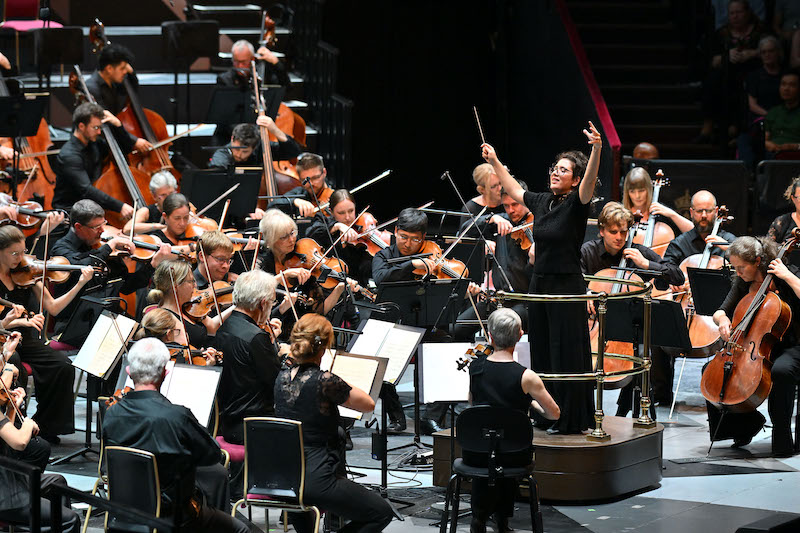 Beethoven’s Seventh Symphony is a favourite of mine, and as so often with familiar pieces a live performance can remind you how unusual and extraordinary it is. This is particularly true of the famous second movement, one of the great miracles of the symphonic repertoire. Venditti (pictured above) specialises in this piece, having conducted it with, by her own count, 62 different orchestras. She favours fast tempos, which means the second movement, so often a funereal trudge, is the allegretto that Beethoven marked it. Venditti went for segues between the first and second, and the third and fourth movements, making the symphony a two-part experience: seriousness followed by energetic abandon.
The first movement was sometimes stern, the horns insistent, the timpani galloping, but with amiability always peeking through. The second movement was not weighty, not portentous, but moved with a lightness of tread that made the sadness more poignant. But in the scherzo and the finale it was all about rampant rhythmic abandon, Venditti driving her band like a ferocious carriage racer, threatening at times to overdo it, but never actually letting it get out of hand. And that edge of danger is surely why we go to hear things live? The glorious melee of the finale, as the orchestra cut loose, finished with Venditti triumphant, arms aloft in the face of the barrage of the final bars.