

Piero Schivazappa’s 1969 debut The Frightened Woman toys with living up to its title, suggesting a sadistic test of endurance. Its Italian title, Femina Ridens, though, translates as The Laughing Woman, and this is really an ironically extreme battle of the sexes, carried by extravagant pop art designs and its star Dagmar Lassander’s playful pertness.
Dr Sayer (Philippe Leroy) is a wealthy head of a philanthropic institute who spends his weekends sadistically dominating prostitutes. Let down by a regular, he’s delighted when a previously unknown journalist in his press department, Maria (Lassander), suggests visiting his home. She barely has time to admire his bizarre gallery of bacteria portraits and Medici knife collection before falling, drugged, into his power.
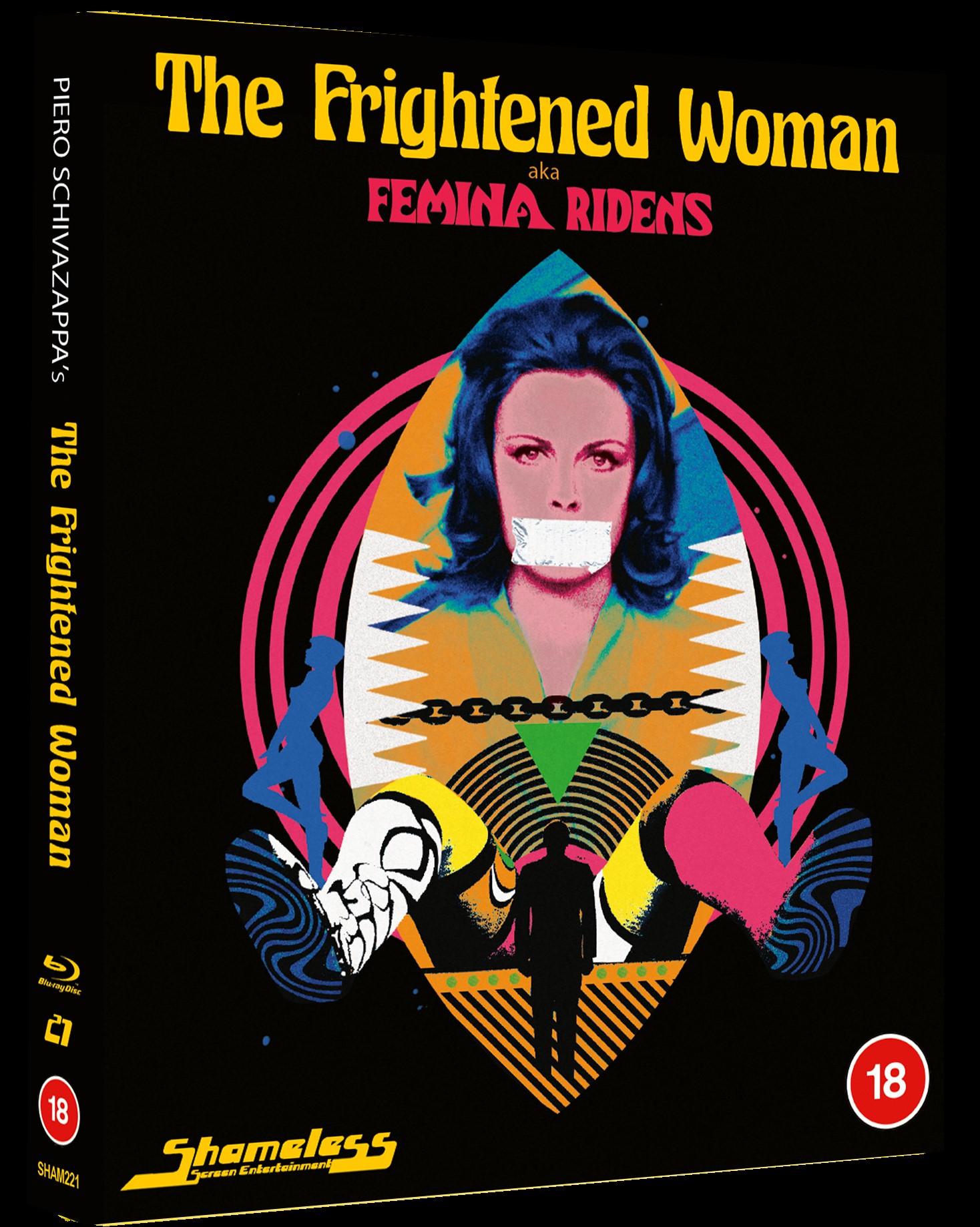 “From an aesthetic point of view, you’re absolutely perfect,” he gloats when she wakes tied to a poll, relishing “a woman in the grip of fear,” with the piquant addition of “a filament of hope”. The Frightened Woman’s enduring relevance comes as this proto-Incel explains his misogyny’s origins in a bestial childhood primal scene of a female scorpion eating her mate, now encompassing Sixties radical feminism’s fringe, which theorised male redundancy from reproduction, freeing women from men altogether. “You’ve been planning to make yourself socially and sexually self-sufficient,” Sayer rants, freezing sperm in test-tubes “to be chosen like a new pair of gloves”.
Pornographic photos of previous women, trussed and seemingly murdered, are the closest Schivazappa and Sayer get to true brutality, and Maria attempts escape, racing desperately down a tree-lined avenue at night as if in a dark fairy tale, till Sayer’s Merc herds her back.
There’s a weakness at the core of Sayer’s need to dominate, though, a pathetic overcompensation which Maria exploits. Leroy combines the features of an aristocratic aesthete going to seed and blond brute; he could be an art collector, or SS officer occasionally troubled by his actions. He is, Schivazappa notes in an Extras interview, “an amateur Marquis de Sade…pushed by his undoubtedly abhorrent desires” but “quite naïve” and at heart “inoffensive”. Maria, the director explains, is the “Praying Mantis”, embodied by Lassander’s “ironic and slightly cold feel…not oozing sexuality”. Indeed Lassander, pictured below, then a naïve young German actress, reveals in this release’s exclusive interview that the film’s sadism and innuendo passed her by. Whether mesmerising Sayer with a disco dance of the veils or provoking, aviator-shade-sporting indifference, her cool intelligence overwhelms him, till he yearns, puppyish, for her love. You’d imagine a subsequent career more like Monica Vitti’s than the mostly similar cult parts in Italian Gialli, sex comedies and horror which followed.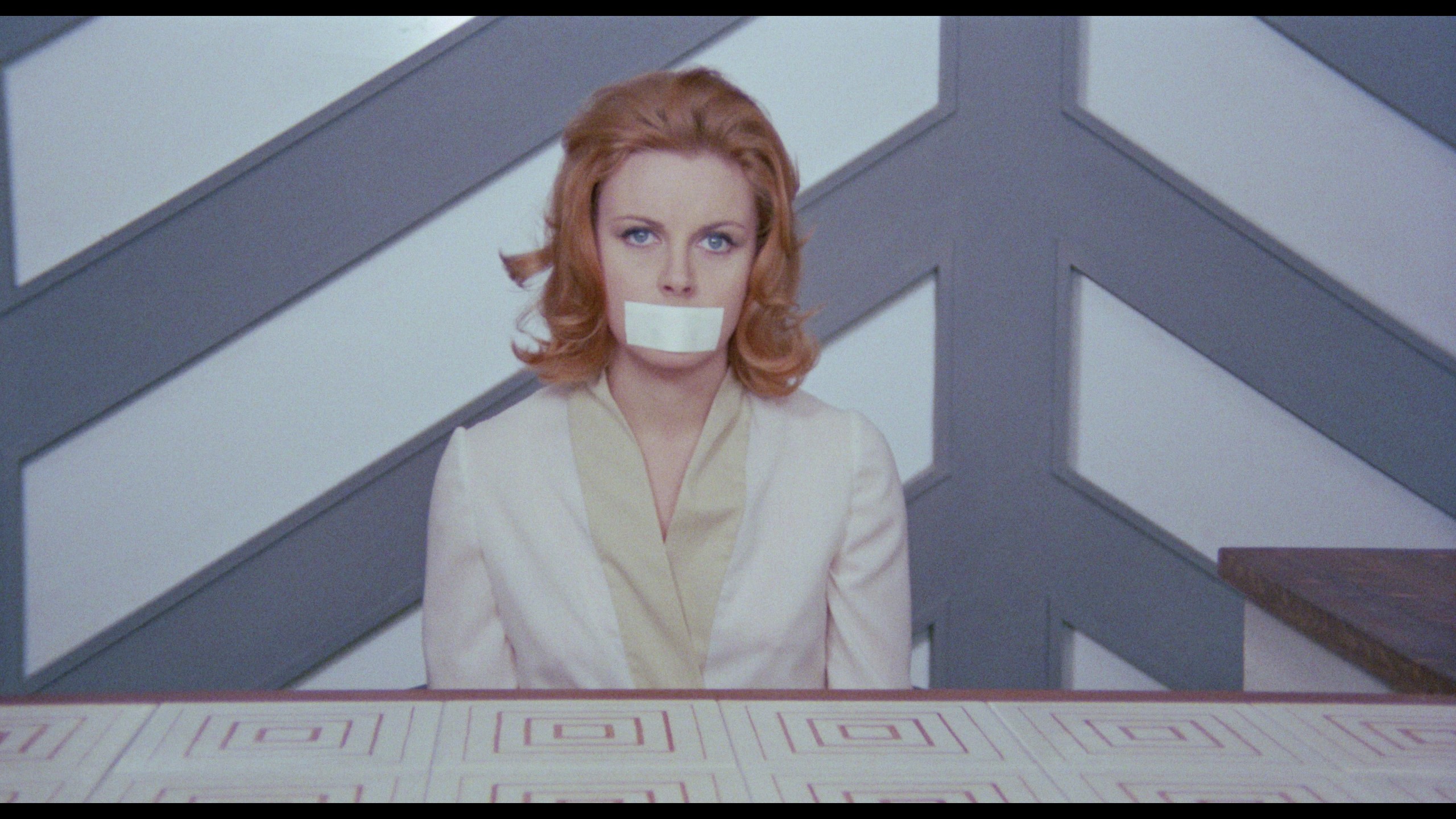 The 34-year-old Schivazappa’s first feature after a career in Italian TV is equally pleasurable for Francesco Cuppini’s lavish production design, Sante Achilli’s bright cinematography and Stelvio Cipriani’s pulsing, brassy, Europop score. These combine with the writer-director’s sense of eccentric absurdity in a heightened reality, hinting at both the “white telephone” era of Fascist-signifying Italian cinema and contemporary modishness (a Fascist-era store is one found set, alongside a rustic castle with dwarfs' bedrooms and armour-suited knight-doormen, and the Medieval cardinal’s palace serving as Sayer’s institute). Mussolini, Modernism and pop art meet an Italian relish of the grotesque expressed through cast-members such as Maria Cumani Quasimodo’s cigar-smoke-wreathed, gimlet-eyed secretary. The sculptor Niki de Saint Phalle’s giant, spread female legs with man-sized hole and vagina dentata teeth is pirated (with credit) for Sayer’s denouement.
The Frightened Woman was, Schivazappa says, mostly ignored on its Italian release and, the already established Leroy’s career apart, little of substance followed for its makers. Schivazappa returned to TV, and a 1986 erotic feature, Lady of the Night (La signora della notte), with its dubious fantasies and faked rape scene, shows where his debut could have faltered. As it is, this is an utterly strange, surprisingly breezy erotic curio.






Add comment