

You can almost feel the dust on your skin in Spanish director Diego Quemada-Diez’s debut feature The Golden Dream. It’s the dust of the precarious journey from Central America towards the US, undertaken by four teenage Guatemalan kids intent on finding a better life north of the final border. And of the gritty immigrant experience of jumping train after train, and struggles with the authorities, where each new stage presents new challenges, and more acts of betrayal than of kindness are to be found along the way.
We are introduced to the protagonists only gradually. Juan (Brandon Lopez) looks like he’s in command in his own ghetto. Sara (Karen Martinez) travels as Osvaldo, cutting her hair, and binding her chest to disguise her sex (an attempt that will go heartbreakingly awry), while the passive Samuel (Carlos Chajon) will reconsider his intentions at the first obstacle. In the process they're joined by Chauk (Rodolfo Dominguez), a Tzotzil Indian, who tags along even though the trio understand nothing of his Mayan language, and he only a few words of their Spanish.
It's as close, heartbreakingly close, to this immigrant experience as we’re likely to get
They pass through some staggering landscapes, seen mostly from the top of the freight trains that they jump. They find company among the older men (it’s always men) who are making the same trip, but much more harshly they’re fleeced and exploited by almost everyone else, from local police to criminal gangs. (A rare moment of kindness and assistance from a local Catholic mission only heightens the sense of passing through otherwise unfriendly territories – and that’s even before a final sneak across the US border, where the hostility is at least undisguised).
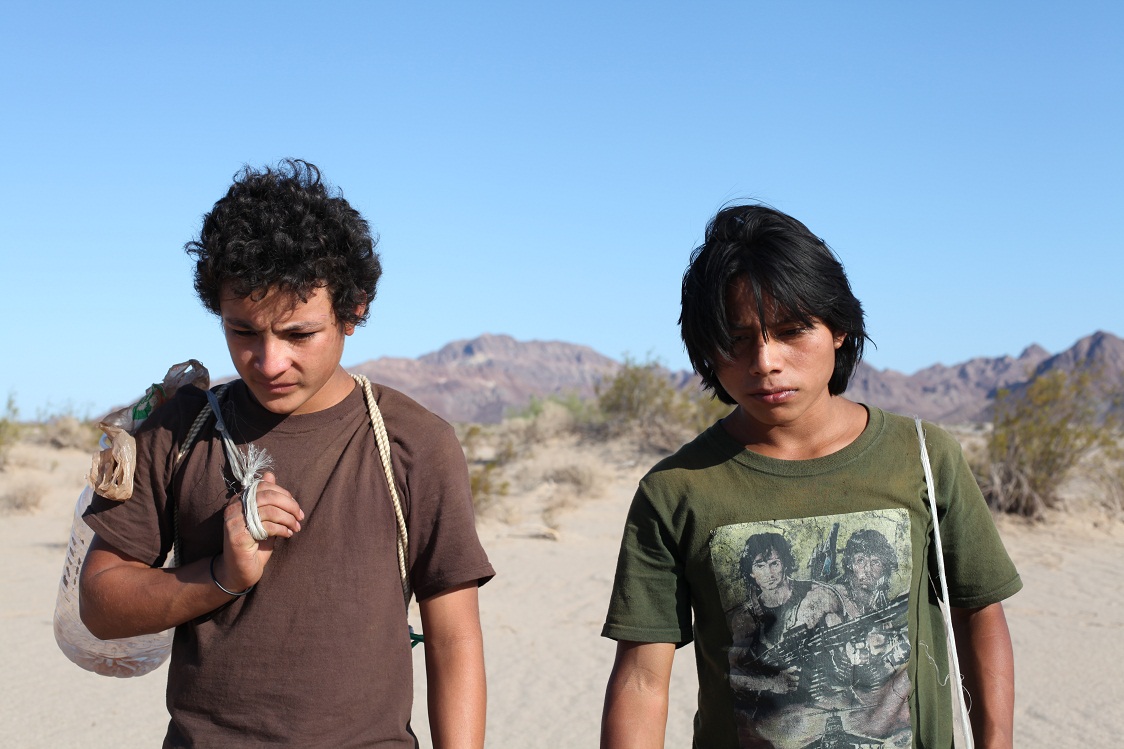
The main character development eventually comes between Juan and Chauk (pictured, below right), who overcome their initial hostilities to develop a genuine bond, despite their lack of shared vocabulary. The Golden Dream is a markedly wordless film, leaving landscape and an effective musical score to speak for emotions. Quemada-Diez has worked in various roles on three of Ken Loach’s films, and the influence is palpable: in the detailed research of testimonies drawn from real life, the improvisational technique with the (obviously) non-professional leads, the hand-held camera work, and the technique of filming in story-line development (the director only gave his young actors loose scripts shortly before their scenes were shot).
We see so much of man’s inhumanity to man along the way that we wonder (and it’s never quite elucidated) what exactly sent these would-be immigrants out on this journey of danger, unless it’s an almost traditional rite of passage to the “golden dream” of the film’s title. The film’s Spanish title, however, is La jaula de oro, which translates more literally as “the gilded cage”. We'll discover just what that difference means in the closing scenes.
 Five years ago, Cary Joji Fukunaga told a somewhat similar story with his Sin Nombre, a film made much more to Hollywood standards (and that’s where Fukunaga has ended up). Quemada-Diez stays far closer to his Loachian roots, and delivers a work of considerably greater emotional heft, really registering the different landscapes, both physical and emotional, along the way.
We’ll see more on the compulsions of immigration from the region soon, with the August release of the Sundance-winning documentary Who Is Dayani Crystal? from director Marc Silver, made with the prominent participation of Gael Garcia Bernal. Before long the Brenda Blethyn-starrer Two Men in Town will no doubt reach British screens, showing something of a different perspective, from the US side of the border. Until then, The Golden Dream - which won a special jury prize for its ensemble performance at last year’s Cannes festival in the “Un Certain Regard” programme - brings us as close, heartbreakingly close, to this immigrant experience as we’re likely to get for a long while.






Add comment