François Ozon’s Frantz is an exquisitely sad film, its crisp black and white cinematography shot through with mourning. The French director, in a work where the main language is German, engages with the aftermath of World War One, and the moment when the returning rhythms of life only emphasise what has been lost. The eponymous hero of his film is one of its casualties – we see Frantz only in flashbacks – and his death has left a gaping, if largely unarticulated wound. His erstwhile fiancée Anna (Paula Beer, a revelation) has become effectively his widow, living with Frantz’s parents. That element of company assuages both their grief and her own, but it’s a world in which the shutters have been drawn down, both literally and symbolically.
It’s an unusually subdued mood for Ozon, a prolific director accomplished across genres (Under the Sand, all the way back in 2000, was the last time he assayed such sombre territory). He works around the story of a 1932 film by Ernst Lubitsch, Broken Lullaby, itself adapted from a stage play by the French writer Maurice Rostand, although the transformations Ozon makes, especially in the second half, finally count for more than anything that he has borrowed. If terming the film “exquisite” implies a level of artifice, there is certainly an element of mannerism. Ozon’s subject is less grief itself than the secrets and lies that come to surround it: how we keep secrets to guard the feelings of others, and how such acts of apparent kindness easily shade into something profoundly damaging.
They are no longer defined through the memories of a dead man
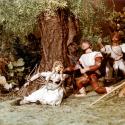
The film’s opening scenes elegaically capture life in the quiet provincial German town where Anna’s existence revolves around her daily visits to Frantz’s grave (which is itself a fiction: his body, of course, never came back from the front). Her discovery that someone else is leaving flowers there leads to acquaintance with Adrien (Pierre Niney), the Frenchman who has come, he says, to remember the German friend he had known in Paris before the war. After uncompromising rejection by Frantz’s stern doctor father – “Every Frenchman is my son’s murderer,” he insists initially – the young man is gradually welcomed in by the family. His memories, of visits to the Louvre with Frantz, and their companionship in music (both are violinists), come to make his presence restorative for all (pictured below).
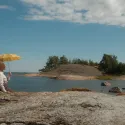
Ozon draws beautifully restrained playing from Ernst Stoetzner as Frantz’s father, and Marie Gruber as his mother; they are figures from an older, stricter generation, which only makes the sense of their feelings beginning to thaw more touching. As her world changes, Anna, who at the film’s opening has rejected the attentions of a well-meaning suitor offering companionship rather than love, finds prospects opening before her in a way she would never have imagined possible. As she walks with Adrien in the countryside, they talk – both are lovers of poetry, Verlaine a shared favourite – and gradually establish a bond that is their own; they are no longer defined through the memories of a dead man.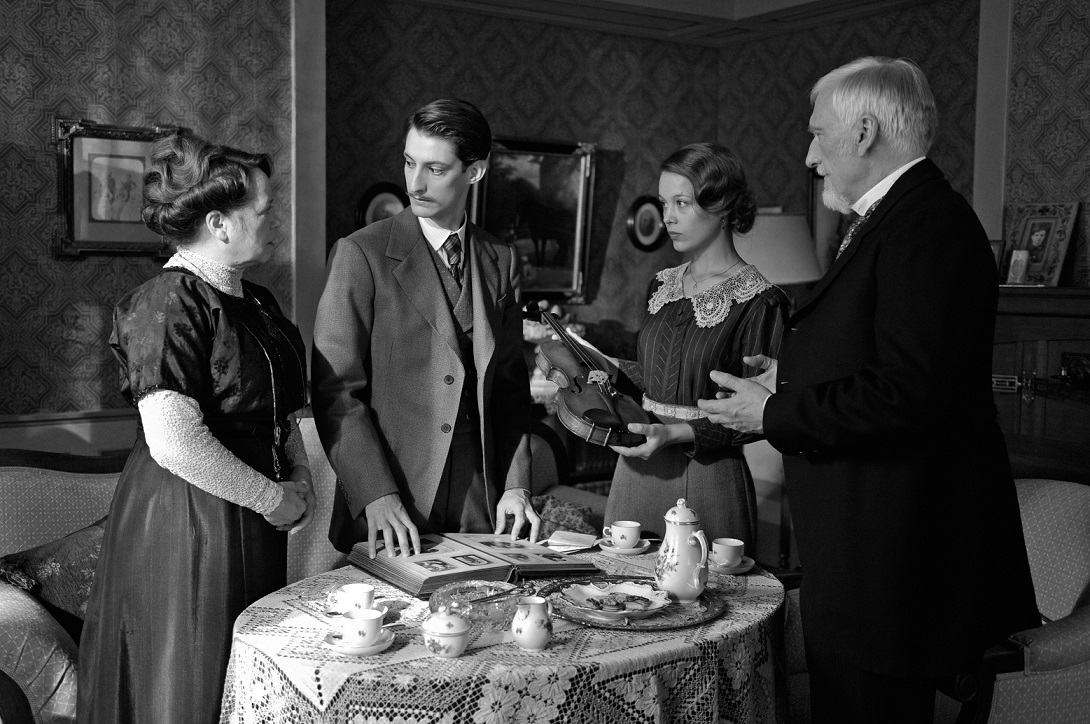 But such foundations for any possible future will not withstand life’s harsher truths. Revealing them would be impossible, since Ozon is himself a storyteller who here, especially, plays with our expectations. He confounds (for those who know themes from the rest of his work) some of those on one level, and allows the visual reality of his film to flesh out a story that is itself illusory. Anna’s complicity in maintaining that version of events precipitates her journey to France in the second half (at which point Ozon leaves Lubitsch behind).
There she begins to function as a fully independent character, dealing with a world far wider than the one from which she has come; she asserts her ability to engage with it on her own terms, however unexpected or cruel it proves. Rediscovering Adrien, we are left with a sense that war’s casualties include those who have survived the physical hell of the trenches no less than those whose lives ended there.
Paula Beer conveys the trajectory of Anna’s journey wonderfully, her character’s initial reticence gradually opening out to reveal reserves of inner strength. She conveys the unspoken gradations of feeling with a rare, subtle power, in a way comparable to Ozon’s use of colour. The black and white images of Frantz give the film its opening severity, but in fact Ozon and his cinematographer Pascal Marti vary that texture, allowing elements of distant, subdued colour to intrude and change the mood.
The effect is sometimes that we are witnessing life returning, however hesitatingly, to this dead landscape. Yet the colour is also there, paradoxically, in the film’s scenes of invention, when cinema is doing what is most natural to it, telling a story – but in this case, too, inventing a false narrative. The final scene has Anna in the Louvre, looking at Manet’s Le suicide. “It makes me want to live,” we hear her say. What a nuanced journey she has accomplished, how impressively shaded Beer’s performance. Ozon has achieved emotional depths that are rather new for him.
Overleaf: watch the trailer for Frantz