

“By their beginnings, you shall know them” is a useful motto for cinematic rediscovery. Rather than predicting how a director’s creative path may develop in the future, you go in the opposite direction to see which way, starting from his or her earliest works, the web has been spun.
“Spinning a web” is a phrase appropriate for Thai director Apichatpong Weerasethakul’s 2000 debut feature Mysterious Object at Noon (Dokfa nai meuman), as ingenious an exercise in playful narrative development as can be imagined. Beginning with that classic storytelling trope, “Once upon a time…”, it develops in an elliptically beguiling, deeply original way.
The loose development structure, as the director refers to it in a 26-minute interview that is the main extra here – it’s taken by Mehelli Modi, founder of the Second Run label, on which Object is released – was known as “exquisite corpse” by the Surrealists, though it’s also close to the game Consequences. It involves the hand-on of a piece of narrative for subsequent development by later storytellers who have, however, limited knowledge of what's been created before them.
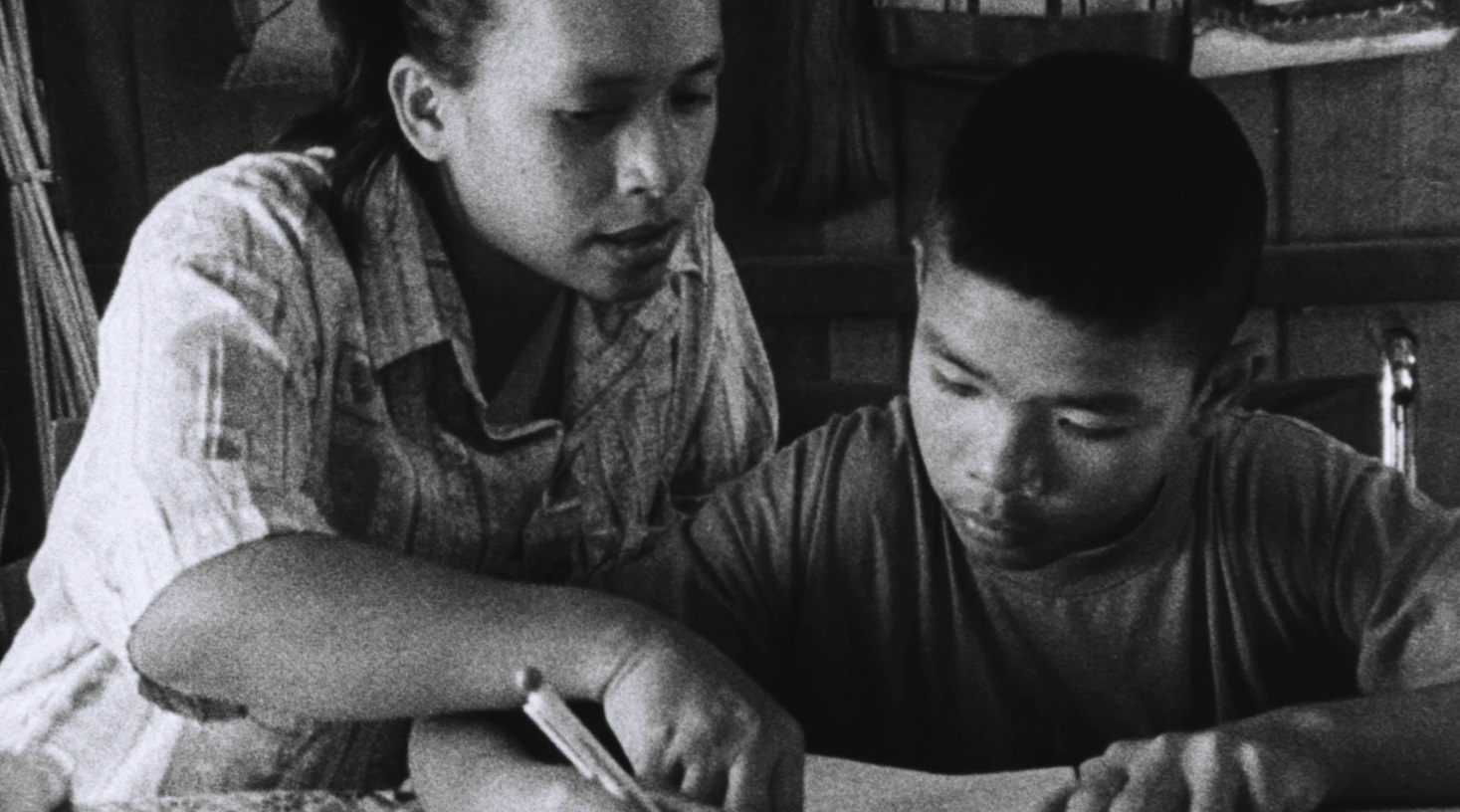
The central drama involves the interaction between a boy in a wheelchair and Dogfahr, his tutor (pictured above). If that sounds simple, the way it’s developed – involving fable, magic and dream, the kind of shortcut into some more elemental world that has become Weerasethakul’s trademark – the result is anything but. However, the sheer variety of ways in which it is retold, across the length and breadth of Thailand, from boys working in an elephant camp to a school for deaf-mutes, including appropriation by a traditional Thai drama group, has a naturalness that is entirely its own, caught in a fresh black and white 16mm style that’s close to documentary.
The booklet essay from Tony Rayns, the first person from outside Thailand to see the film and who proved instrumental in it reaching the 2000 Rotterdam festival, notes that the closing credit reads “conceived and edited by” rather than “directed”. Yet the element of directorial mediation is clear, however artfully Weerasethakul chooses to disguise it: compare it to his 2007 short film Meteorites, also included here, which seems “unmediated”, closer to pure documentary even when we can’t help but try to weave a narrative line.
Rayns calls Weerasethakul the first Thai director to work in independent rather than commercial cinema in his country, a position his 2000s festival acclaim – culminating with his Cannes 2010 Palme d’Or for Uncle Boonmee Who Can Recall His Past Lives – has gone on to cement. He was unlucky in one respect, however: the original 16mm negative of Mysterious Object at Noon was lost. The final mini-feature details the restoration (from a single festival print), carried out at the Austrian Film Museum, of the version presented here.










Add comment