"Crazy comedy" was a recognised subgenre in post-war Czech cinema. Turn to this disc’s bonus features first and watch Michael Brooke’s video essay Those Crazy Czechs, an entertaining whistle-stop guide which piqued my curiosity about films such as You Are a Widow, Sir!, I Killed Einstein, Gentlemen! and How About a Plate of Spinach?
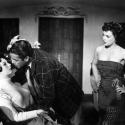
 Jindřich Polák’s time-travelling Nazis comedy Tomorrow I’ll Wake Up and Scald Myself with Tea has been reissued by Second Run, and it’s now followed by Václav Vorlíček’s Who Wants to Kill Jessie? Released in 1966 as Kdo chce zabít Jessii?, this features comic-strip characters released into the real world as a result of a scientific mishap. In it, Dana Medřická’s Professor Růženka Beránková (pictured below left) develops a serum aimed at boosting the milk yield of cows by banishing bad dreams. A nifty eavesdropping device allows Beránková to monitor the results, a distressed cow plagued by gadflies soon seen reclining in a hammock while listening to a string quartet. That the flies subsequently materialise in the laboratory isn’t noticed, the demonstration hailed as a miracle. Vorlíček and co-screenwriter Miloš Macourek hint at the invention’s more sinister applications, one observer pointing out its potential for “social-political influence”.
 Flushed with success, Růženka celebrates with her husband Jindřich (Jiří Sovák, pictured bottom right), an engineering professor. He’s distracted by a comic belonging to one of his female research assistants, the pneumatic titular character’s "anti-gravity gloves" hinting at a solution to a thorny work problem. Observing Jindřich tossing and turning in his sleep, Růženka injects him with her serum, causing the three comic-strip protagonists to appear in the couple’s tidy Prague flat.
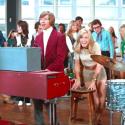
Vorlíček and Macourek’s hiring of Czech cartoonist Kája Saudek was a key element in the film’s success. Saudek designed the brilliant opening credits and drew the strips which Jindřich studies. A glamorous Olga Schoberová was the director’s first choice for the title role, a scientific genius with super strength, wearing a skimpy polka dot dress. She’s pursued by Karel Effa’s Cowboy and a thuggish Superman played by Slovak architect-turned-bodybuilder Juraj Višný (pictured below).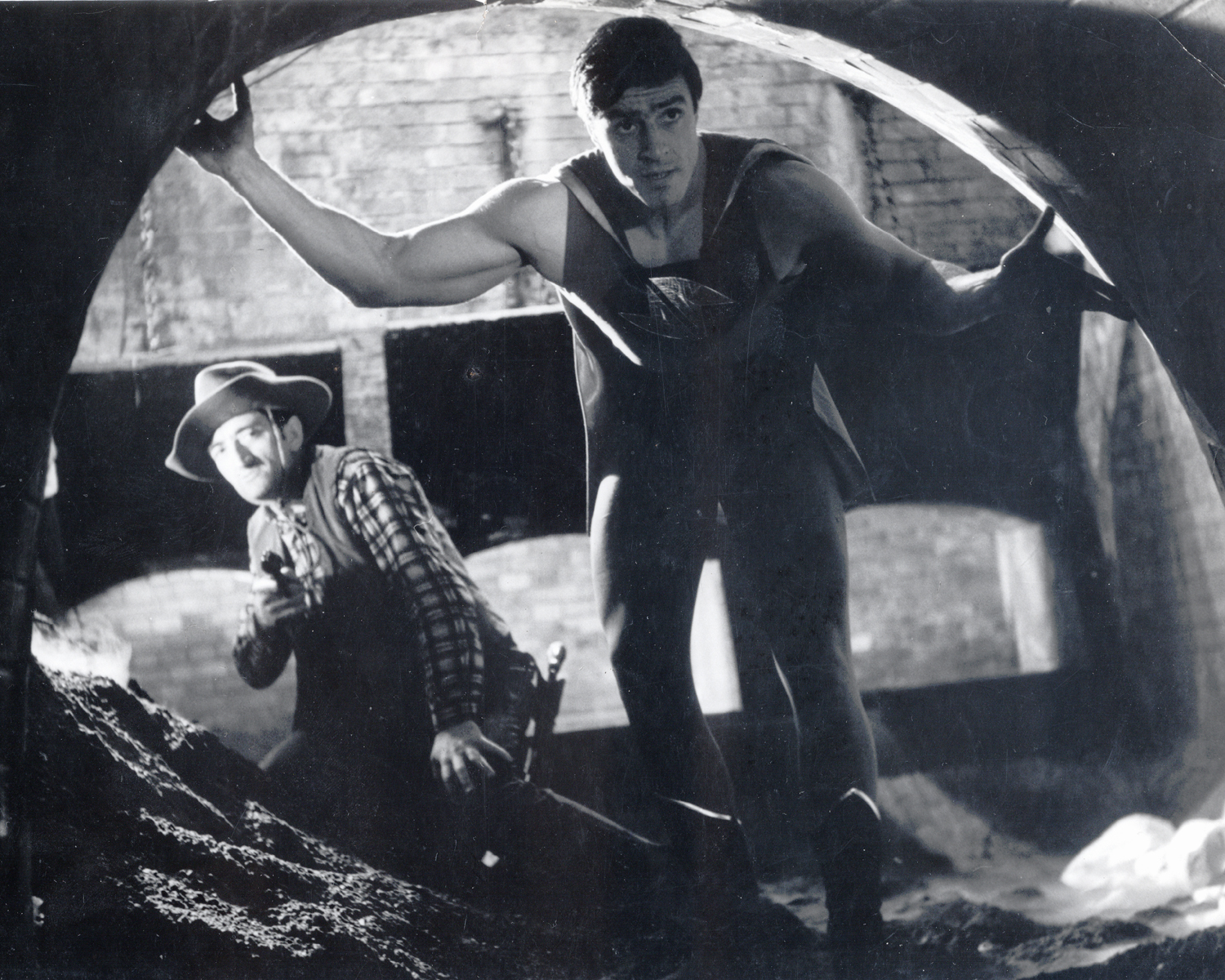 None of the trio can speak in the conventional sense, Vorlíček having them communicate in forward-facing speech bubbles, the effect similar to the animated onomatopoeia (POW! SPLAT! ZONK! etc) in the 1960s Batman series. There’s a choice sight gag in the central courtroom scene where the fate of the interlopers is being debated, an usher flipping one of the bubbles around so that it can be read by those in the public gallery. It’s suggested that the three comic characters be disposed of to prevent them causing further chaos, their non-human, imaginary status meaning that execution presents no moral problems.
 Satirical digs at the Czech regime hit home. There’s a servile policeman assiduously guarding an open manhole long after Jessie has fled, and we meet a friendly prison guard open to bribery plus a lazy lab assistant dreaming of nothing but beer. The gender politics haven’t worn quite as well: we’re invited to snigger at the domineering and sexually assertive Růženka, especially when she becomes infatuated with Superman, while Schoberová’s blonde Jessie resembles a male fantasy. Still, it’s Jessie and the female lab assistants who are key to constructing the gloves which Jindřich uses to do a spot of heavy lifting near the close. Mostly a visually inventive and fast-moving delight, then, and it lasts just 83 minutes.
Jonathan Owen’s booklet essay is an interesting read and mentions how Hollywood producer William Snyder liked the film, engaging Vorlíček and Macourek to develop an English-language remake which would have starred Jack Lemmon and Shirley Maclaine, a project aborted after the 1968 Soviet invasion of Czechoslovakia. This HD transfer looks splendid, and Second Run also includes Vorlíček’s debut short film Directive, a wry, dry look at state interference during a youth choir’s trip to Poland.