The premiere of the newly restored version of Alfred Hitchcock’s 1929 silent classic Blackmail, outdoors at the British Museum, will go down as one of the defining moments of the London 2012 cultural extravaganza. This was a thrilling, beguiling, resonant celebration of the city and its greatest film-maker.
Of the four screenings of restored Hitchcock silents in marquee venues this summer, this will be the most singular, due to Blackmail’s climactic sequence – the director’s first major set piece – taking place at the museum itself. As the glowing building loomed over the forecourt screen, the pristine new print shimmering under a kindly sky, the frisson was palpable.
 The event had a dual significance: the film is one of the Hitchcock 9, the largest restoration project ever undertaken by the British Film Institute (and on-going: funding is still being sought for four remaining films), and these special screenings the prologue for the summer-long Genius of Hitchcock retrospective.
Hitchcock directed Blackmail in 1929, aged just 29 but already the UK’s most famous film-maker. More exactly, he directed two films, simultaneously making a sound version that became the country’s first talkie – inadvertently casting the silent into the shadows. Tonight it emerged triumphant, clean as a whistle and quite beautiful, accompanied by a new score by composer Neil Brand and performed by the Thames Sinfonia.
The themes and visual flourishes that we associate with the mature director are already at play
Adapted from Charles Bennett’s play, it’s a dark and racy piece, starting with a fabulous police procedural sequence – as we follow a Flying Squad team in its pursuit, arrest and process of a villain – before moving on to the main story. This involves attempted rape, murder and blackmail, at the heart of which a policeman and his girlfriend are embroiled in the sort of moral quagmire that was Hitchcock’s bread and butter.
The themes and visual flourishes that we associate with the mature director are already at play: the interest in male cruelty towards women and in the presentation of psychological distress, the potent employment of off-camera violence, the interplay between drama and comedy – often within the same shot – and the telling use of location and spectacular set piece.
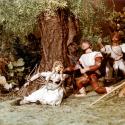
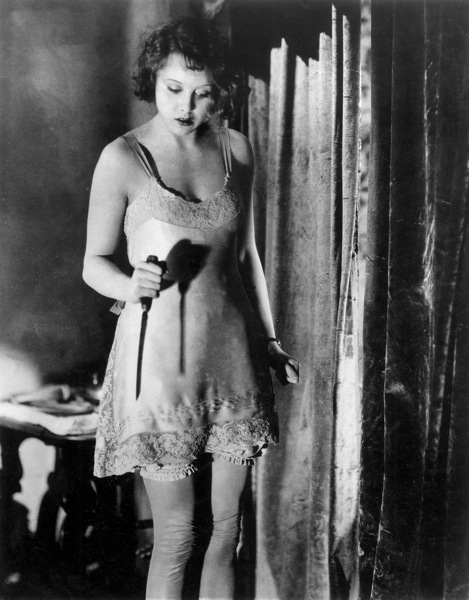
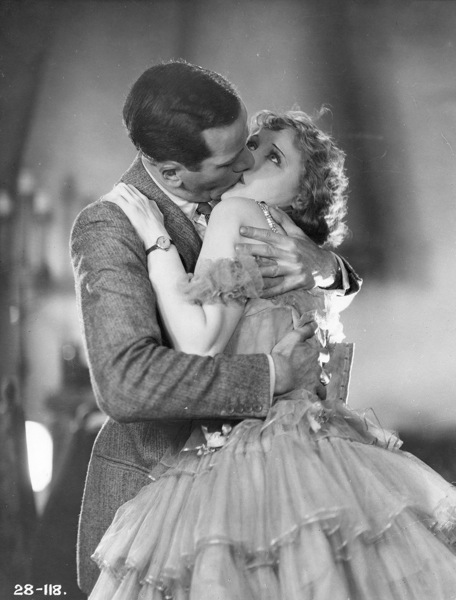 Many of these elements feature in the murder, committed by Alice White (the extraordinarily expressive Anny Ondra, pictured above, an obvious precursor of Hedrun and Novak): the stabbing itself, witnessed as a repeated movement behind a drape, her almost catatonic flight from the scene, down a newly spiralled staircase and through a Piccadilly Circus whose neon signs remind her of the crime, the subsequent, often comic appearances of knives and limbs that haunt her. As blackmail kicks in, we see a familiar gender power struggle, between Alice and the cop boyfriend she has just, inconveniently, jilted.
And then there’s the climax, a chase through the British Museum that ends with a misguided climb to the dome that evokes later jaunts up the Statue of Liberty (Saboteur) and Mount Rushmore (North by Northwest). Brand’s lively, playful score fuels our associations, via Bernard Hermann of course, notably with a staccato nod towards Psycho and swirling motifs that recall Vertigo.
Hitchcock had even started making his little cameos in the Twenties: here, already lugubrious, he plays a passenger on the underground, being comically harassed by a boy. We’re going to be seeing a great deal more of the great man in the coming weeks.