

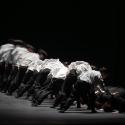
The air is thick with theatrical smog… then comes prolonged darkness. Gradually, a dull glimmer of warm light reveals a tangle of limbs moving slowly like the coils of a giant serpent undulating in deep water. As the light slowly increases, a cluster of beings emerges from the gloom moving in oily undulations like tormented souls roiling in the depths of hell. Occasionally they form into brief tableaux, and I’m reminded of The Raft of the Medusa (1819), an apocalyptic painting of a tragic shipwreck by Théodore Géricault, and also of paintings of downtrodden workers by the likes of Gustav Courbet.
The eight dancers are from Shechter II – Hofesh Shechter’s company of young talent from around the world – and they are having a hard time. They move together with shoulders hunched, heads lowered and eyes downcast as if burdened by shame or worn down by toil. Then as if to assuage the wrath of a vengeful God, they raise their eyes to heaven and lift their arms in supplication. But absolution doesn’t come and, with minor variations, these rituals are repeated again and again.
In the Brian builds on Cave, a shorter piece produced in 2022 by the Martha Graham Dance Company, which drew inspiration from Berlin’s dynamic rave scene. But the slower, quieter first half of this hour-long piece feels much more archaic than that, more tribal. And it is mesmerising.
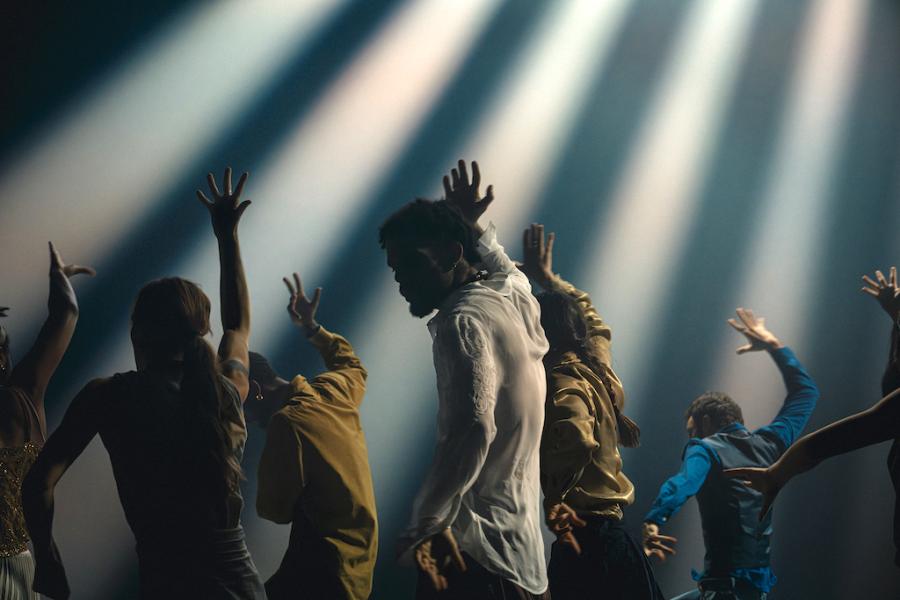
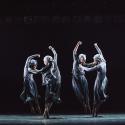
Tom Visser’s atmospheric lighting creates the sombre mood then, without warning, shifts the piece into the present day. Shafts of cold light (pictured above) open up the space, and as the rumble of drums gets louder, the dancers respond to the quickening tempo with moves that feel both more individualistic and more neurotic. There’s an occasional break-out into rubber-limbed solos or duets, but crowd mentality prevails, although it feels more robotic than communal.
Shechter’s soundtrack inexorably builds to the heavy, thumping rhythms of his signature style and, as if hypnotised by the insistent beat, the dancers are propelled into increasingly frenetic movement. The piece is billed as a “dreamlike, club-like, timeless state… where euphoria unfolds”, but there’s no sense of an evolving journey – just more of the same – so a climax is never reached and euphoria never comes. In its place is the endless repetition of dancers attempting to reach a trance-like state or, even perhaps, of dancing themselves to death – whichever comes first.
The most memorable moment in the whole piece is far removed from those high energy twitches and turns that feel more akin to hysteria than joy. Lying on the floor, the dancers repeatedly arch their backs and slacken them again. It’s as if their whole bodies have become giant lungs breathing in unison, and it creates a sense of calm communion – verging on euphoria.


Add comment