

Few dancers have the luck to find a permanent place in history through their role in a new creation as Matz Skoog did in 1987. The Swedish star of the then London Festival Ballet, who died last weekend aged 69 from cancer, was one of the mesmerising original trio in a protest ballet that touched a nerve in its own era, and would then travel across four decades to become a classic.
Swansong, choreographed by Christopher Bruce for Festival Ballet in a conscientious response to rising world protests at the disappearance of loved ones into the oblivion of Chilean prisons, seemed to portray a grim interrogation of a prisoner by two guards. The stage was bleak, a black room with a single chair, and a sharp beam of light. Over its half-hour, the language of the interrogation brilliantly brought together balletic leaps, aggressive tapdancing and mocking dance-offs, eloquent choreography in its own athletic and aesthetic right, but also as a whole, with Philip Chambon’s electronic soundscape of whispers, crashes, taut silences and jangling pulses, summoning a nightmare of powerlessness.
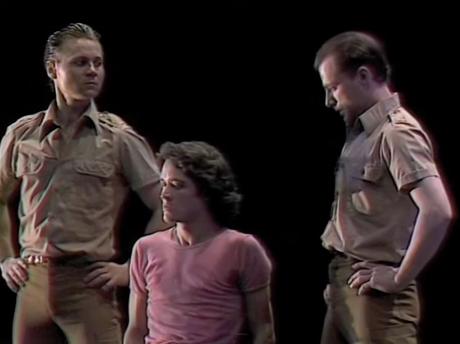
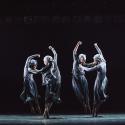
The three performers – Skoog and Kevin Richmond as the khaki-uniformed interrogators, Koen Onzia as the captive in a red T-shirt – seemed elemental archetypes of corrupt power and its prey (from left in photograph: Skoog, Onzia, Richmond). Skoog’s nimble tapdancing had a menace the more potent because of his almost gentle half-smile, "good" cop against Richmond’s flinty "bad" cop.
Yet it would be difficult, if you knew Skoog in normal life, quiet, kind and even-tempered, to think of him as such an interrogator. And nor would it be easily imagined that the making of such a frightening ballet was, in fact, a process of lively goodnaturedness and extreme satisfaction for the choreographer and his three dancers.
Matz Skoog talked to me about this and about his adventurous career in a filmed interview I made with him in June 2022 (available on YouTube here), including his rollercoaster five years as artistic director of his old company – now named English National Ballet – when he took over from Derek Deane at a time of existential crisis. Under Skoog, ENB almost closed down altogether, due to its intractable financial problems.
As he described, his very first day in the office was, ominously, the apocalyptic day of 9/11, the terrorist attacks on the World Trade Center and the Pentagon of 11 September 2001, whose aftershocks caused years of chaos in the entertainment and arts world. And from then on it only got harder as British ballet became embroiled in a crisis of identity and public financing.
Memorable insults were hurled between ENB directors. Skoog accused Deane of dumbing down ballet's image to chase the box office. Deane attacked Skoog's "naive and artyfarty" ideas, which would drive English National Ballet to financial oblivion just as it reached its 50 years up.
But there was no doubt that both men agreed on the fundamentals of artistic excellence, hard work and public connection that had always been the engine of the company launched with the 1951 Festival of Britain. Nor was it in doubt that the pair were fighting the same war with ENB’s Board of industrialists and conservative culture patrons as their predecessors –one of whom, Ivan Nagy, told the Board that if they wanted a marionette, they should go and buy one. No fewer than five artistic directors in a row were noisily shown the door by the ENB Board in just over 20 years.
For Skoog his frustrations and, as he confessed, failures directing ENB were a painful experience after his satisfying years dancing there, when Rudolf Nureyev mentored him, and Swansong would bring him the role of his life. Yet, undaunted, he took from his ENB years a lesson in the need for greater skills training in arts leadership, and became eventually a sought-after leadership coach.
So we had much to talk about when Skoog and I met at the Vyne Dance Academy in Berkhamsted, where he was a guest teacher. We began where his dance story began, as an eight-year-old sent to the Royal Swedish Ballet School inside Stockholm’s historic and picturesque Royal Opera House.
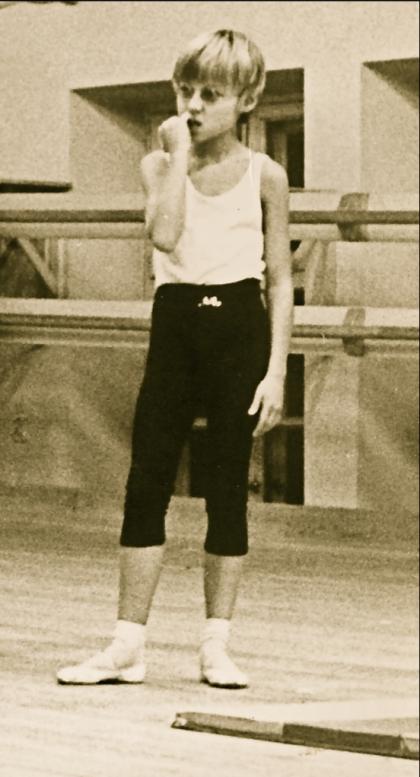
MATZ SKOOG: I was eight years old when my mother suggested I try for the Royal Swedish Ballet school. I come from a theatre family - my dad was a jazz musician and artist and my mother was an actress and a dancer herself. I was a good little boy so I said, yes, why not? In 1965 I was accepted into the school, which was run in parallel to the ballet and opera companies inside the opera house.
So I didn’t start it from a burning desire – it was just because I was a good little boy doing what my mother wanted. But it became a way of life quite quickly. We were trained alongside the opera company and it was an old 19th-century type institution that today couldn’t exist for health and safety reasons and child protection and so on, but it was a great environment in which to grow up. The Opera House companies and the school were like a very close family affair. And it was where I spent 14 years of my life.
ISMENE BROWN: The Royal Swedish Ballet is the third oldest ballet tradition in the world, 250 years old. The legendary ballerina Marie Taglioni who inspired La Sylphide and the entire Romantic transformation of ballet was actually born in Stockholm, and her mother was a Swedish ballet dancer. In modern times the Royal Swedish Ballet also had a strong English connection with Antony Tudor and Mary Skeaping both being balletmasters there. And this wonderful view of the opera house auditorium was what you saw, Matz, for all those years. A magic place.
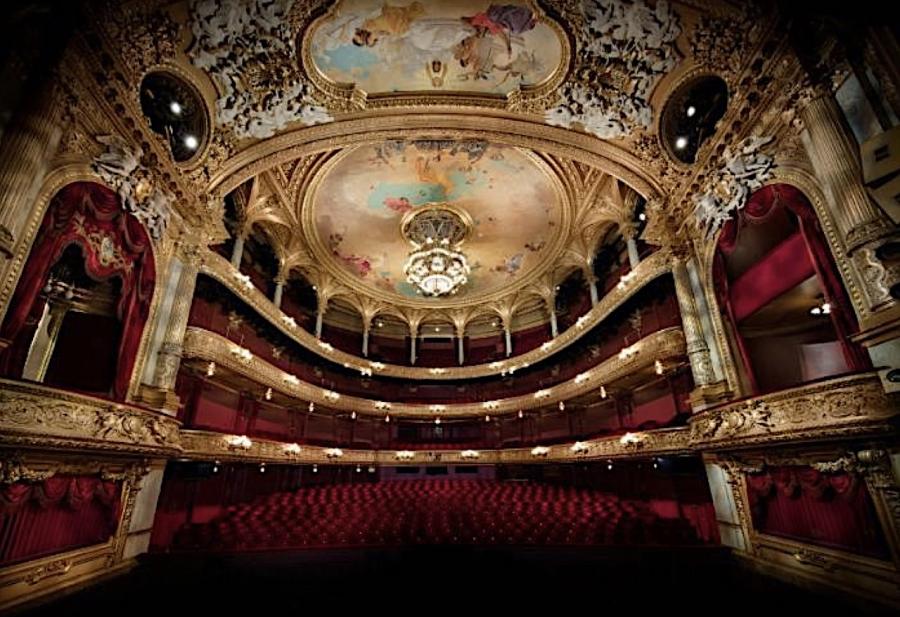
I didn’t realise it at the time, but now of course I know that. At the time being a curious little boy I knew every corner of it from top to bottom, the dungeons underneath, up on the roof, every part.
Despite being a ballet company of such tradition, the Royal Swedish Ballet had an eclectic repertoire. I see you were immediately dancing a very wide range of roles when you entered the company at 17. Swedish contemporary work by Birgit Cullberg, Flemming Flindt, as well as the classics like Blue Bird in The Sleeping Beauty.
I sort of emerged into the profession. After eight years you became a paid student, which meant half salary to do both full schooling and company work, from the age of 16 to 18 - which meant working two jobs for half the money! I had already been a member of the company, though, since I was a child, so it was just that one day I became paid.
I was told early on that I was talented. Too early! Better not to have been told! So I had an assumption that I would be successful, which was perhaps a helpful assumption. It helped me to be successful because I believed I had the right to be successful, which was great –and I was.
And you had a solo made for you called, rather embarrassingly, Superboy!
Well, it was not made for me, but, yes, it was true! Not great!
Our training was hardheaded - it was about stagecraft, about understanding you were part of a theatre, entertaining
The idea of ballet in Stockholm embraced a very wide range of dance and I imagine it was a mindset that, perhaps unrealising, you carried throughout your later career.
Yes the ballet school was progressive for its time - this was the Sixties. We were trained in a wide range, not only classics, but national dancing, character dance, jazz, Graham technique, ballroom tapdancing, all sorts, so I had a very broad understanding of what dance was. The director of the school, Herr Albert Koslowsky, told us on our first day, "Now boys, you are here to learn a job. You can learn to dance in your own time, but you are here to learn a job." A hard-headed enphasis. It was about stagecraft, it was about understanding you were part of a theatre, about entertaining, the show must go on.
Were your idols Danish? Russian?
Mostly it was Russians who were our role models, because their male dancing was athletic, powerful, masculine. I only became aware of what was happening in America and the rest of Europe much later on.
And you visited Russia for training. You went to Leningrad.
Through my parents’ connections. They wangled some sort of exchange scheme so I could travel to the Vaganova School and the Kirov Theatre to train. Living in the Soviet Union in the 1970s was quite a challenge.
That was not long after Baryshnikov defected. I suppose he could only have been talked about in secret over there as a defector but surely he was the dancer everyone looked up to?
He would have been if anyone had talked to me! In fact on my second visit, when I was at the Kirov Theatre in 1977, on my second day, Yuri Soloviev – another great dancer – committed suicide. The rumour was that he had been in touch with Baryshnikov and wanted to defect, and couldn’t, and shot himself with his father’s service revolver. I turned up at the theatre that day, it was absolutely quiet, no one was saying a word to me, I got changed for class, no one turned up. Two days later I found out this had happened. Soloviev was a fabulous dancer.
He was truly exceptional, a more refined dancer, many thought, than Nureyev, who was his contemporary. So what were your expectations? To join a Russian company?
No, I just wanted the experience of being there because the training was excellent and still is. It was to get a flavour I could get nowhere else.
You may not have noticed that I am quite short! In Sweden the company was quite tall
But you went back to Sweden, and then came on to London?
I always aspired to leave Sweden. You may not have noticed that I am quite short! And I could see my entire ballet career spread out ahead without the title roles – especially in Sweden, where the company was quite tall. So I wanted to find opportunities elsewhere.
It came about because Anton Dolin (who was Alicia Markova’s partner, and together they founded what would become Festival Ballet) was guesting in Sweden and he took a great interest in me, mainly because I was a young boy actually… Then I bumped into him again in Cuba at the Havana Festival when I danced a solo – one of my teachers was quite political – Dolin saw me again and he said, why not try Festival Ballet? He said he would introduce me to Beryl Grey, the artistic director, who was married to a Swede. She was very welcoming and accepted me into the company.
London Festival Ballet had an exciting group of young talent then. You were there with Peter Schaufuss, Trinidad Sevillano, and when John Field took over as artistic director in 1979, when you were 22, you were quickly promoted.
It was a great place to be, you worked really hard and I wanted to work hard. Festival Ballet did eight performances a week, it was very exciting for a young person.
Were you conscious of Nureyev, who was making those big productions at Festival Ballet –The Sleeping Beauty in 1975 and Romeo and Juliet in 1977 – and had hoped to direct the company himself?
Absolutely, he was a very important influence on me, because he came out of Russia the sort of time when I started dancing and he passed away around when I stopped dancing, and he was part of that journey. And I had the privilege of working very closely with him when he guested with us, that was really important for me.
He would come and basically hire Festival Ballet every summer at the Coliseum for three or four weeks, he would dance all the performances, and that was where I came across him. He took an interest in me as well. I remember I met my wife’s family for the first time just before Nureyev passed away - it was in 1993 in New Zealand, and she was a dancer in the company. We were all talking around the dinner table, we had never met before, and someone said, did you realise Rudolf Nureyev died today? And I just burst into tears. Not so much that he was a personal friend but he had been so much part of my dancing life. Quite an embarrassing way to meet your future wife’s family!
You had great leading roles there. Along with 19th-century classics like Giselle, The Sleeping Beauty and La Sylphide, you danced Lensky in John Cranko’s Onegin and you danced both Nureyev's and Ashton’s Romeo and Juliet.
I loved Lensky, a great part.
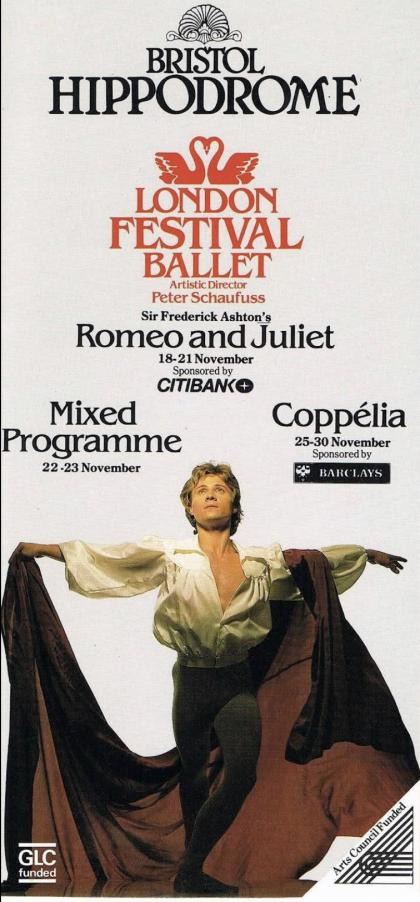
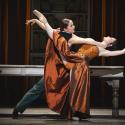
And you were the company's poster boy for Romeo and Juliet (pictured above). You had those leading male roles that you left Sweden for. Did you find ballerinas were shorter in London?
Yes! That’s right - it was my aim to find shorter girls!
You then, aged 25, decided to leave this promising classical career for Netherlands Dance Theatre.
Jiri Kylian was Netherland Dance Theatre’s director and I had worked with him in Stockholm, and he had kind of invited me to audition. Which I did. After three years in England I had concluded that the English dance world was quite insular, quite narrow – having come from, as you say, the varied background of Sweden. Here if it wasn’t Ashton or MacMillan it wasn’t good enough. So I wanted to dance some of the great European choreographers, Kylian, Cranko, John Neumeier, William Forsythe. Already then they were great choreographers, but here in England nobody really mentioned them.
Actually it’s interesting that these choreographers all have artistic, familial links. Kylian trained at the Royal Ballet School, was a protege of John Cranko at Stuttgart, which itself was an offshoot from Sadler’s Wells Theatre Ballet, and Cranko came from Sadler’s Wells to run Stuttgart, so Netherlands Dance Theatre was a sort of artistic grandchild of Sadler’s Wells Ballet.
You could say so, yes. But still what was happening in Europe was completely separate from what was happening here in England and it was very attractive.
But you didn’t stay? You spent only a year.
Well, they wanted me back here in Festival Ballet and I had a girlfriend here. I sometimes wonder if I should have stayed longer than a year in NDT, maybe my life would have turned out quite different.
Your older colleague Peter Schaufuss became artistic director and now you got some landmark roles for which you will always be known.
Yes, Schaufuss took over after John Field in 1984, and that was a new chapter in the company’s history, the beginning of a very successful five or six years, with a lot of new repertoire and great dancers and new people came in. Peter was a very ambitious man, ambitious for himself and therefore ambitious on behalf of the company and all of us.
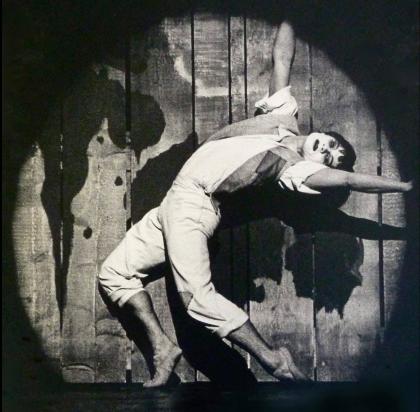
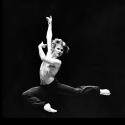
He changed the company’s name too to English National Ballet, and at the time the new ENB was really making waves in British ballet. You were dancing Glen Tetley works and Christopher Bruce, first Cruel Garden, that dreamy fantasy he created with Lindsay Kemp in which you performed the role of Moon (pictured right). Bruce then made this now legendary trio Swansong for Koen Onzia, Kevin Richmond and yourself. He said he remembered laughing so much with you all as he created it, which seems unlikely considering the ballet’s rather sinister, even tragic impression. Tell us about that.
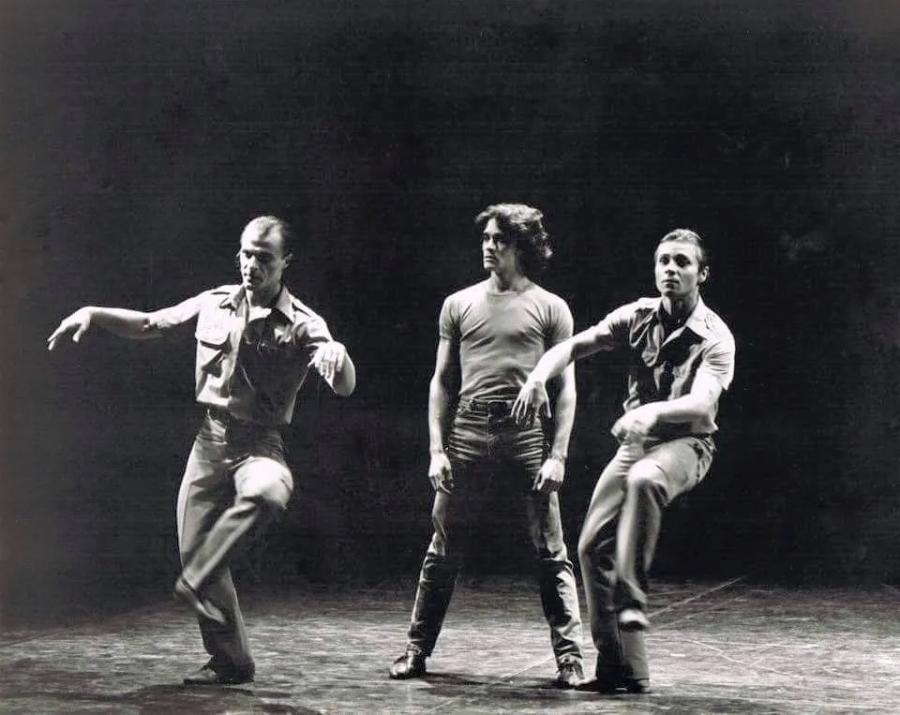
Swansong is basically an interrogation situation between a prisoner and two guards (pictured above, the original cast, Richmond, Onzia and Skoog). It’s quite an aggressive interrogation, done through dance and some tapdancing. At the time it was a bit of a landmark piece, it really changed people. I have met male dancers who told me it was the reason they started dancing. It has stood the test of time dramatically, it still holds water. [Students study it for GCSE and A-levels now]. Bruce didn’t tell us his intentions, he left it to us to work out – it was how he worked, just giving you the material and letting the material speak for itself. I can say it was one of the highlights of my career.
It was a moment when you knew you’d arrived, in a sense? You now knew yourself as an artist?
It happened towards the end of my dancing career. I think I felt I had finally found a style of dancing that worked for me, because as a younger man I think I felt the prince in white tights was not what I was cut out for.
During that time there were board fights going on inside ENB over Schaufuss’s directorship. Did you then start thinking you might be interested in such a role?
I always knew I was quite interested in the vision side of directorship, how to do things better. It was a combative time, when management was command and control – authoritarian, not very nice. I became aware there were other ways to do things.
Ballet management was command and control - authoritarian. I became aware there were other ways
Did you think it was an English thing?
Yes, I think I did. It was a much more hierarchical structure, and Britain is a class society, of course.
You took up your first leadership role at Aterballetto, Italy's leading contemporary ballet centre.
As balletmaster, not director.
You then became artistic director at Royal New Zealand Ballet for several years. Again a little like Royal Swedish Ballet, you mixed it up, thinking of ballet with this broad definition, alongside classical ballets you had work by Mark Morris, Jiri Kylian, Kim Brandstrup and Mark Baldwin.
That’s right. It was my background, and I arrived at the time when the only way to go was upwards, because it was a low point in the company’s history. The premises were awful, finances were awful, we were discussing with the Arts Council whether and how to continue at all. Long story short, we obtained new premises, we became directly funded by NZ culture and heritage, before then it was project-funded. Plus they were really interested that I wanted to do more stuff there. There was a sense of partnership with the Board.
And was this what you expected when you applied for the directorship at ENB?
I didn’t initially apply. It was kind of suggested to me by someone on the Board that I should apply for the job. So I assumed that I was brought in to do something similar here in England. As it turned out, that wasn’t the case at all.
This was historically interesting, a controversial time, a fiery time. ENB's departing artistic director Derek Deane had been close friends with Princess Diana and brought in her patronage for ENB, he also pioneered the arena Royal Albert Hall productions. ENB had been lurching between devastating debt and sometimes very populist fare and marketing in order to sell seats to new audiences, and it wasn’t only their problem. The Royal Ballet in Covent Garden had also got into financial trouble and the same year as you took over at ENB they had a controversial leadership change that only lasted a year. Generally ballet's so-called elitism was coming under fire, story ballets were seen as vital to the box office, and popularity was held as a holy grail. Matz, you began in the lions’ den from day one.
Yes. The day I arrived was 9/11, which had a devastating impact on box office and audiences throughout the West End for the next 18 months. It had a significant impact on what we could do. The first year was already planned, but my dreams started dwindling quite quickly.
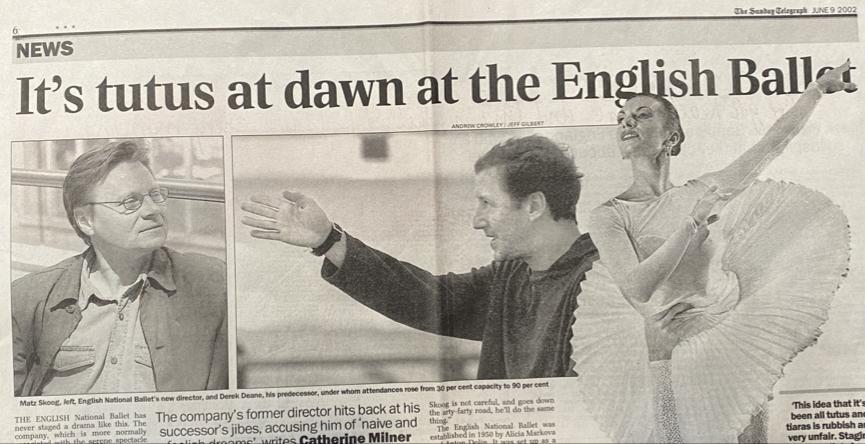
There was a huge row in the papers between you and the previous director Derek Deane - you said ballet was being dumbed down, he accused you of naive dreams and arty-farty programming that would break ENB’s bank.
It was slightly unfair that Derek and I were cast in these roles as adversaries, which in reality we weren’t.
You did both agree about quality and technical excellence. But the row was about the place of public taste in defining what ENB did, wasn’t it? The issue was how much ENB should become mass-market and feed the audience for classics, or try to tempt the public to buy tickets for new works and today's choreographers. Which was your preference.
Yes, I wanted to commission new British choreographers as well. And in fact we got an award nomination for commissioning new work. [Skoog commissioned Wayne McGregor, Cathy Marston and Christopher Hampson early in their careers.] That was what I wanted to be a chief part of my artistic directorship, commissioning choreographers, designers, composers. As it turned out, it didn’t really happen. I think there was some desire for it, but circumstances stood in the way, significant events happened that prevented the company from doing virtually anything for the duration of my directorship. 9/11 was one. And then there was the flop season at the Hammersmith Apollo where we did The Nutcracker and Cinderella because the Coliseum, which was our usual home, was closed for refurbishment for a season, and Hammersmith, which was known as more of a pop venue, did not attract the audiences that we needed. I remember the numbers of the box office losses were tremendous.
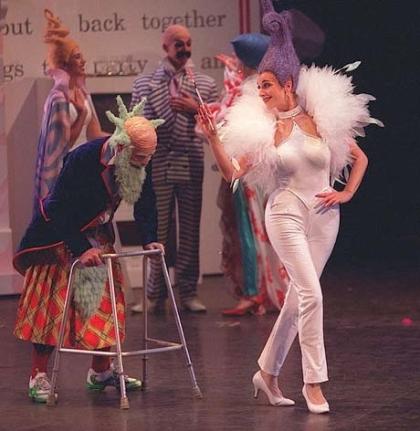
Yes, the same thing happened when the Royal Ballet performed there previously. Your season came in half a million pounds short. Actually The Nutcracker was a fascinating example of the challenges of trying to look forward and back at the same time. You had young Christopher Hampson choreographing it but the chief point was that you got the most boldly satirical cartoonist in Britain, Gerald Scarfe, to design this wacky cartoony Nutcracker world. Personally I thought they were just marvellous designs, and he had some very funny rude jokes in the costumes, but whether they suited the expectations of an ENB family outing was a moot point. I gather small children loved it but it got a "mixed" reception, as we say, from the adults.
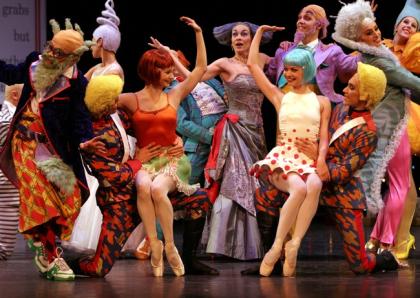
Well, I got into trouble from my Board. They never really approved of the idea, they went with it, but I kept getting beaten up for it for a long time. Because when it first premiered it hadn’t quite gelled, the opening night in Bristol wasn’t great, but we got it fixed. Still, a lot of people thought it was not an appropriate style of work for ENB. But in fact it was commercially very successful [the Scarfe Nutcracker ran for seven years], which is the point, because Nutcracker pays for most of the rest of the year. Thirty or 35 shows of Nutcracker at Christmas guarantees money in the bank.
Well, I would have thought that the Board would have had a good laugh at it…
It was criticised from all quarters, as I remember. Some members of the Board objected from the start on the grounds that Gerald Scarfe was a cartoonist, not a designer, and so on.
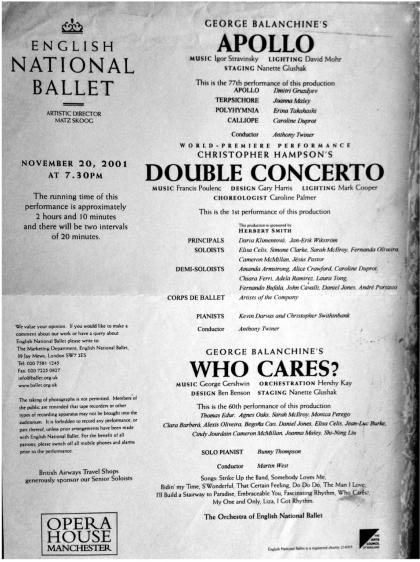
On the other hand, you were succeeding in commissioning a lot of new choreography for those regional tours, which were being danced very well and going down well with critics, such as young Christopher Hampson's Double concerto (playbill, pictured right), and you also had two big firsts, in presenting ENB at Covent Garden, which hadn’t been done.
That's right, I did.
Still, you lost half a million pounds on the Hammersmith Apollo season, The Nutcracker and Michael Corder's new Cinderella, which was rather lovely but didn't sell well. The Board and management were at odds - Angela Rippon had quit as chairman acrimoniously, leading executives resigned. And finally in 2004 the Arts Council felt ENB’s deficit was beyond recovery, you had to cancel a big new ballet, Michael Corder's Les Liaisons Dangereuses, and there was much talk about whether ENB should continue to exist at all.
Yes, well, a lot of water has passed under bridges now, but at the time it’s true that it was that close to the company closing down, though we were all sworn to silence. But the Arts Council did step in with a rescue package, a huge recovery, on condition that the company had to be commercially successful for the next three years. So that of course defined what little I was able to do.
How did you feel people were gauging your part in it? Were you at fault? Was it the Board’s fault?
I don’t feel I was personally blamed for it. It was a combination of circumstances, and also the adversarial culture of Board and management. It wasn’t a comfortable relationship between the company managers and the directorship, unlike what I came from in New Zealand, which was more of a partnership.
And the artistic director was blurring into a marketing executive! Because at ENB marketing politics had taken over.
Yes, I was even sent off for media training! Like a politician! Politicians who never answer questions. Where they say, "Let me be clear…" and then they’re not clear! That’s just not me. I didn’t do very well in that arena, I must say.
It was felt I had overstepped the mark. I had to apologise to the Board
I remember when you arrived at ENB you gave me an interview for the Daily Telegraph where you said bluntly, ‘Change is paramount. If that’s not going to happen I probably won’t be here very long because life is too precious and my talent, or whatever I’ve got, is too precious to waste on nothing.' How did they react on the Board?
Not very positively. It was felt at the time that I had somehow overstepped the mark by making that statement. I had to apologise to the Board for saying that.
You had to apologise to the Board for saying that you didn’t want to waste your time and talents if you weren’t wanted? Hm. Then near the end of your time, in your last issue of the ENB house magazine you wrote something about the place of classical ballet which seems to me to go to the heart of the issue. You wrote: "What do we mean by the phrase, classical ballet? Is this phrase rather more restricting than liberating? Ballet is a wonderful phenomenon in our civilisation. But if it is to advance, we all have a role to play, both as artists and audiences." And you made a plea for the public to be more open-minded about ballet, think about accepting novelty, broaden their receptivity.
I think that is happening now. Dance is seen in a much broader range and more interesting rep than it was 20 years ago. When I was an artistic director the choice was to be a ballet dancer or a contemporary dancer. You don’t have to make that choice today – it’s about choosing to be an excellent dancer.
ENB was a very competitive place, lots of people applying. What did you go for in recruiting a dancer?
My priority has always been their attitude. It’s easy to pick dancers because they look great or do nice pirouettes, but if they don’t have the right attitude they’re not going to be useful. It’s personality, and what you can bring. Teachers, directors, today pick dancers for physical attributes but I think you must also have intelligence. I have rarely seen a successful ballet dancer who is not also very intelligent. They don’t exist.
How about the confidence issue? It’s such a big problem for dance students, to handle the reality of whether they are good enough to make a career.
It’s true. A big dilemma, for classical ballet students more than contemporary, who are still trained very much in a command-and-control style. There’s a discrepancy between their preparation for the professional world and actually what’s expected of them once they are working. I mean, when I say it's primarily attitude, we are talking now about excellent people in the first place, we are not talking about mediocrity. People already at a high level of excellence just as dancers.
Where do you spot artistry? Do you see it quickly when you are recruiting? Do you sometimes have to hire dancers who can do it right now, or can you grow people on?
Oh, of course both. Sometimes you take someone young who needs time to develop, and sometimes you buy a readymade product, as it were, because you need them. What I always said for myself that if we get it right about 80 percent of the time we’re doing okay. Mostly you know with people whether you’re right or not, but sometimes you miss it, of course you do.
And how about the way dancers feel about a hardworking, fast-turnover company like ENB? Is it difficult still to spin the appeal of this trouper’s life? Doing lots of Swan Lakes, lot of Nutcrackers, and will they be able to grow as artists?
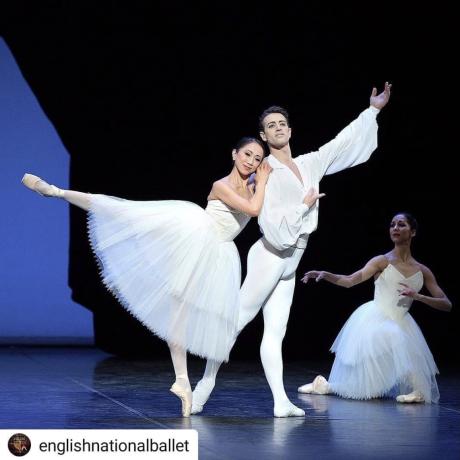
I think it’s a very individual thing. At least one of the ballerinas at ENB has been there over 25 years, a tremendous achievement, a beautiful ballerina, Erina Takahashi (pictured left, with James Forbat). And there are others who stay two or three years and go. It inspires loyalty in some, if not in everybody.
The corps de ballet has always been ENB’s strength.
It’s always been the company’s strength, especially the females. Or so it was in my time. I felt that the ladies were the backbone, they were fabulous.
What’s the spirit that keeps the corps de ballet so strong even when the company’s fortunes are wavering?
I think because it’s a tough environment, they need to stick together to survive, that element of camaraderie, that group mindset – it’s always been a collective company.
You have said that your work as a life coach now is to help people write their own story. Do you think it was a happy story that you wrote for yourself at ENB?
Um. At different times, yes. I mean my directorship there turned out to be a disappointment in certain ways, and certainly it was not my decision to go. In retrospect, perhaps I should have stayed with New Zealand where I was doing good work with good people.
Though it should be said you are only one of four or five successive artistic directors of ENB who were shown the door.
I’m in good company!
You were in very good company! Then you decided to go into life coaching. Why?
The reason was that when I left ENB I felt in my 10 years I had done as a director, I’d had some success but made some mistakes. At the time there was still this culture that if you become artistic director of course you have had a successful dancing career, which I have had. But that doesn’t prepare you for leadership, management or anything else. Being a dancer gives you many good personal qualities but it doesn’t train you for management.
So when I got out of ENB, having had as I said some success and some problems, some failures, I wanted to get into leadership development. I wasn’t aware of coaching, someone suggested it to me as a good tool – that was in 2006 or so – for helping people develop their potential. I felt that was a good direction to pursue. And having learned something about it I found it changed my approach to working in the studio with dancers, it changed my language, changed my method of teaching. My wife and I moved back to New Zealand for some years, because Amanda was appointed executive director of the Royal New Zealand Ballet, and when we returned to Europe in 2015 I decided to upgrade my coaching to full executive qualification, coaching leadership skills.
One thing I’ve often noticed in meeting dancers is that even those who haven’t fulfilled a career they hoped for have acquired certain personal qualities, of self-discipline, of self-awareness and presentation, of resilience and bouncing back. And a lot of them, I observe, find little difficulty after all in starting another career because of these qualities.
A lot, but not all dancers. In fact many do find it hard because they identify themselves so strongly with being a dancer, probably ever since their childhood. You have to dedicate your life from early on, and it’s quite insular, a narrowly focused and even self-centred existence, and you emerge 15 or 20 years later having not actually looked beyond it.
If you perform at a high level you're in a high-performance environment, which dictates the performance - you become a higher performer because of it
Also if you’ve performed at a high level you’ve been in a high-performance environment, and what a lot of people don’t realise is that it’s the environment that dictates the performance, not necessarily the dancer’s personal effort or integrity per se. You actually become a higher performer because of that environment. And if you take that person out of the high-performance environment, they don’t have that infrastructure around them, that peer network, those facilities and pressures that enable their performance.
It’s funny we haven’t talked about magic at all! We have been dissecting its realities and engineerings and nothing at all has been about magic, the magic that I, the spectator, feel as I watch it, the spell that the dancer is trying to cast on the audience. The wonderful ballerina Lynn Seymour said to me her job as a ballerina was to do the magic, not to feel it. I found that a very stimulating, insightful comment. I get to feel the magic if she does it right!

She has got a point. It’s a job which you have to do, you have to know what you are doing as a professional. When you are on the stage you are focused, you must do things quite precisely. But it is a magical existence, and you don’t have to give up feeling the magic because you are not dancing any more. It’s a conversation I’ve often had with dancers in my coaching practice. I say, no, don’t worry, you haven’t lost that magic world, just because you’ve stopped dancing. You will always be a dancer, you are just doing something else now - you are just coming to terms with doing more things, you are doing more now.
- Matz Skoog, born 10 April 1957, died 7 February 2026




Add comment