

Filmmakers Powell and Pressburger were not the first to portray ballet dancing as a fatal obsession and choreographer Matthew Bourne won’t be the last, but the latter’s 2016 stage adaptation of The Red Shoes, Powell's 1948 film (now most famous as a favourite of Martin Scorsese), looks set for longevity nonetheless. Deftly invoking the postwar European dance scene and bringing sharp definition to the film’s plot and characters, the show brims with added entertaining detail. Hurtling to its dénouement, it also undercuts the film by half an hour.
Bourne’s production, as in the film, follows the rise of a talented young British dancer, Vicky Page, as she joins a foreign ballet troupe (loosely based on the Ballets Russes de Monte Carlo which toured in the 1930s and 40s) then finds herself torn between love and art. In the movie, there’s an awful lot of talking. Bourne does without dialogue altogether, yet packs more expository information into the first 10 minutes than the film manages to give in 30, channelling the narrative into fluent, often dazzlingly fluent movement. It’s a masterclass in the classic advice to show, not tell.
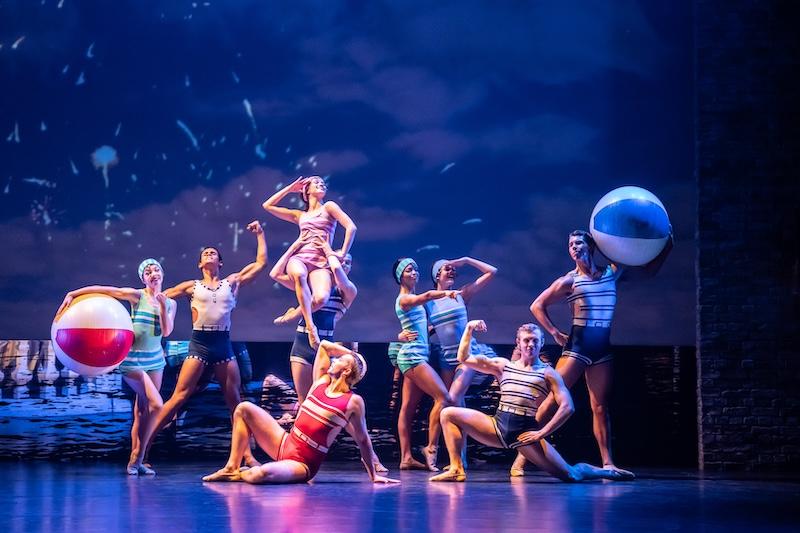
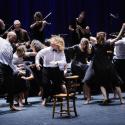
Lez Brotherston’s hypermobile set is a key player, ushering us from backstage to front-of-stage, from Cote d’Azur to East End music hall. By means of a swivelling proscenium arch, a single scene can flip between a seedy London bedsit and a gilded suite in Monte Carlo, or switch the audience’s point of view. One second you’re watching the dancers in a show-within-the-show, the next the proscenium has swivelled through 180 degrees and you’re seeing the dancers’ backs and the rapt faces of the front row they’re playing to. Watching performers watch performers has become a bit of a Bourne trope (viz the first act of his Swan Lake). In The Red Shoes that fascination is given full rein.
The other narrative force is musical, and I wish I’d noticed in advance that the score would be played live. The orchestra pit at Sadler’s Wells is tucked away, even the top of the conductor’s head invisible from the stalls, and many in the audience will have assumed that Terry Davies’ orchestrations were recorded. I’m not sure why, if you can’t see the musicians, it makes such a difference to know that music is live, but it does.
It was a major decision of Bourne’s and his musical collaborator to ditch the original 1948 film score and opt instead for a patchwork of early movie scores by Bernard Herrmann. Selections from Citizen Kane prove remarkably danceable, and there’s a delicious waltz in the style of Ravel. The harmonic tug and inherent drama of Herrmann’s later, and more familiar, film music (Vertigo, Psycho, North by Northwest) is already there in embryo. And it’s put to some surprising uses, not least pastiches of ballets known to have toured Europe in the 1940s, and of course the central “Red Shoes” ballet, based on the Hans Christian Andersen story about a girl whose dancing slippers dance her to death.
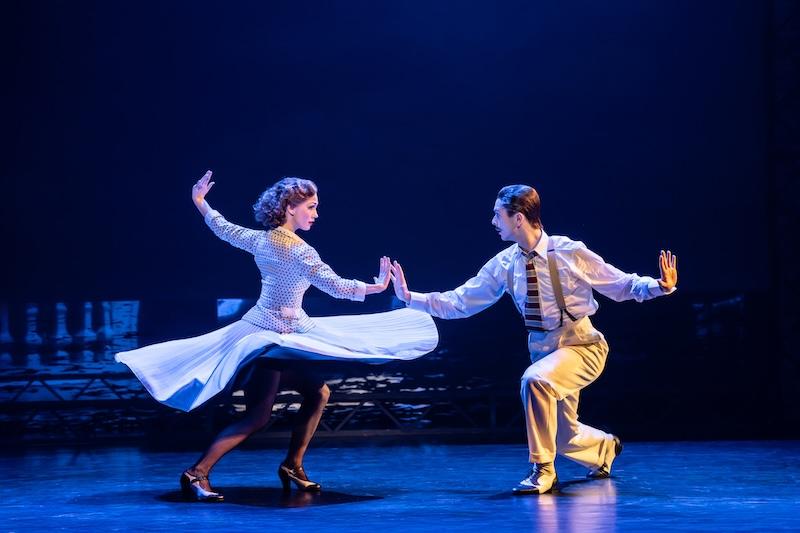
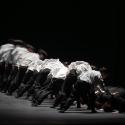
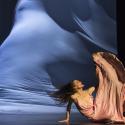
Performances are as bright and breezy as we’ve come to expect from Bourne’s company New Adventures – these days a multi-functional institution with a repertoire of 13 full-length productions and its own training programme. The decision to cast non-classical dancers in a story about ballet might seem counter-productive, but these performers have energy and dramatic flair to spare, and no one in this audience is going to give a fig about perfect entrechats. Pint-sized Ashley Shaw (pictured top and above) – more Debbie Reynolds than Moira Shearer – once again leads the cast as Vicky Page – a marathon of a role, at least half of it on point – with tremendous style and verve.
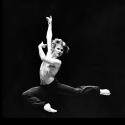
Just as impressive is Dominic North as her love interest, struggling composer Julian Craster. To the world he appears tweedy and shy, but in one fabulously virtuosic solo, alone with his thoughts at the piano, he reveals his inner fire. In the space of a few minutes we see unfold the mind of a composer in creative spate: the igniting of the spark, the building of musical ideas, the full orchestral vision. No other choreography in the show grabs you by the collar quite like this. It’s a shame that Bourne hasn’t managed to find a match for this physical effusion of feeling in the character of Boris Lermontov, the other male protagonist, the ballet company's fiercely principled impresario who ultimately sacks Craster, and Vicky by association, for being so little devoted to Art as to fall in love. This makes for an imbalanced central triangle, and gives the story less weight.
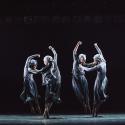
But many of the set-pieces live on in the mind. These include a glorious send-up of old-school ballet manners in a rehearsal of Les Sylphides, with Michela Meazza on fine comic form as the self-regarding prima ballerina who insists on bringing along her lapdog; and a Busby Berkeley-esque beachball sequence on the Cote d’Azur, the cast flexing their muscles in mid-century swimwear. Both scenes are typical of what keeps Bourne’s back catalogue alive and in-demand. How good that The Red Shoes, come the New Year, is to set out on a 13-venue British tour!





Comments
Well done for mentioning the…
Add comment